Showing posts with label burgundy. Show all posts

Sunday, April 7, 2019

An Amazing Wine Tasting Evening with Friends

A group of friends in the midst of an amazing wine tasting.

WSET is not just for studying....

As I have alluded to before, people make great connections and friendships while doing the WSET course. We were all in it together, trying our best to pass the course, feeling the pressure of learning such a vast amount of information and feeling the pleasure of tasting wine together. 

But it finished in December!

Happily, the group that I have tasted with before - the friends that I have tasted with before - are continuing to get together. The first time, since our test, was a couple weeks ago when I was in France. 

The next time was just last Thursday.

Andrew was our host. He has taken both his WSET 3 and a comparable level of his CMS - Court of Master Sommeliers. He works at a restaurant but also works at a local independent liquor store and, therefore, can get a great deal on great wines!

Verity and her partner, Joey, were also in attendance. I took my WSET 3 with Verity - in fact, she related the story of our first class together - we had a champagne and some minor bubbles like Prosecco in a blind tasting. Both of us proudly announced that the Prosecco was the great wine, much to our chagrin! We both learned an awful lot more about wine since that first class. Verity also completed a comparable level of her CMS.

When I took my WSET, Sarah sat beside me every class - she was my WSET Buddy! It was great to see her at the tasting and reconnect with her once again.

A new person (for me), Steph, was working on the same level of CMS that Verity and Andrew had achieved. She is an actual Sommelier at a famous Vancouver restaurant! 

Finally, my buddy, Stewart, whom I have known since high school (when we used to drank a gallon bottle of Calona Medium White) came along as well.  Although he has not completed a formal wine course, Stew is well versed in the wine world (we've both come a very long way).


After everyone arrived, Andrew welcomed us with a glass of 2016 Crescent Hill Glennallyn Private Reserve Gewürztraminer from the Okanagan. As is common with this varietal, it was very aromatic and was a tasty, light way to start off our night. 

Andrew always does such a good job!

Our next wines were blind tastings. We had three whites and three reds.

Our first white was described by Steph, who spoke with such confidence that I was drawn in, hook. line and sinker, to what she thought the wines were. We tasted, and swirled, and spat. 
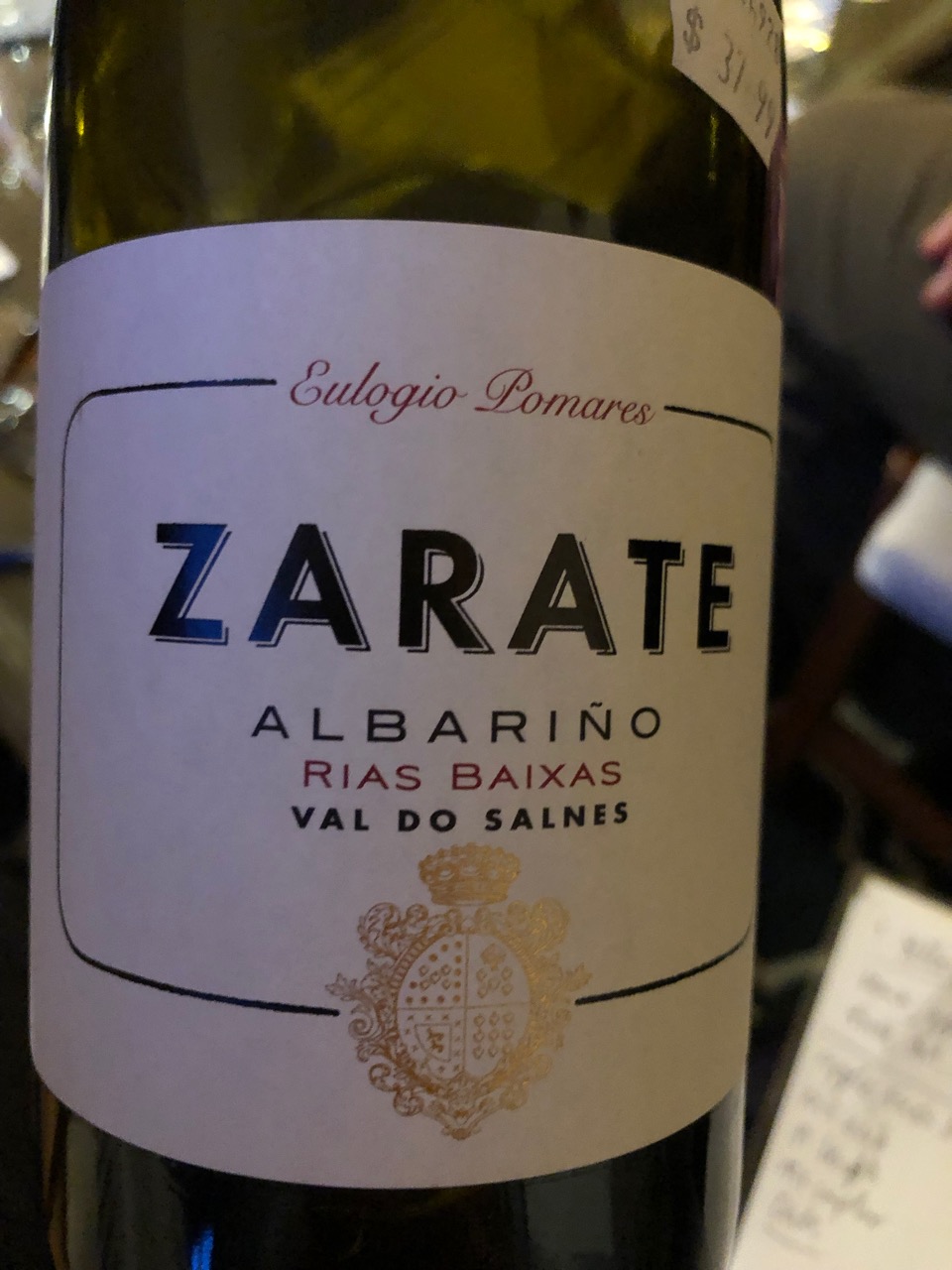

It was a Zarate Rias Baxas Albarino from Spain. It was not a strong wine and was not as full bodied as I thought it would be. 

Yellow, or lemon, in colour, this wine had aromas of lemon, apple, and had a minerality. These aromas were fresh, tart and ripe. On the palate, there were the same flavours - fresh or ripe apples, wet stone,  as well as medium plus acidity, medium length and medium complexity. There was also some oak on this wine.

As for all of the wines that we tasted, we all tried to come up with both the varietal and the place. Most people though this was a Chardonnay although some thought it was a Pinot Gris or something Italian. But we were all wrong. Albarino was just not on our radar! Overall, a Good wine.


Our next wine was another white and, this time, I nailed it. For me, petrol is an unmistakable aroma - and that means Riesling. Interestingly, unlike many of the petrol smelling Rieslings I have had in the past, this one was bone dry. This 2014  Howard Park Porongurup Riesling from Australia had additional aromas of rubber. pear, peach,. apple and a minerality. A complex nose with pronounced aromas.

On the palate, it was bone dry, as I said, with tastes of apple. It did not have the same mineral taste and was medium plus in alcohol and medium plus in acidity. This was a great dry Riesling - and I stated that to the group. Before the reveal I had also written down that I thought it was from Australia but hesitated to share that information. A Very Good to Outstanding wine.

Our final white was a real shocker. Verity described it as a 'giant in a sleeping bag' which means that it did not have a very pronounced aroma but when you got your nose close enough, there was an explosion of complex aromas. On the nose - and on the palate - were aromas like cloves, wood, popcorn, butter and vanilla. In fact, it smelled a little like a buttered popcorn Jelly Belly! It had medium acid, medium body and a very complex flavour.

Still, we didn't think it was all that fancy. We narrowed it down to Chardonnay but thought it was from California. You know, a big, oaky Chardonnay with lots of flavour.

Nope.


It was a Pouilly Fuiissé from the Maconnais region of Burgundy.  This 2014  Chateau Fuissé Le Clos Monopolé was not what we expected! It was probably the most expensive wine of the night, worth over $100. However, none of us found the elegance or refinement that we would expect from this kind of wine, although there was great complexity. I would rate this as Good to Very Good.

On to the reds!

Our first red of the night was a difficult one. Pale ruby in colour, it had aromas of mint and earth and a bit of an underbrush aroma. There were red fruits like cherry and raspberry as well as dried cranberry. On the palate, there were tastes of the same with the addition of some sort of leaf - like tomato leaf. It had medium plus acidity, medium minus tannins, and light bodied.


This Sangiovese wine was a 2015 Noelia Ricci Godenza Superiore from the Romagna area of Italy. It stumped us all. I thought it might be a cru Beaujolais although I couldn't detect the hallmarks of carbonic fermentation. There were some murmurings that it might be from Italy but no one had a strong feeling about that. Pinot Noir was another guess made by many of the group. It was certainly a surprise when the reveal came. This was a Very Good wine.


There next wine was probably my favourite. The 2015 Cannonball Merlot from Sonoma County had aromas of pepper, smoke, dark fruit such as plum and black berry,  jam, cedar and mushrooms. This wine had a pronounced intensity on its rather complex nose. On the palate was the same black, jammy fruits as well as some earthiness with medium acidity, medium plus tannins, and high alcohol. This wine had balance, complexity, length and intensity and I would rate this wine as Outstanding.  I first thought it was a Syrah, possibly from the Northern Rhone. My second guess was Merlot from California.


The final red for the night was another tricky one. The Chateau de Cherrière Bourgogne Pinot Noir was a very structured wine with medium plus acid and medium plus tannins, something I did not expect with a Pinot Noir. There were tastes and aromas of cedar, tobacco, farmyard, leather, mushroom, black fruit and black cherry. This was a real stumper as it had that Pinot Noir taste but such strong structure! I would rate this as Very Good.

One of the members of our group had something to celebrate so Andrew brought out a celebratory champagne style wine. The celebrant, Verity, then used a bread knife to sabre the wine! If you have a nice cold bottle of champagne (or other bubbly), you can use any kind of knife to open it. You simply slide the knife from the middle of the bottle up the seam of the bottle and, voila! The cork and some of the bottle will fly off the top!


Verity sabred a 1996 Summerhill Cipes Traditional Cuvée sparkling wine form the Okanagan ($80). I didn't do a formal tasting note at this point (we had finished the bottle leftovers at this point and were refraining from spitting or dumping) but I do recall that this was more than just a bready, yeasty tasting champagne. It had a beautiful golden colour. a nice fizz, and an exquisite taste that included a bit of a sherry.

A wonderful celebration to finish off a wonderful wine tasting evening!


Friday, October 5, 2018

WTF! Wine Tasting Fiasco! WSET 3.5


This week's class marks the one third point in our course. I have been feeling pretty good about my tasting ability.

Until this week....

Our first wine region was the Loire valley. This is a big area that stretches from the ocean (maritime climate) to the centre of France (continental climate). The main grapes are pretty easy to remember. 3 blancs and a franc - Sauvignon Blanc, Chenin Blanc, Melon Blanc (or Muscadet) and Cabernet Franc. Some of the famous areas in the Loire include Chinon (Cab Franc), Muscadet and Vouvray Chenin Blanc).  There's also two really famous Sauvignon Blanc regions, Sancerre and Pouilly-Fumé.  A great deal for Sauv Blanc is in Menetou-Salon which has great wine but not the same expensive price.

Our first wines were the three whites. Unfortunately, I had a really difficult time figuring out which was which. For example, I thought the Sauv Blanc was Chenin Blanc until I tasted what I thought was Sauv Blanc - and it was sweet! Threw me off completely!

Oh well, here's the wines:


Our first was a wine that had gooseberry, flint, stone, lemon and grass on the nose. It was definitely a youthful wine that also had apple and pear on the palate. It was a 2017 Domaine Delaporte Chavignol Blanc ($38). This wine had high acidity, medium alcohol, and medium (+) intensity of flavour. We rated this wine as Very Good and was a 'drink now' wine. I initially thought it was the Melon Blanc.


The second of the trio was a 2017 Domaine de la Pepiere  Muscadet Sevre et Maine ($26) which is the best of the Muscadets. This Melon Blanc had peach, apricot, melon (ha! melon for a Melon Blanc!), lemon peel and a bit of grassiness on the nose with some yogurt flavours from being on the lees on the palate. Despite the time on the lees, I felt that although this wine was balanced and complex, it did not have a particularly long finish and was not all that intense so was rated as merely Good. This wine is good to drink now and is not suitable for ageing.  Unhappily, I thought this was initially a Chenin Blanc.


The final wine of my three initial errors was a 2016 Maison Darragon Hautes des Ruettes Vouvray made from Chenin Blanc ($28). By the way, if it says Vouvray on the label, it has to be Chenin Blanc. I really enjoyed this one as it had pronounced intensity and something that I had a hard time defining, on the nose. The smell was wet wool which is textbook for a Chenin Blanc. There were also aromas and tastes of ripe apple, honeysuckle, honeydew, and honey. It was a balanced wine that was pretty intense, complex, and had a fairly long finish. I would put it between Very Good and Outstanding. When I first smelled this one, I thought it was a Sauvignon Blanc because of the funky smell, By the way, if you're ever in the Okanagan, Road 13 makes an amazing Chenin Blanc sparkler.

As you can see, the first three wines did not go well. I fared better, however, with the next two.

Moving East and South from the Loire valley, we ended up in Burgundy, home to the world's most expensive wines. In Burgundy, they make Pinot Noir and Chardonnay and that's about it. The north part does mainly Pinot Noir and the south part does mainly Chardonnay, although there are exceptions. Beaujolais is actually considered part of Burgundy but it's such a different kind of region, I have separated it out.

The first two wines were Chardonnay wines. Chardonnay is made from such famous places as Chablis, Mersault, Puligny-Montrachet and Chassage-Montrachet. I was able to figure out which was from Chablis and which was from the Cote de Beaunne - thank goodness something went right this week!


The first of these wines was a 2017 Jean-Paul and Benoit Droin Chablis ($58).  This had tastes of apple, grapefruit, lemon, butter and stone and was a high acid, bone dry wine. It was balanced, had complexity and was fairly intense but lacked a long finish so we gave it a Very Good rating (and a pat on the back for my first correct wine of the night). Drink this one now as it is not suitable for ageing!


The second wine was heaven! This one was a 2014 Chassagne- Montrachet ($131) and is a Monopole wine which means that this is one that the negociant produces from their own vineyards and is their flagship wine. There was a lot of different fruit going on here but the best was the secondary and tertiary characteristics such as vanilla, butter, roasted nuts, mushroom and popcorn. It had all the hallmarks of an Outstanding wine and was one that you could drink now but wold also really benefit from ageing.

Staying in Burgundy, we then looked at some Pinot Noir. There are many different houses that make first rate Pinot Noir including Gevrey-Chambertin, Nuits St. Georges, and the incredible but incredibly expensive, Pinot Noir. Domaine Romanee Conte which is a winery that demands some of highest prices for a bottle of wine anywhere.

Unfortunately, I was back to my old tricks again and mixed these up!


The first was a 2015 Joseph Faively Bourgogne Pinot Noir ($32). This had a fair bit going on including red plum, cranberry, cedar, smoke, and red cherries. On the palate, there was a pronounced intensity of flavours. It met some of the criteria for the assessment of quality and was rated Good.


The other Pinot Noir was a 2015 Domaine Daniel Rion et Fils Premier Cru from Nuits St. George ($100). This wine also had some great fruit on it including red plum, raspberry, cranberry, strawberry, and something vegetal - mushroom? - as well as strong tannins. This wine was less austere than the first one (which is maybe why we guessed wrong) and has some wonderful fruit flavours. Despite the age on it already, it would definitely benefit from ageing. It was rated Very Good - bordering on Outstanding.

I was on more solid ground for the last two wines. One was from the Loire - from Chinon - so a Cab Franc - and one was from Beaujolais - so a Gamay Noir. Beaujolais is one of those wines (like Pinot Noir) that's a great one to order if everyone at a restaurant orders something different. There's also Beaujolais Nouveau which is released this year on November 15th. It is a super light, bubble gummy wine (from carbonic maceration) and is supposed to be lots of fun - I've never had a Beaujolais Nouveau so I will definitely try it out next month. 


The Beaujolais that we did have was a 2016 Close de Roilette from Fleurie ($30), one of the ten crus of Beaujolais. It had flavours of stewed fruit, black cherry, bubble gum, and a bit of pepper. There was medium tannins, alcohol, and intensity with maybe a bit higher than medium acidity, It was very good but should be consumed now.

Courtesy BK Wine Photography
Fun fact - most vines in Beaujolais are trained in the gobelet style where the spurs are pushed up and tied together - sort of like braiding your hair and tying the braids together on the top of your head. 


The final wine was a 2016 Bernard Baudry Les Granges Chinon from the Loire valley ($27). It had flavours and aromas of black currant, red plum, eucalyptus, and smoke. This wine was high in acid and in tannins and had some cedar on it as well that meant it could age. It wasn't all that balanced and the length was OK so the question would be, would you bother ageing it as it was only a Good wine? 

Good question.

And so, my evening ended with me mis-identifying 5 of the 9 wines and missing out on a variety of aromas - or just getting them wrong. I will definitely have to refine my palate over the next few weeks. 

Will Taste Feverishly.


Friday, September 14, 2018

Tricky Tastings and Sticky Fingers - WSET 3.2


Today's class started out in a very hectic manner, especially for a recently semi-retired guy.

I had two wonderful clients for a wine tour that I was guiding (my part time job which actually uses some of my wine knowledge) and we ended up going a bit late. By the time I dropped them off, dropped the van off and scooted over to BCIT, it was 6:10pm. Why was that a big deal? Lynne, our instructor, is now holding a study session for the first half hour of every class where she puts questions on the board and we try to write down the answer - closed book - and that starts at 6pm sharp!

As it turned out, I had time to answer the questions - except for one.  It was, "Name the seven wine faults and odours that they produce".  I could name 'cork taint or TCA' (smells like damp cardboard) and 'volatile acidity' (smells like nail polish remover or vinegar) but that was about it. Of course, there was also Brettanomyces (smells meaty or like a bandaid), Reduction (rotten eggs), Out of Condition (stale), Oxidation (dried fruit), and Sulphurt Dioxide (acrid, sharp smell).

Then we went over all the things to do with growing vines including grafting, planting, crossing, and what the vines need (heat, sunlight, CO2, water and nutrients) as well as other things in the growing environment. We also looked at all the parts of the vine and how to prune wine vines - which got a bit complicated - especially as I don't really know how to prune a tomato plant or even flowers!

We talked about the different climates; Continental (biggest difference between hot and cold months, generally cooler temperatures overall - think - the Okanagan), Maritime (low difference between hot and cold months, generally cool to moderate temperatures overall - think Bordeaux or coast of California) and Mediterranean (low difference between hot and cold months, generally hotter temperatures overall - think Southern Rhone or Chile).

It was a lot of information to take in but, luckily, it builds on knowledge that I already have from WSET 2.

For tastings, I sat with Owen again and we had some new people including an English woman, Sarah, who was very nice - although at one point I thought her glasses were mine and I accidentally stole them. We'll see how friendly she is next week after the 'sticky fingers' glasses incident....

There were eight wines for this class. Most were the same wine grape with more subtle differences. One side benefit from WSET 2 - I now realize that I can tell most of the grape varietals from taste! Great party trick....

The first pair were two Chardonnay wines - one was higher quality than the other but both were from the same company. I always struggle with Chardonnay, I think because I'm not overly fond of it and, when I do drink it, prefer the oaky, slightly sweet version rather than the steely, mineral wine that is so valued.


The first was a 2015 Jean Marc Brocard Chablis ($42). I felt it had stone fruits on the nose, tropical fruit on the palate, but wasn't a very balanced or complex wine with a medium finish and medium plus intensity. It was rated as ready to drink now.


The second was a 2011 Jean Marc Brocard Grand Cru Chablis ($120). It had grapefruit and lemon peel on the nose and lemon and creaminess (from lees stirring) on the palate. It also had some oak. Overall, it was balanced, had a long finish and was complex so was rated as very good. It was also rated ready to drink. Grand Cru wines in Chablis are the best wines to be had.

I faired better on the second pair. This time we were looking at the same grape from the same country but one was grown on a flat area (where there's not the best drainage and sunlight is not as strong) while the better one was grown on the a steep slope with excellent sunshine.


First up was the 'bunny wine' - a 2016 Rudolf Müller Riesling from Pfalz, Germany ($17). This was a merely acceptable wine with some simple flavours and tastes of honey, pear and lime. It had a short length, was not all that intense and was not complex - the flavours that were there were fairly balanced. Drink it now!


The second Riesling was a 2011 J. J. Prüm Bernkasteler Badstube Auslese ($92). This glorious wine was both delicate and strong at the same time. The Germans have a sweetness system called the Pradikat and an Auslese wine is a fairly sweet wine - but not cloying at all. It would be a nice match for cheese, Asian food (especially Thai or Chinese) and dessert. There were lots of wonderful aromas (mineral, grapefruit, lemon peel, honey) and tastes and this wine was outstanding! You can drink this wine now but it will only get better with age!

The next two wines were supposed to be a comparison between a cool climate and a warm climate but in one of those 'mwa mwa mwaaaa" moments, the second wine had cork taint! We did have to taste it (yuck) and it was the cheaper one that was made in the warm climate (California) but that's all I got on it so I won't give any more information about that wine.


The cooler climate wine was a 2013 Olivier Leflaive Volnay Pinot Noir ($92) from Burgundy (Volnay is near Pommard in the Cote d"Or and has struggled in the past few years from grapes being wiped out due to hail). This pale garnet wine was full of red fruit and was high in acidity - so much so that I thought it seemed a bit astringent. Perhaps it needed some age? It was a good wine overall as it had good length and complexity.

The final two wines were both the same blend.

Courtesy Shopify

The first was a good wine. It was a 2015 Grand Bateau (made by Chateau Beychevelle - although you can't tell from their website) Merlot blend from Bordeaux ($24). There was some red fruit on the nose, high acid, medium tannins, and medium body. Not a terrible wine but not overly balanced or complex.


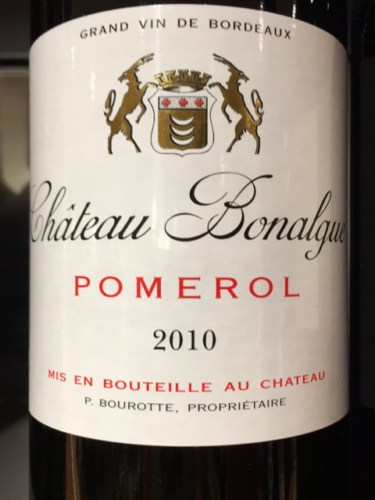
The second was much better. It was a 2010 Chateau Bonalgue from Pomerol ($115). It was complex with red currants, green pepper, coffee, leather, black cherry, vanilla, plum, chocolate and fig flavours and aromas. Do I need to say more than it was COMPLEX? I had a struggle telling what grape this one was, but then we were told it was a Bordeaux blend. Most of the class thought it was from the Left Bank (Cab Sauv dominant) but I could tell it was a Merlot based, velvety Right Bank wine. Also, I had had a Left Bank style wine from Township 7 just a couple days previous and remembered the difference!

I am enjoying the course very much (especially the wine tastings) and look forward to next week's class!


Friday, September 7, 2018

This ain't gonna be a walk in the park - WSET 3 - first class


After doing really well on my WSET level 2 last year, I thought that it would be a good idea for me to  complete my WSET 3. After all, I got an amazing 96% on my exam so I thought that It would be a fairly easy jump to get my next level.

Wrong.

Our instructor from Fine Vintage, Lynn, was clear. I am going to have to WORK to pass this course. Really hard. Don't get behind or that's it!

One good thing is that the part I was most worried about, the blind tasting, apparently isn't as hard as I thought. So, one silver lining....

Other than scaring the  crap out of us in the first five minutes, Lynn also went over a few things but did not get too in-depth as we just received our materials. Luckily, I borrowed my son-in-law's WSET 3 materials at the beginning of summer and I have at least a good background on what we are doing.

Topics covered included the art of tasting (appearance, nose, and palate). She also discussed the different wine faults that you can come across. The whole concept of food and wine pairing was also discussed, although this is pretty much the same as in level 2. Finally, she went over the new tasting grid for level 3.


Basically, it builds on the level 2 grid. There are the same categories with a few extra (e.g. mousse- for champagne, ageability,  three kinds of flavour characteristics) as well as a slew of new aroma and flavour descriptors.

I sat with another just-retired gentleman, Owen, and a bright, young woman, Verity. We got along really well and think alike - especially when we unanimously got the first two wines wrong!

I also knew two people, well, sort of. Kelly works at Blackwood Lane (I think my favourite Fraser Valley winery) and is taking the course. I see her almost every time I take a tour there. Beside her was April, a young woman who works at the same place my youngest does, Brewery Creek. Somehow she put two and two together and figured I was the dad!

Onto the wines:

All of the tastings are blind tastings. This evening all of the tastings were in pairs.

The first pair were two bubbly wines - a tank style and a traditional Champagne.

When you hear 'tank style' it means that all the wine is put into a giant tank and yeast is added to the tank after wine has been made to provide the fizz. Prosecco is a tank method wine and sometimes gets a bad rap - although I really like Prosecco. This wine wasn't really close to Prosecco - in fact, our group thought it was the Champagne!


The wine was a non-vintage Von Buhl sparkling Riesling from Pfalz, Germany ($36). It had some nice fruit aromas which were pronounced and very pleasing. It was a high acidity, off dry wine with medium flavour intensity and medium finish. Interestingly, the bubbles didn't persist on the palate - they escaped rather quickly - and so, this is called 'aggressive' in terms of the mousse! Ready to drink. Vivino gives it 3.8 stars.


The next wine was a non-vintage Pierre Peters Blanc de Blanc Grand Cru Champagne (made from Chardonnay - $104).  I felt it was rather light on the nose but this may have been my nose confusing lightness for complexity. It was fresh and a bit off dry with medium acidity and medium plus length. There were stone fruits and biscuit on the palate as well as delicate mousse. I still can't believe we got it so wrong - and i don't think I'd pay the $104 -  but this one was ready to drink now, I felt. Vivino gives it 4.1 stars which surprised me.

The next two wines were made from Chardonnay grape. I'm getting better at guessing the grape and I did that with these ones. 


The first was a 2015 Louis Jadot Macron-Villages Chardonnay from Burgundy ($34). It had a pleasant nose with apple, peach and pear with a medium plus intensity. On the palate, it seemed a bit off dry and was fruity with peach, apricot, and honey as well as some vanilla denoting oak. It was a good wine - balance was just OK and had a bit of a short finish and is ready to drink now. Vivino gives it 3.6 stars. 


The second was a classic Burgundy Chardonnay - s 2015 Jacques Prieur Clos de Mazeray Mersault ($135). The nose was less intense - a medium - but had some complex aromas including orange peel, apple, and peach. It was less fruity on the palate - there was lemon zest - but there were other rich tastes including mushroom and toasted nuts. At first, I thought this was not that flavourful and then I realized that the flavours were complex and subtle - an outstanding wine that could age for another 10 years! Vivino gave it 4.1 stars. 

Our next two wines were both whites which we had to compare. I guessed the Riesling and Owen guessed the Pinot Grigio, for what it's worth. 


The Pinot Grigio was a 2017 Tolloy Piniot Grigio from Italy ($26). It had quite the nose with aromas of honeysuckle (I think), peach and pear. On the palate, it had high acidity, included flavours of citrus like lemon and lemon peel, and had a medium finish. We rated it as good and ready to drink. I'll be honest, I'm not a big fan of the Pinot Grigio style (I prefer Pinot Gris style with this grape) and this did not change my mind. This got 3.9 stars on Vivino.


The Riesling was a 2015 Fritz Haag Spatels Riesling from Mosel, Germany ($52).  The nose was pronounced - oh my! There was a strong petrol smell as well as nectarine. On the palate, it was actually medium sweet with peach, apricot, honey, and high acidity. This wine was balanced, intense, complex and had a long finish - outstanding! It has definite ageing potential. Vivion gives this one 4.1 stars.

The last two wines were a rosé and a red. We did some cool stuff including sucking a lemon, eating a chili cracker, or having goat cheese to see the effect on the taste of the wine. Very cool!


The first was one of my favourite Rosés, Joie Farms - a 2017 made form Pinot Noir and Gamay - from the Okanagan ($26). It was not as pronounced on the nose (I only got cherries), but there were lots of flavours on the palate including grapefruit, cherries, and strawberries. This was definitely a dry wine with low tannins (like most Rosa´s). I rated it very good - could have been a bit more balanced - and Vivino gave it 3.7 stars. 


The final wine of the evening was a 2014 Stack House Cabernet Sauvignon from Napa ($92). This dark wine - purple, in fact - had lots of aromas including primary (from fermentation - plum, black cherry), secondary (from the winemaker - cedar), and tertiary (from ageing - mushroom and earth). This was repeated with the palate with the addition of bell pepper, cocoa, and wood. There were high tannins and high acidity and full body. This was considered very good by the group and earned a rating of 4 on Vivino. Disappointingly, the price in BC (must be at a private store) is $92 but the average price on Vivino is $44. Sigh.

Well, onto my homework. What homework, you may ask? Read chapters 1 to 7, do a tasting note using the grid, and then do the homework assignment we received in our email yesterday. Here's the intro to one of the questions...

For each of the below scenarios, discuss which vineyard management techniques should be considered to achieve quality grapes for wine production and two examples of wine regions that fall into the climate category.

Sigh.

This definitely ain't gonna be a walk in the park!


Sunday, February 18, 2018

Tapas and Tastings - Another Great Wine Tasting Evening


Last night, we were invited to our friends' house for an evening of wine tasting and tapas - and it was a great time!

Each couple was responsible for bringing a bottle of wine. We were given the tapas dish in advance and were asked to bring something that would go with the food.

When we arrived, we secretly put our bottle in a paper bag and labelled the bag with the number that corresponded to the tapas course.

For each wine, there was a score sheet ( à la WSET 2) and a page that gave descriptors for the different characteristics of wine. Our host, Keith, popped open the wine, shared it around, and then we spied, sniffed, swirled, sipped and slurped the wine. After a few minutes, our other host, Lynn, brought on the tapas that went with the wine which we proceeded to nibble on while sipping the wine yet again.

Finally, after all of this drinking and eating, we would make our guesses and then Keith would reveal the bottle.

I absolutely loved it!

There were five wines and five tapas. Here's what we had.

The first wine received an interesting reaction from the table. One of the guests said, right off, that she didn't like it. Another said that he couldn't smell anything. I was able to smell citrus fruits like grapefruit as well as some green apple. This continued on the palate where I also tasted what I thought was a little yeast and high acidity. It was also quite mineral-y - and had almost a stone taste to it.

It was paired with Deviled Eggs with Shrimp. The pairing was great - it really meshed very well with the wine. Both the egg and shrimp came alive with the minerality of the wine.

I decided that because it was a great food pairing that this was an Old World wine. The minerality and lack of real fruitiness on the nose led me to Chardonnay. I guessed that is was either a Chablis or a Burgundy Chardonnay.


It was, in fact, a French Premier Cru Chardonnay from Burgundy - a 2014 Mont-Palais Rully Premier Cru ($50 - not sure where to buy in BC). I haven't drunk a lot of Premier Cru wines so far so it is a special honour to be able to drink one. On its own, it was a good wine, but with the food, it was amazing!

Next was a red wine. I recused myself from this one because my friend had phoned me a few days before and asked for a recommendation - so I knew what it was! Even so, I think that I would have been able to get this one. It had a lighter ruby colour with just a hint of garnet around the edge. The taste was definitely black fruits and there was medium structure and acidity. This was unmistakable as a Pinot Noir.

The tapa for this wine was a mushroom crostini with roasted red pepper and gruyere cheese. The wine paired very nicely with the food.

I had given my friend two possibilities - an Old World Pinot from France and a New World from the Okanagan. Since the wine tasted so darned good on its own, I, naturally, assumed it was the New World Pinot.


Wrong! It was a French Jean-Claude Boisset Les Ursulines 2016 Burgundy (Bourgogne) Pinot Noir ($26). I found it to be a very nice Pinot and would pair with a very nice range of dishes - the perfect wine when everyone orders something different!

The third wine was tricky. It was a fairly pale lemon white wine with a somewhat fruity nose and smelled of apple, honey, and stone fruit. The tapa that we had with it was an amazing Mu She chicken wrapped in lettuce. The fruitiness of the  wine paired well with the spices in the chicken.

My wife and I have had a couple of bottles of Gewürztraminer lately and I didn't think the nose was floral enough. That still left others like Pinot Gris or Viognier - so that's what I guessed - Pinot Gris.


Nope! It was a 2016 Gray Monk Gewürztraminer ($16) from the Okanagan. I was fooled by the less floral nose! Fooled or not, it was a good wine to have with the food.

Fourth was the wine that we had brought. It was well received as it was a bit bold, had some nice red and black fruit, had soft tannins and medium acid, and paired well with the tapa which was potato skins with chorizo and queso (cheese). The food was unbelievably delicious (well, it all was, actually) and I was tempted to find a yogurt container so I could steal all the left overs. The wine really stood up well to the chorizo but didn't overpower the subtler flavours in the skins or the cheese. A great pairing!


One of my friends got it (or came close enough, in my mind). He guessed Tempranillo - and it was, in fact,  a  2013 Beronia Rioja Reserva (aged at least 3 years) from Spain. For $26 I think this was an excellent wine and will definitely buy it again. Kudos to 'my guy' at the Pitt Meadows Specialty BC Liquor Store who helped me with this selection. This wine actually has Tempranillo and two Spanish grapes that I don't know a lot about, Mazuelo and Graciano.

Finally, we had a fortified wine to finish off. It was definitely a Port but it's pretty hard for me to tell the difference between Ports - other than they taste wonderful! This Port was quite sweet, had notes of nuts, caramel and honey, and was paired with an incredible chocolate mousse. The Port was sweet enough to stand up nicely to the dessert. I decided that it wasn't a vintage Port (as it was poured straight from the bottle - vintage Ports need to be decanted), tasted sweeter than I thought a Tawny Port would taste and tasted smoother than a ruby Port so I thought it was a Late Bottle Vintage (LBV) Port.


Close, but no cigar - it was a Taylor Fladgate 10 Year Old Tawny Port from Portugal ($40). Still, not a bad guess....

A great end to a fantastic tasting evening. Viva tapas!


Thursday, August 31, 2017

Hosting a Wine Tasting Party - How It Went!


Everything was almost ready - the pulled pork smelled heavenly, the cheeses were all laid out, water on the table, wine tasting mats all ready. I just needed to put the tasting glasses out that I had bought at IKEA. OK - ten guests means 2 glasses each so 20 glasses....

Oh no, I only have ten! Ugh....

Luckily, I had bought some other glasses that I was going to use for after the tasting but they would have to be tasting glasses as well!

The guests arrived, bringing the required bottle of wine as well as a tasty cheese and some crackers. Luckily, all arrived around 6pm and I had them drop off their cheese and wine at the kitchen counter and have a seat at the table where everything was set up.

I explained the tasting mat and what we could do to help us compare the wines. Above all, I cautioned, this is about friends getting together and having fun - and that is exactly what happened!

I had purchased wine pourers from the local liquor store - and these helped a lot. They slowed down the rate of wine coming out of the bottle and looked very professional as well! I bought two different colours so it was easy to differentiate who was pouring which wine. All wines were placed in paper bags with a label of what kind of wine it was. Due to the rather warm day (26°C.) the Sauvignon Blancs were refrigerated until needed, the Pinots were refrigerated for 20 minutes before serving, and the Shiraz wines were refrigerated for just 7 minutes.

The first two wines were Sauvignon Blancs. I didn't know if there were any big drinkers of SB but I thought that this would be a good one to start off with.


The first was an 2016 Oyster Bay Sauvignon Blanc ($20)  from New Zealand. It tasted crisp and had nice fruit flavours with some complexity. It was medium in intensity and our group rated it between Good and Very Good. One of our number, Anna, said that she thought is was a Sauvignon Blanc from New Zealand - Oyster Bay! Truly amazing! Apparently that is one of her 'go to' wines but, still!


The second of the pair was a 2016 Les Fumées Blanches ($15)  from France. It is a Vin de France so is classified as table wine. This Sauvignon Blanc had a low intensity nose and lacked much of the fruit and flavours of the Oyster Bay. There was a subtle minerality underlying this wine but the overall taste was just not that great. Combined with a short finish, it was a bit of a disappointment.

Of our group of ten, nine were in agreement that the Oyster Bay was the better Sauvignon Blanc due to its nose, taste, balance and complexity.

The second two wines were both Pinot Noirs, one Old World,, and one New World.


The first was a local wine from the Okanagan - a 2016 See Ya Later Ranch Pinot Noir ($20). It had some very nice red fruit both on the nose and on the palate. It had a good long finish and was fairly complex. This was a very enjoyable Pinot Noir and was rated Very Good.


The second was a 2014 Joseph Drouhin Pinot Noir from Burgundy ($26). I had bought this one and I thought that it would be a great choice. As it turned out, it was Ok but the flavours seemed a bit too subtle and a bit overwhelmed with the acidity of the wine. There was almost an astringent taste on the finish which was really noticeable to most of us. The harsh finish and lack of real character put this one between adequate and good - it wasn't balanced, nor complex, nor had a good finish. The aroma was a bit intense and the wine was somewhat expressive of Pinot Nor.

Overall, it was another no brainer - nine of ten agreed that the Okanagan Pinot Noir was much better due to its taste, complexity, finish, and balance.

Our final two wines were Shiraz/Syrah. I had intentionally gone from less bold wines to more bold wines so I felt that the Shiraz/Syrah would be a nice way to finish off.


The first was a 2011 Domaine des Lises (no website found - owned by Maxim Graillot)  Crozes-Hermitage ($34) that I also had bought. I had purchased a Crozes-Hermitage last month (surprisingly, an Ogier Heritage Crozes-Hermitage - might have been a 2012) and it was super disappointing - flabby, watery and characterless. I was worried about shelling out $34 for what could be another stinker but thought I'd give it a try.

This was a whole different animal. It had great structure, complex taste of black cherries, black berries and tobacco. The only thing that really stopped it from being an outstanding wine was the fact that it smelled like canned peas! Yes, that's right - canned peas! Once you got through that initial aroma, however, it was an amazing wine. Actually, it was a little short on the finish as well. Still, a Very Good wine.


The second Shiraz was a 2015 Shingleback Red Knot from the McLaren Vale of Australia ($20). This started out very promising with a great bouquet but lost that boldness on the palate where it was rather average. It had some structure but not a lot of complexity of flavours. For all that I've heard of Australian Shiraz's, this one was not overly impressive. It did have a nice, deep, dark purple colour, though. This was rated as a Good wine.

Finally, in the third round, France came up with a victory. This was a bold drinking wine that would do justice to barbecued meats and even a nice, juicy steak.

After our tasting, I set up the bottles with the remaining wine ( about half in each) and we had a variety of cheeses while we chatted, discussed the wines, laughed, and generally had a great time. Another hour later, we brought out the pulled pork and cole slaw and our guests tucked into this offering. Finally, another hour later, out came the peach crisp, coffee, tea and some nice port.

It was past eleven when the last wave of guests left. I high-fived my wife after such a good evening and we went to bed, content in our first-time hosting of a wine tasting party.


Time to Taste an Albariño from Catalonia, Spain!

  Today we're drinking an Albariño — but there's an interesting twist. This 2024 Raimat Albariño doesn't come from the cool, Atl...