Showing posts with label pfalz. Show all posts

Friday, September 14, 2018

Tricky Tastings and Sticky Fingers - WSET 3.2


Today's class started out in a very hectic manner, especially for a recently semi-retired guy.

I had two wonderful clients for a wine tour that I was guiding (my part time job which actually uses some of my wine knowledge) and we ended up going a bit late. By the time I dropped them off, dropped the van off and scooted over to BCIT, it was 6:10pm. Why was that a big deal? Lynne, our instructor, is now holding a study session for the first half hour of every class where she puts questions on the board and we try to write down the answer - closed book - and that starts at 6pm sharp!

As it turned out, I had time to answer the questions - except for one.  It was, "Name the seven wine faults and odours that they produce".  I could name 'cork taint or TCA' (smells like damp cardboard) and 'volatile acidity' (smells like nail polish remover or vinegar) but that was about it. Of course, there was also Brettanomyces (smells meaty or like a bandaid), Reduction (rotten eggs), Out of Condition (stale), Oxidation (dried fruit), and Sulphurt Dioxide (acrid, sharp smell).

Then we went over all the things to do with growing vines including grafting, planting, crossing, and what the vines need (heat, sunlight, CO2, water and nutrients) as well as other things in the growing environment. We also looked at all the parts of the vine and how to prune wine vines - which got a bit complicated - especially as I don't really know how to prune a tomato plant or even flowers!

We talked about the different climates; Continental (biggest difference between hot and cold months, generally cooler temperatures overall - think - the Okanagan), Maritime (low difference between hot and cold months, generally cool to moderate temperatures overall - think Bordeaux or coast of California) and Mediterranean (low difference between hot and cold months, generally hotter temperatures overall - think Southern Rhone or Chile).

It was a lot of information to take in but, luckily, it builds on knowledge that I already have from WSET 2.

For tastings, I sat with Owen again and we had some new people including an English woman, Sarah, who was very nice - although at one point I thought her glasses were mine and I accidentally stole them. We'll see how friendly she is next week after the 'sticky fingers' glasses incident....

There were eight wines for this class. Most were the same wine grape with more subtle differences. One side benefit from WSET 2 - I now realize that I can tell most of the grape varietals from taste! Great party trick....

The first pair were two Chardonnay wines - one was higher quality than the other but both were from the same company. I always struggle with Chardonnay, I think because I'm not overly fond of it and, when I do drink it, prefer the oaky, slightly sweet version rather than the steely, mineral wine that is so valued.


The first was a 2015 Jean Marc Brocard Chablis ($42). I felt it had stone fruits on the nose, tropical fruit on the palate, but wasn't a very balanced or complex wine with a medium finish and medium plus intensity. It was rated as ready to drink now.


The second was a 2011 Jean Marc Brocard Grand Cru Chablis ($120). It had grapefruit and lemon peel on the nose and lemon and creaminess (from lees stirring) on the palate. It also had some oak. Overall, it was balanced, had a long finish and was complex so was rated as very good. It was also rated ready to drink. Grand Cru wines in Chablis are the best wines to be had.

I faired better on the second pair. This time we were looking at the same grape from the same country but one was grown on a flat area (where there's not the best drainage and sunlight is not as strong) while the better one was grown on the a steep slope with excellent sunshine.


First up was the 'bunny wine' - a 2016 Rudolf Müller Riesling from Pfalz, Germany ($17). This was a merely acceptable wine with some simple flavours and tastes of honey, pear and lime. It had a short length, was not all that intense and was not complex - the flavours that were there were fairly balanced. Drink it now!


The second Riesling was a 2011 J. J. Prüm Bernkasteler Badstube Auslese ($92). This glorious wine was both delicate and strong at the same time. The Germans have a sweetness system called the Pradikat and an Auslese wine is a fairly sweet wine - but not cloying at all. It would be a nice match for cheese, Asian food (especially Thai or Chinese) and dessert. There were lots of wonderful aromas (mineral, grapefruit, lemon peel, honey) and tastes and this wine was outstanding! You can drink this wine now but it will only get better with age!

The next two wines were supposed to be a comparison between a cool climate and a warm climate but in one of those 'mwa mwa mwaaaa" moments, the second wine had cork taint! We did have to taste it (yuck) and it was the cheaper one that was made in the warm climate (California) but that's all I got on it so I won't give any more information about that wine.


The cooler climate wine was a 2013 Olivier Leflaive Volnay Pinot Noir ($92) from Burgundy (Volnay is near Pommard in the Cote d"Or and has struggled in the past few years from grapes being wiped out due to hail). This pale garnet wine was full of red fruit and was high in acidity - so much so that I thought it seemed a bit astringent. Perhaps it needed some age? It was a good wine overall as it had good length and complexity.

The final two wines were both the same blend.

Courtesy Shopify

The first was a good wine. It was a 2015 Grand Bateau (made by Chateau Beychevelle - although you can't tell from their website) Merlot blend from Bordeaux ($24). There was some red fruit on the nose, high acid, medium tannins, and medium body. Not a terrible wine but not overly balanced or complex.
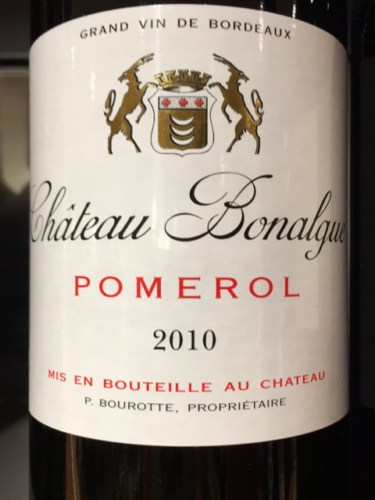

The second was much better. It was a 2010 Chateau Bonalgue from Pomerol ($115). It was complex with red currants, green pepper, coffee, leather, black cherry, vanilla, plum, chocolate and fig flavours and aromas. Do I need to say more than it was COMPLEX? I had a struggle telling what grape this one was, but then we were told it was a Bordeaux blend. Most of the class thought it was from the Left Bank (Cab Sauv dominant) but I could tell it was a Merlot based, velvety Right Bank wine. Also, I had had a Left Bank style wine from Township 7 just a couple days previous and remembered the difference!

I am enjoying the course very much (especially the wine tastings) and look forward to next week's class!


Wednesday, May 24, 2017

Riesling Evening with some Blanc Plonk - WSET Class 5 - Part 1

It was a lovely day on Tuesday.

I was able to combine two of my favourite things - riding my scooter and drinking wine!

It was a nice, sunny day and I hopped on my scooter and headed out to my WSET class in Vancouver. I even got there about a half an hour early and I was able to try a new restaurant, Pokérrito. This restaurant serves Hawaiian poké - sort of a Hawaiian version of sushi - on rice, salad or in a burrito. 

I really enjoyed poké when I was in Maui and was very excited to see it arrive here in recent weeks. When I entered the restaurant - sort of a take out place with a couple of tables - I was a bit concerned about the 12 people in front of me but the line went fast. I ended up gobbling half of the rice and accompanying wonderful ingredients before class started. 

This was class number 5 - time is definitely going far too rapidly! 

We started off with Riesling a wine that can range from bone dry all the way to sugar-sweet. The best ice wine in BC, as a matter of fact, is made from Riesling. Riesling is also one of the few white grapes that lends itself to ageing. 

Most Riesling comes from Germany. There's Mosel that has the lightest and most delicate, somewhat sweet, Rieslings grown on steep slopes in places like Piesport and Bernkastel. Then there's Rheingau which is a smaller region that makes drier wines where all the grapes only grow on the north side of the river to catch the sun. Next up is Pfalz which has off dry, medium body wines in places like Forst and Deidesheim. Finally there's Rheinhessen which is the largest area which is flat and produces the cheaper Rieslings. 

The Germans have Qualitatswein which is the first level of their better wines and then they have Pradikatswein which is their higher quality wine. I have to learn this, so you might as well, too! Within the Pradikatswein category, there are grape quality levels going from almost dry to very sweet. They are kabinett, spätlese, auslese, beerenauslese, trockenbeerenauslese, and eiswien.

In Alsace,  the French label the wines with the grape varietal but also have the better wines from Villages and then from Grand Cru. They are usually dry or sweet wines. Other areas include Austria, New Zealand, and Australia where Riesling smells like a lime popsicle - and petrol!

Our first three wines were all Riesling and we had to blind taste them. 


The first wine we tried was from Alsace and sort of replaced our wine that had cork taint during the first night. It was clear, pale, lemon, with a pronounced nose, lots of stone fruit and apple, a dry wine with high acidity, medium body and a medium minus finish. It was rated Good. It was made by Trimbach and dost $36. 


The second was a Kabintett level German wine that was medium lemon, with medium intensity on the nose and had some stone fruit (nectarine, peach, apricot) as well as petrol and lychee. It was an off dry wine with high acidity and a medium finish It was a 2014 Weingut Max Ferd Richter from Mosel  that was rated Good and cost $40 and had a whopping 9% alcohol. 


The last Riesling was Auslese - so it was pretty sweet!  It was pale lemon, medium intensity on the nose, lots of stone fruit (apricot, peach, pear) as well as a hint of lime. It was medium in sweetness, had high acidity, medium body and a medium finish. This wine was a giant seven and a half percent alcohol and was a 2011 Joh. Jos. Prüm Bernkasteler Badstube Auslese that was rated Good and cost $85.

After the Rieslings, we looked at some different white grapes that are all grown in France. 

First was Chenin Blanc which is the grape grown in Vouvray. It is famous for its 'wet wool' or funky smell and is also South Africa's most planted grape. 


The wine we tried was pale lemon with medium intensity on the nose, a lot of stone fruit, off dry in taste with high acidity and a medium body. It had a bit of a funky taste (apparently - I couldn't sense it, though) and a medium finish. It was a 2015 Vouvray made by Baron Bernard (couldn't find a web site), was rated Very Good, and cost $28.

The next grape was Melon Blanc, grown in Muscadet. It is a neutral grapeshot is not aromatic and lends itself to sur lie - absorbing dead yeast cells - for 6 months to a year.


This Clos de Briords old vines Muscadet was pale lemon, with a medium minus nose, and had apple, peach, floral aromas, and tastes of lemon, peachy and apricot. It's smokiness was complimented by light body and a medium plus finish. This wine was rated at Very Good and cost $30. 

The last was Viognier which is a big sugar, full bodied wine with low acid and none of the spiciness of, say, a Gerwurztraminer. 


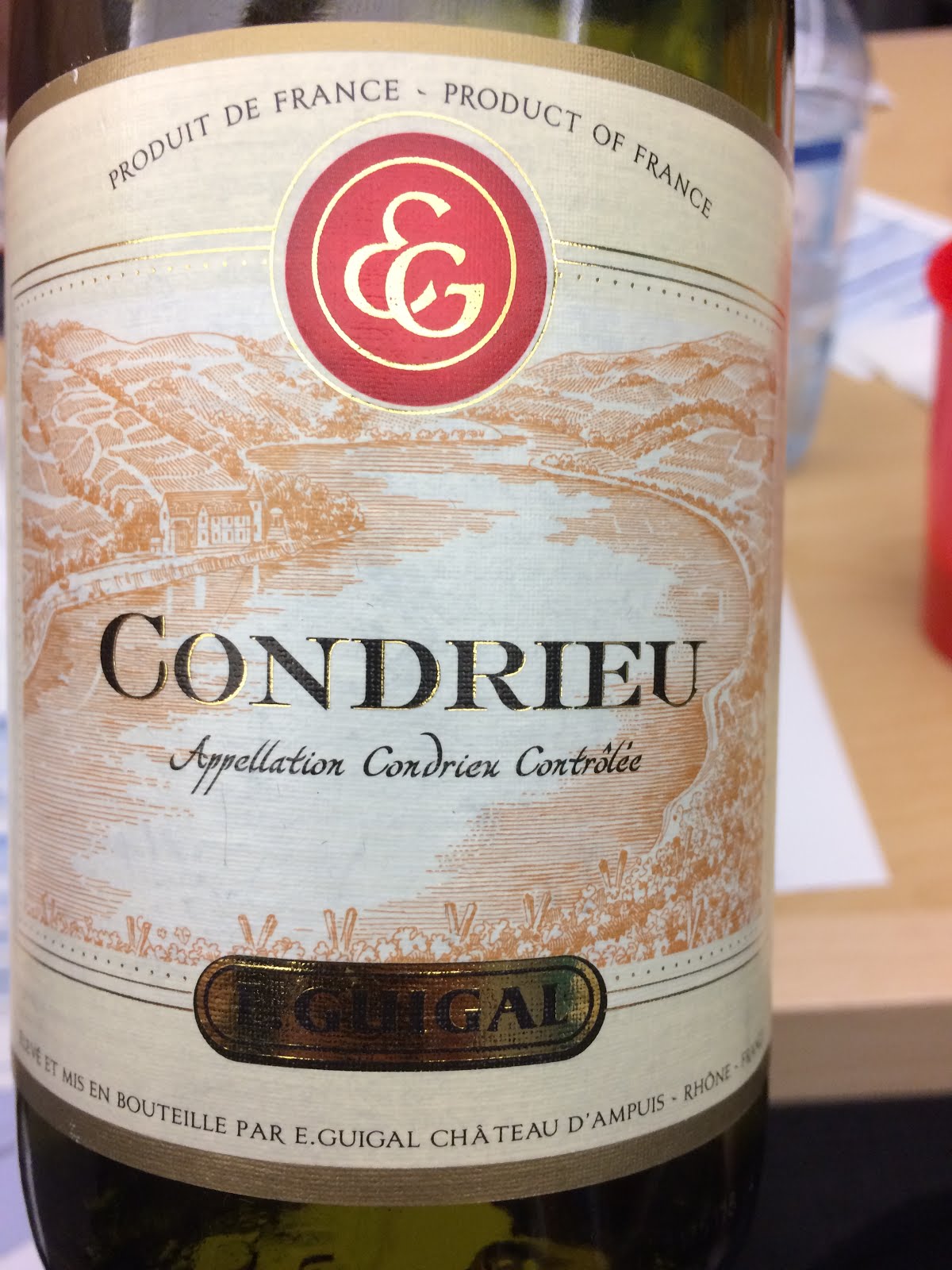
The Viognier we tried was medium lemon, had pronounced floral, apple and stone fruit aromas, some additional apple and toasty flavours on the palate, and had medium acidity, full body, and a medium plus finish.  This was a Condrieu made by E. Guigal which was rated at Very Good and cost $82. 

Those were the whites that we tried that night - next come the reds!


Time to Taste an Albariño from Catalonia, Spain!

  Today we're drinking an Albariño — but there's an interesting twist. This 2024 Raimat Albariño doesn't come from the cool, Atl...