Showing posts with label chenin blanc. Show all posts

Sunday, December 9, 2018

Final Thoughts Before the Big WSET3 Exam - Wines from Australia, New Zealand, and South Africa - WSET 3.12, 13 and 14

Taking a Beaujolais Nouveau break between studying.

I've been so busy studying the last few weeks that I'm a bit behind. My exam is on Wednesday - two blind tastings, 50 multiple choice, and 4 essay questions.

And, no, I don't think I'm ready.

But we shall see, soon enough!

The last two weeks were a bit of a whirlwind of mock blind tastings, mock questions and looking at a variety of wines. Last week was Port, Sherry and Fortified Muscats while the week before was Sparkling. They were interesting and I did try some good wines but we tended to rush the actual tastings too much to allow for time to practice. I may cover some of those wines down the road but not right now.

This entry, I want to cover the last actual wine class - Australia, New Zealand and South Africa.


But first... we tried a simple red for the blind tasting that night - a 2018 Georges Du Boeuf Beaujolais-Villages Nouveau ($20). I have to say that I really did enjoy this slurping wine made from Gamay. It was great to taste the bubble gum, cinnamon, and banana that is characteristic of carbonic fermentation - that's when the fermentation vessel is kept oxygen free and the grapes start to ferment from their insides. They split open and then the whole mess is pressed and continues to ferment until ready. Tannins? Nope! Structure? Nope! Super easy drinking? Yup!


South Africa has some very hot climates but thanks to cooling currents from the ocean and higher altitudes, they also have a lot of wine production. One of the biggest grapes is Chenin Blanc which can be sweet or dry. The one we tried was a 2017 Cape of Good Hope Van Lill and Visser Chenin Blanc ($36). This youthful wine (and that was tricky - I thought it might age) had notes of grass, lemon, vanilla, toast an green apple. It was a dry wine with a long finish and high acid (characteristic of Chenin Blancs) and was rated as Very Good.
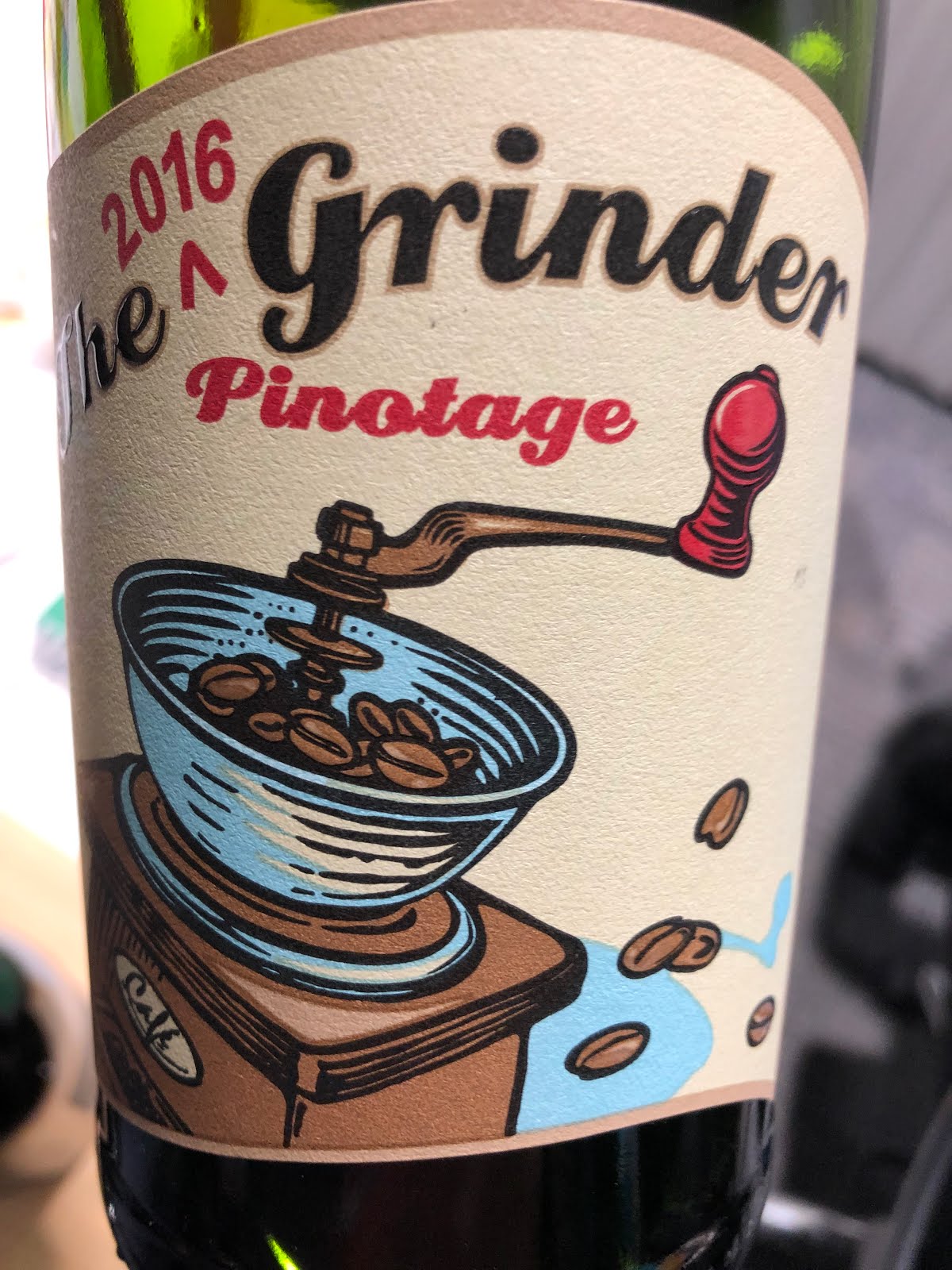

The other South African wine we had was their signature grape, Pinotage. Someone, a bunch of years ago, decide that, since it was too hot for Pinot Noir in South Africa, they should cross it with a hardier grape - say, Cinsault (also called Hermitage in South Africa).  They came up with what some call a franken-wine, Pinotage. It's got a bad rap - as many don't have the best taste - however, I have tasted a wonderful one in the Okanagan made my Stoneboat - but that's another story. The one we tried was a 2016 The Grinder Pinotage ($16). I would rather have another bottle of Beaujolais Nouveau, thanks. This did have a lot of aromas - cranberry, cherry, chocolate, coffee, gamey - and on the palate the coffee and blueberry tastes were rather intense. With high alcohol, it had medium acid, intensity, and body with a pretty short finish. I didn't mind it so much during my WSET 2 but now, it was just Acceptable.

A wine down under from a land down under.


Actually, Australia produces scads of wine and most of it is from the South East part. It's a hot country but there are lots of cool breezes to moderate the areas that grow wines that need moderating. Our first wine from Australia was a 2014 Mitchell Clare Valley Riesling. On the nose, it was, "WOW PETROL!" There was also rubber, pear, green apple and wet stone but I had a hard time getting past that petrol smell. On the palate, it was dry like most Australian Rieslings and had apple and spice - probably from lees stirring - as well as high acid, high alcohol, a medium finish, and a pronounced intensity of flavours. That petrol smell is a great indication that this is a developing wine tat could age a long time. It was rated as Very Good.


We had a Very Good Hunter Valley Semillon - which is an interesting wine. It is a rather neutral wine in its youth but develops amazing flavours of toast, nuts and honey. The one we had was a 2011 Tyrrell's Vat 1 ($68). I struggled with the notes on this - but there were notes of grapefruit, peach and brioche as well as some toast and honey. It had medium alcohol and medium plus intensity on the palate as well as high alcohol and a fairly strong finish. This wine could age for 10, 20, even 30 more years!


I do like a tasty Cab Sauv, as you may or may not have noticed from my blog. I love Bordeaux wines and I love Meritage blends from the Okanagan and I love big California Cab Sauvs. Well, add to that ones from Coonawara in Australia which may be hot but, man, they make great wine. We had a 2014 Yalumba "The Menzies" Coonawara Cab Sauv ($99). It was wonderful! On the nose was black currant, black plum, smoke, barnyard, black pepper, menthol and eucalyptus. On the palate, there was also spice and tobacco. This dry wine had strong tannins, high acid, high alcohol, almost full body, a medium plus finish and a pronounced intensity. It could definitely age for awhile and it was rated Outstanding - maybe a good splurge?


Australia has been famous for it's big, bold Shiraz wines - and so we tried a 2015 Glaetzer "The Bishop" Shiraz from the warm Barossa Valley ($51). This had some good aromas including blueberry, vanilla, pepper and black plum as well as an overall jammy taste. I don't mind a little jam but it does take it away from the "Outstanding" category. On the palate there was blueberry and charred wood as well as medium plus tannins and acidity. This wine was fine to age with its long  finish and strong intensity of flavours and was rated as Very Good. 

There are also more restrained Shiraz wines form Australia but we didn't try one  in class. 


Finally, we went to New Zealand. It's not a huge place but they make a heckuva lot of wine. On the cooler South Island is where Marlborough is - and that means, Sauvignon Blanc, New Zealand's most famous grape. We tried a 2017 Cloudy Bay Sauvignon Blanc ($36).  This wine had lots of green fruit, asparagus, grapefruit, and lemon on the nose with similar tastes on the palate. It had high acid, medium body, medium alcohol, and a pronounced intensity of flavour as well as a longish finish. This was a youthful wine and, like most Sauvignon Blancs, didn't have any ageing potential but was still a Very Good wine. 


Also from Marlborough, we tried a 2017 Villa Maria Pinot Gris ($22) which was OK. I also struggled with this one a bit but there were notes of peach, apricot, lemon, honey and floral aromas. This was an off dry wine and had high acidity, medium alcohol, as well as medium intensity and finish. Not suitable for ageing, this wine was rated as just Good. 


Finally, we had a wine, also from the South Island, but away from the effects of the ocean. From Central Otago we had a 2016 Matua Pinot Noir ($42 - pretty label award). This was a pretty standard Pinot Noir with red cherry, cranberry, and strawberry notes. It was mostly medium although it had a longish finish. Overall this was just a Good wine - and definitely not worth the price. 

Well, that's it for my WSET 3 classes. All that's left is the test. I have been studying hard and have these things to say on the three parts. 

The blind wine tasting: This all depends on my palate - some classes I have been bang on and some I have been right off. I need to focus on the aromas and tastes rather than trying to jump to conclusions and try to figure out the varietal. 

Multiple choice: I think this will be my strongest part. I have gone over the book many times as well as flashcards from me, my son-in-law Dan, and online cards. I have a very good general knowledge of wines of the world. 

Essay questions: This is my big worry. Even doing the few practice ones online, I find that I can't always think of everything that a question asks - and sometimes I draw a blank. I spent time today doing comparative analysis of the same grapes from different countries so I am hoping that will help me study for the last few days. 

I keep remembering what my classmate, Sarah, said during our tasting group and, again during last week's class - at the end of the day, we have learned so much about wine, tasted some fantastic wine, and met some wonderful people. 

But, damn it, I really want to pass!

Wish me luck...


Sunday, December 2, 2018

Come Together ... Right Now. ... Over Wine...

Red wines from our tasting nigh

I'm actually a bit behind in my WSET blog but I had such an enjoyable time this week, I thought I'd blog about a recent evening.

I was invited to a wine tasting evening with some of the people from my WSET class. Here's what comes to mind:

As the big test date looms nearer (less than two weeks), I have become more and more focussed on memorizing facts, practising questions, making charts and maps, and recording myself talking about important information and then playing it back.

Thursday night was a big break from that - and a reality check. Wine is not just about learning and memorizing information - it is about the social aspects of getting together with people, having a few drinks, talking, laughing and enjoying each others' company. Yes, we tasted and talked about the wines and commiserated about our mutual trepidations of the upcoming test but we also talked about each others' work and lives and history - the wine was a part of the evening but it was not the only part of the evening.

To paraphrase one member of the wine group, at the end of the day, we have learned so much about wine, have been exposed to so many wines, have a much improved palette and nose, and have made friends with a bunch of new people.  I want to do well on the test, but I've already had a rewarding experience, regardless of the result.

A great group of wine-experts-in-training.

There were four others in the group; Sarah, who sits beside me during my WSET class and is originally from London, Greg and Marilyn, also in my class, who are part of the family that owns Deep Roots Winery in Naramata, and Andrew, a very knowledgable wine-o-phile who was able to procure our wines for the evening. I really enjoyed spending the evening with these people and also enjoyed sipping and discussing the wines.


The first wine was a bit of a treat. It was a 1994 (yes, I said, 1994!) Moulin Touchais Coteaux du Layon Chenin Blanc from the Loire Valley ($57 on Vivino). This was a highly acidic, intensely sweet wine with tastes of honey, candied apricot, orange zest, almonds, and some earthiness like mushrooms, probably from botrytis. This Chenin also had the distinctive aroma of lanolin or wet wool. It was an amazing wine to start with but, because I was driving, I ended up dumping some of it in my spit cup (ugh!). Definitely an Outstanding wine. I really have grown to enjoy sweeter wines like this because they are balanced with the strong acidity - as opposed to stick sweet wines I had when I was younger like Baby Duck or Calona White.


The first wine was a bit of a teaser and we just enjoyed it without doing a serious tasting. Our second wine was the first real taste. I sort of sat back and watched what others did during the first two tastings but spoke up more after that. I actually guessed (in my head, of course) that this wine was a Torrontes but never said anything - so much for showing off. This was a 2015 El Porvenir Laroum Torrontes from Cafayate which is in the Salta region of Chile ($30). This had aromas and tastes of citrus fruits like grapefruit and lemon as well as peach and apple. It also had non-fruit aromas of fresh grass and honeysuckle. This youthful wine was medium in intensity, acid, alcohol, body and length and was rated as a Good wine which was ready to drink but not suitable for ageing. And, to be fair, Andrew did help us narrow down the wine varietal before I made my amazing guess (that I kept to myself).


Next was another wine that I guessed correctly after Andrew's coaching, again, in my head (what a chicken!).  This was a 2017 Granbazan Albarino Etiqueta Ambar from Rias Baixas, Spain ($40). I really got pineapple on this wine as well as stone fruits like peach and apricot. Unfortunately, I got a bit of vanilla on this which means I was fooled as this wine did not have any oak on it. When I taste a white wine, I am always trying to taste if there is vanilla or toast on it which is a product of oak ageing - and I seem to find it far too often! There was a floral aroma as well of orange blossom that some of the other tasters got but that I missed. I struggle with floral aromas and I probably should find some of these flowers in the next 10 days before my test! This light bodied wine had medium plus acidity, medium plus intensity, medium alcohol and a medium plus finish. Seafood would be a wonderful accompaniment to this wine and, although it is not suitable for ageing, it is ready to drink and is Very Good.


Every now and then, there is a wine that is so recognizable that I can place it immediately. The bubble gum, banana, and red liquorice aromas are unmistakably a Beaujolais Nouveau - in this case a fresh 2018 Louis Max ($20). This is a low tannin, medium minus body wine that's not strong in intensity and does not have a long finish but it is FUN to drink! I really like this style of wine, even though it is not exactly loved by some wine experts. It is easy to slurp back and is friendly enough to go with food that is really casual. Andrew completed his WSET test earlier this week and a Beaujolais Nouveau was the red wine for the blind tasting. I would be so happy if that were the case for our test! This wine is definitely ready to drink and should not be aged. It was a Good wine.


The next wine was a tasty one - a 2015 Klinker Brick Old Vines Zinfandel from Lodi, California ($40). I actually guessed this one too, but, wonder of wonders, I actually said something!  This had aromas of black currant, blackberry, blueberry, pepper, tobacco, cedar and jam. I thought there were some tertiary aromas of mushroom but that didn't seem to be the consensus of the group. I looked on Vivino later and some people did think there was some tertiary aromas like leather so I really am not sure if this was developing or not. This full bodied, high alcohol wine had a medium plus intensity of flavours and a medium plus finish and deserved a Very Good rating. Could you age it? I thought you could but who knows?


The last 'official' tasting wine was a 2014 Chateau de Jau Jaujau Cote de Roussillon red wine blend from the Languedoc Roussillon region of France ($48). We didn't know this was a blend which showed up in our differing notes. Some of us tasted black fruits and some red fruits and some both. On the nose, I found red plum, blueberry, and blackberry as well as black currant leaf, and cedar. This wine had medium plus body, a medium plus finish, and a medium intensity of flavours. A Very Good wine, it was a blend of Syrah, Grenach and Mourvedre. It was suitable for ageing - but was a bit pricey.


Greg and Marilyn brought a wonderful wine for our final, informal tasting. It was a 2014 Deep Roots Naramata Syrah (I think Greg said it was around $40 when released but there's none left now!).  I was asked, earlier in the evening, what my favourite wine was - I really do like Bordeaux so I went with that initially - but, having this wine, I was reminded that Syrah is another one of my favourite wines - especially Syrah done right - which this was. There were aromas and tastes of blackberry, blueberry, and black plum as well as smoke, tobacco, and a bit of leather. There was also some pepper on the nose. This wine was lovely - full bodied, strong intensity of flavours, and a wonderful long finish. I would rate this Syrah as Outsanding and could probably age for a few more years.

As we sat around and chatted and sipped from the remnants of wine, I reflected on how enjoyable an evening I had. We made some progress on our tasting and we discussed some of the more frightening aspects of our looming test but, by far, the most important thing was a group of people coming together over a common interest and having a great time doing it.

Cheers!


Friday, October 5, 2018

WTF! Wine Tasting Fiasco! WSET 3.5


This week's class marks the one third point in our course. I have been feeling pretty good about my tasting ability.

Until this week....

Our first wine region was the Loire valley. This is a big area that stretches from the ocean (maritime climate) to the centre of France (continental climate). The main grapes are pretty easy to remember. 3 blancs and a franc - Sauvignon Blanc, Chenin Blanc, Melon Blanc (or Muscadet) and Cabernet Franc. Some of the famous areas in the Loire include Chinon (Cab Franc), Muscadet and Vouvray Chenin Blanc).  There's also two really famous Sauvignon Blanc regions, Sancerre and Pouilly-Fumé.  A great deal for Sauv Blanc is in Menetou-Salon which has great wine but not the same expensive price.

Our first wines were the three whites. Unfortunately, I had a really difficult time figuring out which was which. For example, I thought the Sauv Blanc was Chenin Blanc until I tasted what I thought was Sauv Blanc - and it was sweet! Threw me off completely!

Oh well, here's the wines:


Our first was a wine that had gooseberry, flint, stone, lemon and grass on the nose. It was definitely a youthful wine that also had apple and pear on the palate. It was a 2017 Domaine Delaporte Chavignol Blanc ($38). This wine had high acidity, medium alcohol, and medium (+) intensity of flavour. We rated this wine as Very Good and was a 'drink now' wine. I initially thought it was the Melon Blanc.


The second of the trio was a 2017 Domaine de la Pepiere  Muscadet Sevre et Maine ($26) which is the best of the Muscadets. This Melon Blanc had peach, apricot, melon (ha! melon for a Melon Blanc!), lemon peel and a bit of grassiness on the nose with some yogurt flavours from being on the lees on the palate. Despite the time on the lees, I felt that although this wine was balanced and complex, it did not have a particularly long finish and was not all that intense so was rated as merely Good. This wine is good to drink now and is not suitable for ageing.  Unhappily, I thought this was initially a Chenin Blanc.


The final wine of my three initial errors was a 2016 Maison Darragon Hautes des Ruettes Vouvray made from Chenin Blanc ($28). By the way, if it says Vouvray on the label, it has to be Chenin Blanc. I really enjoyed this one as it had pronounced intensity and something that I had a hard time defining, on the nose. The smell was wet wool which is textbook for a Chenin Blanc. There were also aromas and tastes of ripe apple, honeysuckle, honeydew, and honey. It was a balanced wine that was pretty intense, complex, and had a fairly long finish. I would put it between Very Good and Outstanding. When I first smelled this one, I thought it was a Sauvignon Blanc because of the funky smell, By the way, if you're ever in the Okanagan, Road 13 makes an amazing Chenin Blanc sparkler.

As you can see, the first three wines did not go well. I fared better, however, with the next two.

Moving East and South from the Loire valley, we ended up in Burgundy, home to the world's most expensive wines. In Burgundy, they make Pinot Noir and Chardonnay and that's about it. The north part does mainly Pinot Noir and the south part does mainly Chardonnay, although there are exceptions. Beaujolais is actually considered part of Burgundy but it's such a different kind of region, I have separated it out.

The first two wines were Chardonnay wines. Chardonnay is made from such famous places as Chablis, Mersault, Puligny-Montrachet and Chassage-Montrachet. I was able to figure out which was from Chablis and which was from the Cote de Beaunne - thank goodness something went right this week!


The first of these wines was a 2017 Jean-Paul and Benoit Droin Chablis ($58).  This had tastes of apple, grapefruit, lemon, butter and stone and was a high acid, bone dry wine. It was balanced, had complexity and was fairly intense but lacked a long finish so we gave it a Very Good rating (and a pat on the back for my first correct wine of the night). Drink this one now as it is not suitable for ageing!


The second wine was heaven! This one was a 2014 Chassagne- Montrachet ($131) and is a Monopole wine which means that this is one that the negociant produces from their own vineyards and is their flagship wine. There was a lot of different fruit going on here but the best was the secondary and tertiary characteristics such as vanilla, butter, roasted nuts, mushroom and popcorn. It had all the hallmarks of an Outstanding wine and was one that you could drink now but wold also really benefit from ageing.

Staying in Burgundy, we then looked at some Pinot Noir. There are many different houses that make first rate Pinot Noir including Gevrey-Chambertin, Nuits St. Georges, and the incredible but incredibly expensive, Pinot Noir. Domaine Romanee Conte which is a winery that demands some of highest prices for a bottle of wine anywhere.

Unfortunately, I was back to my old tricks again and mixed these up!


The first was a 2015 Joseph Faively Bourgogne Pinot Noir ($32). This had a fair bit going on including red plum, cranberry, cedar, smoke, and red cherries. On the palate, there was a pronounced intensity of flavours. It met some of the criteria for the assessment of quality and was rated Good.


The other Pinot Noir was a 2015 Domaine Daniel Rion et Fils Premier Cru from Nuits St. George ($100). This wine also had some great fruit on it including red plum, raspberry, cranberry, strawberry, and something vegetal - mushroom? - as well as strong tannins. This wine was less austere than the first one (which is maybe why we guessed wrong) and has some wonderful fruit flavours. Despite the age on it already, it would definitely benefit from ageing. It was rated Very Good - bordering on Outstanding.

I was on more solid ground for the last two wines. One was from the Loire - from Chinon - so a Cab Franc - and one was from Beaujolais - so a Gamay Noir. Beaujolais is one of those wines (like Pinot Noir) that's a great one to order if everyone at a restaurant orders something different. There's also Beaujolais Nouveau which is released this year on November 15th. It is a super light, bubble gummy wine (from carbonic maceration) and is supposed to be lots of fun - I've never had a Beaujolais Nouveau so I will definitely try it out next month. 


The Beaujolais that we did have was a 2016 Close de Roilette from Fleurie ($30), one of the ten crus of Beaujolais. It had flavours of stewed fruit, black cherry, bubble gum, and a bit of pepper. There was medium tannins, alcohol, and intensity with maybe a bit higher than medium acidity, It was very good but should be consumed now.

Courtesy BK Wine Photography
Fun fact - most vines in Beaujolais are trained in the gobelet style where the spurs are pushed up and tied together - sort of like braiding your hair and tying the braids together on the top of your head. 


The final wine was a 2016 Bernard Baudry Les Granges Chinon from the Loire valley ($27). It had flavours and aromas of black currant, red plum, eucalyptus, and smoke. This wine was high in acid and in tannins and had some cedar on it as well that meant it could age. It wasn't all that balanced and the length was OK so the question would be, would you bother ageing it as it was only a Good wine? 

Good question.

And so, my evening ended with me mis-identifying 5 of the 9 wines and missing out on a variety of aromas - or just getting them wrong. I will definitely have to refine my palate over the next few weeks. 

Will Taste Feverishly.


Monday, June 12, 2017

Sweet Barrel-O-Wine! WSET class #7 - Part 2


Hmm - it seems that Class #7 has a Neil Diamond focus; first it was Cracklin' Rose (well, Cracklin' Champagne ) and then Sweet Barrel-O-Wine (rhymes with Sweet Caroline?).

The second half of the class looked at sweet wines - not my favourite, but important, all the same.

First, the lesson. There are a few ways that you can make wines sweet.

Interrupting the fermentation is the first one we looked at. This can be done by removing the yeast, fortifying the wine (like adding sulphur dioxide or alcohol) which is what they do to Port and to fortified muscats like Muscat de Beams de Venise.

The second way to sweeten wine is to add a sweet component to the blend. One way is to add unfermented grape juice (süssreserve), like in a German liebfraumilch, but the juice has to be made of the same type of grape as the wine. The second way is to add sweet wine. One famous one to add is called PX with stands for Pedro Ximenez which is a super sweet, almost honey-like wine that is used for sweet Sherry.

The last way to sweeten wine is to concentrate the sugars in the grapes. This is done by using dry grapes, either on the vine, like late harvest wines (e.g. spätlese) or letting the grapes dry on racks, etc., until they are like raisins which concentrates the flavours in wines such as Recioto (made form Corvina grape) or PX - the sweetest wine of the world. Another way to do this is by using noble rot  where grapes are in a damp area and develop a specific type of mould. The mould attack the grape and causes it to shrivel. This has to be done with grapes that are highly acidic and thinned skin.  The final way to concentrate sugars is freezing the grapes to make Ice Wine!


Our first wine was from Pantelleria which is an island that is south of Sicily. This wine (I believe it was a Recioto) was deep amber in colour and had medium plus intensity with aromas of raisin, fig, prune and a bit of floral. On the palate, it was nutty, raisin, vanilla, sultanas, and a jammy hint. It was sweet (almost lucsious) had medium plus acidity, full body, and a medium plus finish. This wine was rated as Very Good and was a Passito di Pantelleria made by Donna Fugato ($40 for 375 ml).


The second was a Noble Rot wine. It was from Vouvray (which is in the Loire region) and was made with Chenin Blanc.The colour was medium gold and it had a medium plus intensity on the nose, with aromas of raisin, earth, and lots of stone fruit. On the palate, there was jam, plum, fig, fresh fruit and, again, an earthiness. It was a sweet wine with high acidity, medium plus body and a medium plus finish. This 2005 wine from Nectar Moncontour was also rated as Very Good and cost $72 for 500 ml.


Next up was a Tokaji wine - our instructor's favourite wine! It was medium gold in colour and had medium intensity on the nose with aromas of marmalade, peach, apricot and tropical fruits like mango. On the palate, it had flavours of tech, pineapple and apricot jam with an earth flavour. It was a sweet wine with high acidity, medium body and a long finish. Tokaji wines are rated on sweetness by puttanyos which range from 3 to 6 - this one had 5 puttonyos. This 2009 Tokaji from Chateau Dereszla had 11.5% alcohol,  cost $50, and pairs well with veal and chicken.


The final wine was soooo sweet. If you like sweet wines, this is the one. It was medium gold in colour, and had a medium plus intensity on the nose with aromas of raisin, lychee and pineapple. It was a lusciously sweet wine (the level above sweet is officially called 'luscious') and had tastes of pineapple, raisin and apricot. There was high acidity, full body, and a long finish with 7.5% alcohol. This was a Mission Hill Reseve Riesling Icewine from 2014. It pairs well with cheese and costs $56 for 375 ml.

I definitely learned a lot about both sparkling and sweet wines during this class of my WSET. I was able to pinpoint the tastes that makes sparkling Champagne so desirable and I have an understanding of how sweet wines can really vary.

Our next class deals with Port and Sherry - two wines that I am not all that familiar with. Time for some more learning!

Wednesday, May 24, 2017

Riesling Evening with some Blanc Plonk - WSET Class 5 - Part 1

It was a lovely day on Tuesday.

I was able to combine two of my favourite things - riding my scooter and drinking wine!

It was a nice, sunny day and I hopped on my scooter and headed out to my WSET class in Vancouver. I even got there about a half an hour early and I was able to try a new restaurant, Pokérrito. This restaurant serves Hawaiian poké - sort of a Hawaiian version of sushi - on rice, salad or in a burrito. 

I really enjoyed poké when I was in Maui and was very excited to see it arrive here in recent weeks. When I entered the restaurant - sort of a take out place with a couple of tables - I was a bit concerned about the 12 people in front of me but the line went fast. I ended up gobbling half of the rice and accompanying wonderful ingredients before class started. 

This was class number 5 - time is definitely going far too rapidly! 

We started off with Riesling a wine that can range from bone dry all the way to sugar-sweet. The best ice wine in BC, as a matter of fact, is made from Riesling. Riesling is also one of the few white grapes that lends itself to ageing. 

Most Riesling comes from Germany. There's Mosel that has the lightest and most delicate, somewhat sweet, Rieslings grown on steep slopes in places like Piesport and Bernkastel. Then there's Rheingau which is a smaller region that makes drier wines where all the grapes only grow on the north side of the river to catch the sun. Next up is Pfalz which has off dry, medium body wines in places like Forst and Deidesheim. Finally there's Rheinhessen which is the largest area which is flat and produces the cheaper Rieslings. 

The Germans have Qualitatswein which is the first level of their better wines and then they have Pradikatswein which is their higher quality wine. I have to learn this, so you might as well, too! Within the Pradikatswein category, there are grape quality levels going from almost dry to very sweet. They are kabinett, spätlese, auslese, beerenauslese, trockenbeerenauslese, and eiswien.

In Alsace,  the French label the wines with the grape varietal but also have the better wines from Villages and then from Grand Cru. They are usually dry or sweet wines. Other areas include Austria, New Zealand, and Australia where Riesling smells like a lime popsicle - and petrol!

Our first three wines were all Riesling and we had to blind taste them. 


The first wine we tried was from Alsace and sort of replaced our wine that had cork taint during the first night. It was clear, pale, lemon, with a pronounced nose, lots of stone fruit and apple, a dry wine with high acidity, medium body and a medium minus finish. It was rated Good. It was made by Trimbach and dost $36. 


The second was a Kabintett level German wine that was medium lemon, with medium intensity on the nose and had some stone fruit (nectarine, peach, apricot) as well as petrol and lychee. It was an off dry wine with high acidity and a medium finish It was a 2014 Weingut Max Ferd Richter from Mosel  that was rated Good and cost $40 and had a whopping 9% alcohol. 


The last Riesling was Auslese - so it was pretty sweet!  It was pale lemon, medium intensity on the nose, lots of stone fruit (apricot, peach, pear) as well as a hint of lime. It was medium in sweetness, had high acidity, medium body and a medium finish. This wine was a giant seven and a half percent alcohol and was a 2011 Joh. Jos. Prüm Bernkasteler Badstube Auslese that was rated Good and cost $85.

After the Rieslings, we looked at some different white grapes that are all grown in France. 

First was Chenin Blanc which is the grape grown in Vouvray. It is famous for its 'wet wool' or funky smell and is also South Africa's most planted grape. 


The wine we tried was pale lemon with medium intensity on the nose, a lot of stone fruit, off dry in taste with high acidity and a medium body. It had a bit of a funky taste (apparently - I couldn't sense it, though) and a medium finish. It was a 2015 Vouvray made by Baron Bernard (couldn't find a web site), was rated Very Good, and cost $28.

The next grape was Melon Blanc, grown in Muscadet. It is a neutral grapeshot is not aromatic and lends itself to sur lie - absorbing dead yeast cells - for 6 months to a year.


This Clos de Briords old vines Muscadet was pale lemon, with a medium minus nose, and had apple, peach, floral aromas, and tastes of lemon, peachy and apricot. It's smokiness was complimented by light body and a medium plus finish. This wine was rated at Very Good and cost $30. 

The last was Viognier which is a big sugar, full bodied wine with low acid and none of the spiciness of, say, a Gerwurztraminer. 


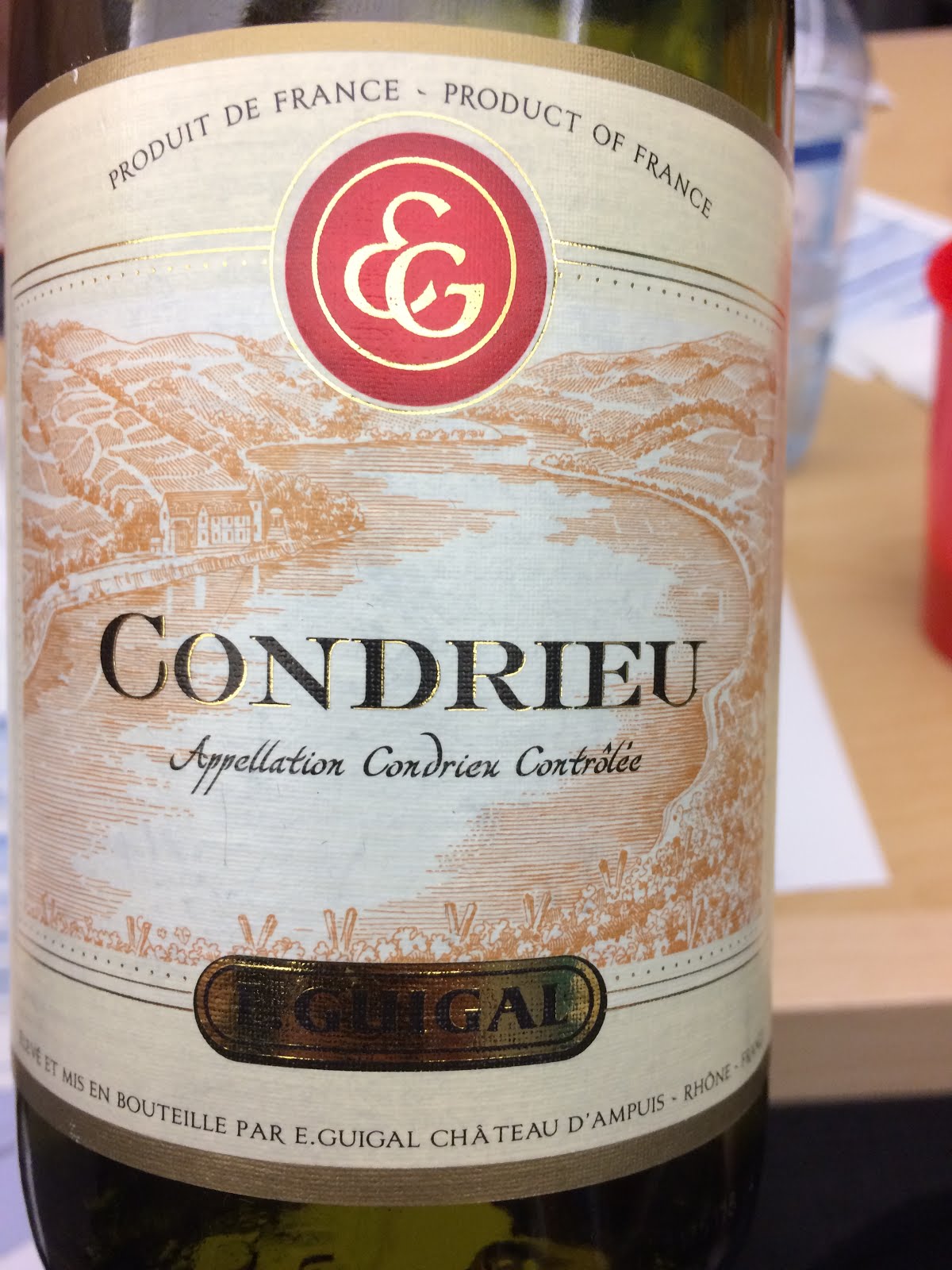
The Viognier we tried was medium lemon, had pronounced floral, apple and stone fruit aromas, some additional apple and toasty flavours on the palate, and had medium acidity, full body, and a medium plus finish.  This was a Condrieu made by E. Guigal which was rated at Very Good and cost $82. 

Those were the whites that we tried that night - next come the reds!


Monday, May 15, 2017

Mega Tasting at Road 13 - Okanagan Spring Wine Festival Part 2

After we left Hester Creek, our several bottles of wine clinking in the cardboard case, we loaded up the car, piled in, and headed for Road 13. This is a winery I have been to before and have enjoyed many different bottles of their wine over the years. One of our good friends really loved the wine and, in fact, had it at their daughter's wedding a few years ago.

My brother-in-law is a member of Road 13's wine club and needed his spring case picked up so we were more than happy to do so. We entered the wine shop and explained our purpose for being there. We also mentioned that we would like a wine tasting. When faced with either the $5 each wine tasting or the $15 each wine tasting, we chose the former - but then my brilliant daughter piped up, "I am in the industry!"

Like a skeleton key, this opened up the tasting door. Since we were picking up a wine club member's wine and since Cait was in the industry, we were able to have a complimentary Premium tasting for three in the Lounge.


First, the whites.

We started off with a Champagne style Chenin Blanc. We were all very impressed by the clean taste and the appealing flavours of this bubbly - in fact, my wife insisted we buy a magnum. Next was the Chardonnay which was good but a bit too oaky for my tastes. Then we tried the Honest John White ($18)  which was a winner - a great BBQ wine! We ended up with a bottle of that one. Next, the 2014 Stemwinder ($18) which was a mix of Chardonnay, Viognier, Marsanne and Roussanne grapes. It was also another good BBQ wine. There was also their Rosé ($18), which has always been one of my favourites with its off dry taste and patio friendly flavours. This is mostly Merlot with Pinot Noir, Gamay Noir and some other grapes in smaller amounts.


Finally, the Roussanne ($29). This is a grape that is not often seen by itself. My daughter went crazy for this one but I wasn't as impressed. It wasn't awful but just wasn't my cup of tea - or glass of wine.

Onto the reds.


First was Honest John's Red ($20). I've always liked this one a lot - and now I like it more! It was just as approachable as before but has some extra richness thanks to more reliance on Gamay Noir, giving it a Beaujolais feel. Really nice change. Then was the 2014 Seventy-Four K ($25) which was also a very drinkable, enjoyable blend of reds. The 2013 Jackpot Petit Verdot ($75) was a very nice wine with good complexity but I didn't really want to spend the price for it. 

Under the new Similkameen Collective label, there were three very nice wines which all could use some ageing. I was tempted by all of them including the 2013 Consensus (Meritage blend at $60), the 2013 GSM (GSM = Grenache, Syrah, and Merlot - very tempted at $50), and the 2014 Syrah/Viognier ($45). These are all Rhône type wines and apparently foreshadow a shift in how Road 13 is going to do its premium blends. However, the one the I absolutely fell for was 2012 Fifth Element ($49). This is, apparently again, one of the last of these Bordeaux style wines as the winery shifts away from this style. I think it's too bad as it is a rich, complex, long finishing wine that I am looking forward to cracking open in the near future (I bought two bottles).

I was really impressed by the Premium tasting - it might have even been worth the $15 if we'd had to pay it! We basically tried every single wine that they still had available! It was a great tasting. At the start, we were given the tasting by Mick, the winemaker, something that I doubt would happen in the summer, and then we were switched over to a personable young guy who was working towards his law degree. Both were very knowledgable and did a great job of informing us about the wines. A fantastic time!

Even though that was enough - the day was not over yet! Our last stop of the day was dinner and a tour at Mission Hill!


Time to Taste an Albariño from Catalonia, Spain!

  Today we're drinking an Albariño — but there's an interesting twist. This 2024 Raimat Albariño doesn't come from the cool, Atl...