Showing posts with label australia. Show all posts

Tuesday, June 11, 2019

Tasty Reds from Australia and Chile - Both Under $20!

Before wine tasting, we always paint plein air. This week was Kanaka Park in Maple Ridge.

Almost twenty years ago I went on a teacher exchange, with my family, for a year. Being Canadian, we had several countries like the US as an option as well as English speaking members of the Commonwealth. We focussed on those Commonwealth countries as we searched for a great place to live for a year.

We eventually settled on the UK - where we applied for the south of England but ended up going to the north of Scotland - but one of the countries we seriously considered was Australia.

There are so many things that are attractive in Australia;  people, sights, animals, food, and culture, to name a few. However, there are a lot of things that can kill you; spiders, snakes, jellyfish, giant centipedes, crocodiles, sharks, snails, and stonefish. Looking at our 7 and 10 year old children, at the time, we figured that we didn't want to lose either of them so we opted against Australia.

Even during that time in 2000, Australia had already garnered a reputation for excellent wines. The way to really test that out, of course, is in a wine tasting. The other wine we tried was from another place  I haven't been, Chile.


Starting with the wine from Chile, we had a 2017 Undurraga Sibaris Gran Reserva Carmenere ($18.50). On the nose I noticed black currant, pepper, black plum, black cherry and a hint of mushroom. On the palate, the same fruits were there with the addition of strawberry. It was a touch astringent, which I think was because it had pretty high acidity. It was a dry wine that had medium tannins and a medium finish. It was excellent with the cheese and crackers we were having (brie and Boursin) so  that is why I felt it would be a good match with food. My guess on this was that it was a Syrah from Languedoc. Oh well! This was a Good wine.


The second wine blew me away! It was a Quarisa Caravan Durif Petite Sirah from Australia ($15.99). Petite Sirah is the offspring of Syrah and another, near-extinct, grape. Durif is the grape's original name but was renamed when it was first imported to the states. As a warm climate grape, it loses a fair bit of acidity so isn't really a good wine to age.

But is it good to drink? Hell, ya!

This wine had aromas of pepper, pencil shavings (first time I've noticed that!), black plum, blackberry, and cassis.  On the palate there were additional flavours of pepper, leather and vanilla from oak. This had medium minus acidity, medium plus tannins, and quite a strong finish. This was nice on its own and would b e good with food as well. I think this is a steal for the price and may very well back up the truck so I can grab a load of this wine. I thought this was a GSM blend from Cote du Rhone - a village class, at least. Wrong again! I would rate this wine as Very Good.

I have been avoiding Australian wines of late as I have had too many overly bold reds that tends to turn me off, unless I am having a fatty steak. The Petite Sirah has definitely given me pause. I think it is worth delving into Aussie wines once again... just stay away from that Yellowtail!

Sunday, April 7, 2019

An Amazing Wine Tasting Evening with Friends

A group of friends in the midst of an amazing wine tasting.

WSET is not just for studying....

As I have alluded to before, people make great connections and friendships while doing the WSET course. We were all in it together, trying our best to pass the course, feeling the pressure of learning such a vast amount of information and feeling the pleasure of tasting wine together. 

But it finished in December!

Happily, the group that I have tasted with before - the friends that I have tasted with before - are continuing to get together. The first time, since our test, was a couple weeks ago when I was in France. 

The next time was just last Thursday.

Andrew was our host. He has taken both his WSET 3 and a comparable level of his CMS - Court of Master Sommeliers. He works at a restaurant but also works at a local independent liquor store and, therefore, can get a great deal on great wines!

Verity and her partner, Joey, were also in attendance. I took my WSET 3 with Verity - in fact, she related the story of our first class together - we had a champagne and some minor bubbles like Prosecco in a blind tasting. Both of us proudly announced that the Prosecco was the great wine, much to our chagrin! We both learned an awful lot more about wine since that first class. Verity also completed a comparable level of her CMS.

When I took my WSET, Sarah sat beside me every class - she was my WSET Buddy! It was great to see her at the tasting and reconnect with her once again.

A new person (for me), Steph, was working on the same level of CMS that Verity and Andrew had achieved. She is an actual Sommelier at a famous Vancouver restaurant! 

Finally, my buddy, Stewart, whom I have known since high school (when we used to drank a gallon bottle of Calona Medium White) came along as well.  Although he has not completed a formal wine course, Stew is well versed in the wine world (we've both come a very long way).


After everyone arrived, Andrew welcomed us with a glass of 2016 Crescent Hill Glennallyn Private Reserve Gewürztraminer from the Okanagan. As is common with this varietal, it was very aromatic and was a tasty, light way to start off our night. 

Andrew always does such a good job!

Our next wines were blind tastings. We had three whites and three reds.

Our first white was described by Steph, who spoke with such confidence that I was drawn in, hook. line and sinker, to what she thought the wines were. We tasted, and swirled, and spat. 


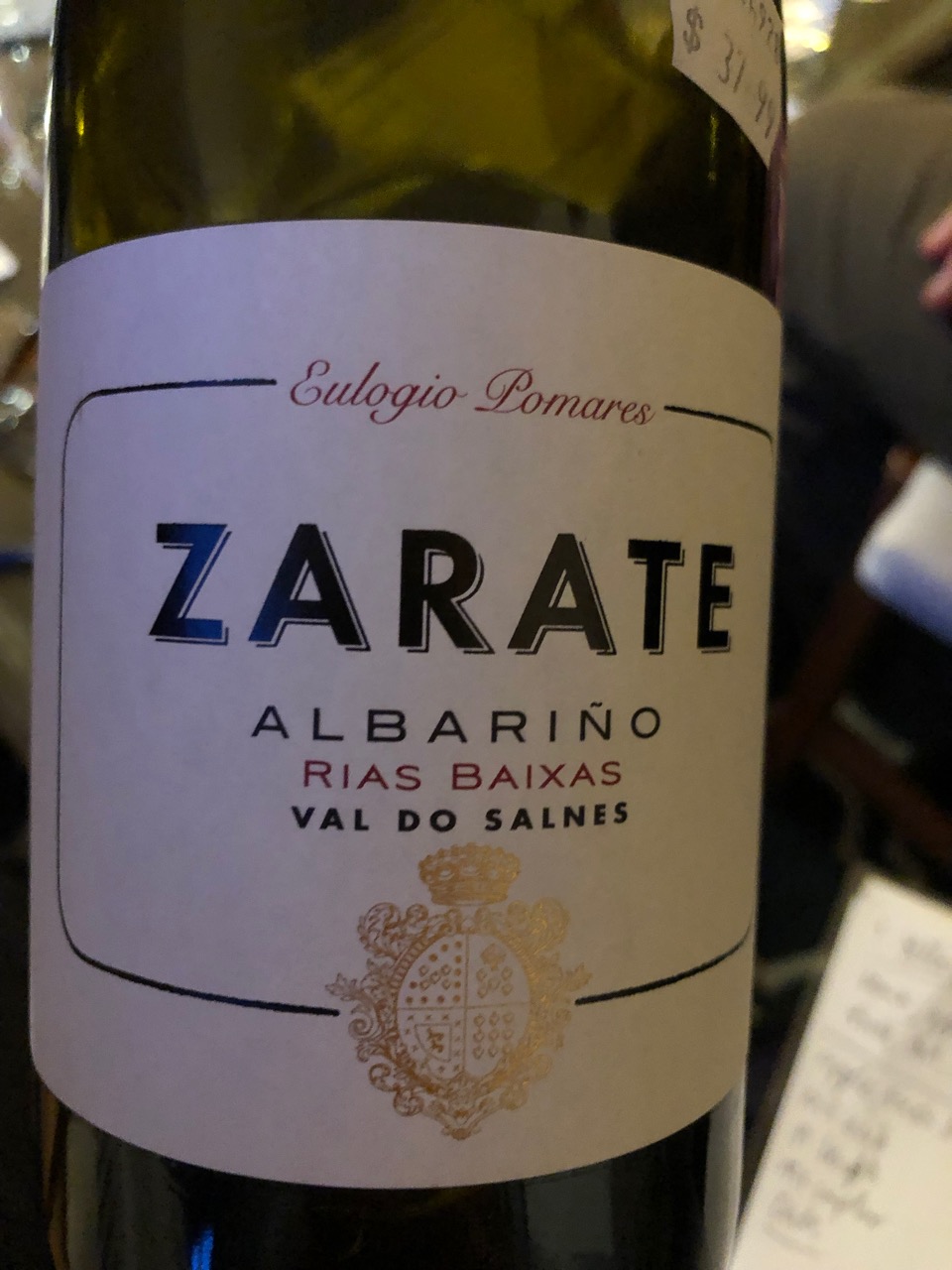
It was a Zarate Rias Baxas Albarino from Spain. It was not a strong wine and was not as full bodied as I thought it would be. 

Yellow, or lemon, in colour, this wine had aromas of lemon, apple, and had a minerality. These aromas were fresh, tart and ripe. On the palate, there were the same flavours - fresh or ripe apples, wet stone,  as well as medium plus acidity, medium length and medium complexity. There was also some oak on this wine.

As for all of the wines that we tasted, we all tried to come up with both the varietal and the place. Most people though this was a Chardonnay although some thought it was a Pinot Gris or something Italian. But we were all wrong. Albarino was just not on our radar! Overall, a Good wine.


Our next wine was another white and, this time, I nailed it. For me, petrol is an unmistakable aroma - and that means Riesling. Interestingly, unlike many of the petrol smelling Rieslings I have had in the past, this one was bone dry. This 2014  Howard Park Porongurup Riesling from Australia had additional aromas of rubber. pear, peach,. apple and a minerality. A complex nose with pronounced aromas.

On the palate, it was bone dry, as I said, with tastes of apple. It did not have the same mineral taste and was medium plus in alcohol and medium plus in acidity. This was a great dry Riesling - and I stated that to the group. Before the reveal I had also written down that I thought it was from Australia but hesitated to share that information. A Very Good to Outstanding wine.

Our final white was a real shocker. Verity described it as a 'giant in a sleeping bag' which means that it did not have a very pronounced aroma but when you got your nose close enough, there was an explosion of complex aromas. On the nose - and on the palate - were aromas like cloves, wood, popcorn, butter and vanilla. In fact, it smelled a little like a buttered popcorn Jelly Belly! It had medium acid, medium body and a very complex flavour.

Still, we didn't think it was all that fancy. We narrowed it down to Chardonnay but thought it was from California. You know, a big, oaky Chardonnay with lots of flavour.

Nope.


It was a Pouilly Fuiissé from the Maconnais region of Burgundy.  This 2014  Chateau Fuissé Le Clos Monopolé was not what we expected! It was probably the most expensive wine of the night, worth over $100. However, none of us found the elegance or refinement that we would expect from this kind of wine, although there was great complexity. I would rate this as Good to Very Good.

On to the reds!

Our first red of the night was a difficult one. Pale ruby in colour, it had aromas of mint and earth and a bit of an underbrush aroma. There were red fruits like cherry and raspberry as well as dried cranberry. On the palate, there were tastes of the same with the addition of some sort of leaf - like tomato leaf. It had medium plus acidity, medium minus tannins, and light bodied.


This Sangiovese wine was a 2015 Noelia Ricci Godenza Superiore from the Romagna area of Italy. It stumped us all. I thought it might be a cru Beaujolais although I couldn't detect the hallmarks of carbonic fermentation. There were some murmurings that it might be from Italy but no one had a strong feeling about that. Pinot Noir was another guess made by many of the group. It was certainly a surprise when the reveal came. This was a Very Good wine.


There next wine was probably my favourite. The 2015 Cannonball Merlot from Sonoma County had aromas of pepper, smoke, dark fruit such as plum and black berry,  jam, cedar and mushrooms. This wine had a pronounced intensity on its rather complex nose. On the palate was the same black, jammy fruits as well as some earthiness with medium acidity, medium plus tannins, and high alcohol. This wine had balance, complexity, length and intensity and I would rate this wine as Outstanding.  I first thought it was a Syrah, possibly from the Northern Rhone. My second guess was Merlot from California.


The final red for the night was another tricky one. The Chateau de Cherrière Bourgogne Pinot Noir was a very structured wine with medium plus acid and medium plus tannins, something I did not expect with a Pinot Noir. There were tastes and aromas of cedar, tobacco, farmyard, leather, mushroom, black fruit and black cherry. This was a real stumper as it had that Pinot Noir taste but such strong structure! I would rate this as Very Good.

One of the members of our group had something to celebrate so Andrew brought out a celebratory champagne style wine. The celebrant, Verity, then used a bread knife to sabre the wine! If you have a nice cold bottle of champagne (or other bubbly), you can use any kind of knife to open it. You simply slide the knife from the middle of the bottle up the seam of the bottle and, voila! The cork and some of the bottle will fly off the top!


Verity sabred a 1996 Summerhill Cipes Traditional Cuvée sparkling wine form the Okanagan ($80). I didn't do a formal tasting note at this point (we had finished the bottle leftovers at this point and were refraining from spitting or dumping) but I do recall that this was more than just a bready, yeasty tasting champagne. It had a beautiful golden colour. a nice fizz, and an exquisite taste that included a bit of a sherry.

A wonderful celebration to finish off a wonderful wine tasting evening!


Sunday, December 9, 2018

Final Thoughts Before the Big WSET3 Exam - Wines from Australia, New Zealand, and South Africa - WSET 3.12, 13 and 14

Taking a Beaujolais Nouveau break between studying.

I've been so busy studying the last few weeks that I'm a bit behind. My exam is on Wednesday - two blind tastings, 50 multiple choice, and 4 essay questions.

And, no, I don't think I'm ready.

But we shall see, soon enough!

The last two weeks were a bit of a whirlwind of mock blind tastings, mock questions and looking at a variety of wines. Last week was Port, Sherry and Fortified Muscats while the week before was Sparkling. They were interesting and I did try some good wines but we tended to rush the actual tastings too much to allow for time to practice. I may cover some of those wines down the road but not right now.

This entry, I want to cover the last actual wine class - Australia, New Zealand and South Africa.


But first... we tried a simple red for the blind tasting that night - a 2018 Georges Du Boeuf Beaujolais-Villages Nouveau ($20). I have to say that I really did enjoy this slurping wine made from Gamay. It was great to taste the bubble gum, cinnamon, and banana that is characteristic of carbonic fermentation - that's when the fermentation vessel is kept oxygen free and the grapes start to ferment from their insides. They split open and then the whole mess is pressed and continues to ferment until ready. Tannins? Nope! Structure? Nope! Super easy drinking? Yup!


South Africa has some very hot climates but thanks to cooling currents from the ocean and higher altitudes, they also have a lot of wine production. One of the biggest grapes is Chenin Blanc which can be sweet or dry. The one we tried was a 2017 Cape of Good Hope Van Lill and Visser Chenin Blanc ($36). This youthful wine (and that was tricky - I thought it might age) had notes of grass, lemon, vanilla, toast an green apple. It was a dry wine with a long finish and high acid (characteristic of Chenin Blancs) and was rated as Very Good.


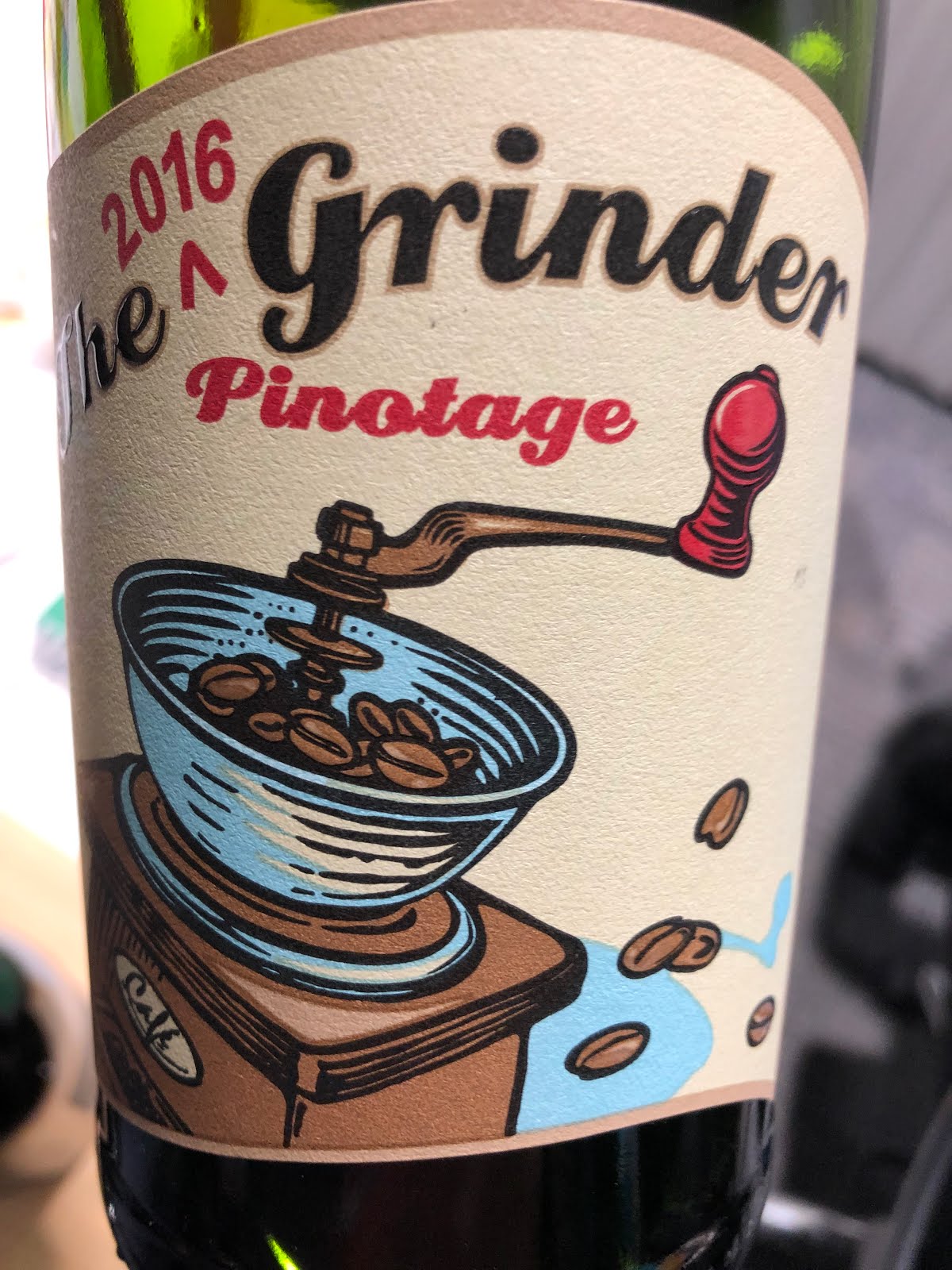
The other South African wine we had was their signature grape, Pinotage. Someone, a bunch of years ago, decide that, since it was too hot for Pinot Noir in South Africa, they should cross it with a hardier grape - say, Cinsault (also called Hermitage in South Africa).  They came up with what some call a franken-wine, Pinotage. It's got a bad rap - as many don't have the best taste - however, I have tasted a wonderful one in the Okanagan made my Stoneboat - but that's another story. The one we tried was a 2016 The Grinder Pinotage ($16). I would rather have another bottle of Beaujolais Nouveau, thanks. This did have a lot of aromas - cranberry, cherry, chocolate, coffee, gamey - and on the palate the coffee and blueberry tastes were rather intense. With high alcohol, it had medium acid, intensity, and body with a pretty short finish. I didn't mind it so much during my WSET 2 but now, it was just Acceptable.

A wine down under from a land down under.


Actually, Australia produces scads of wine and most of it is from the South East part. It's a hot country but there are lots of cool breezes to moderate the areas that grow wines that need moderating. Our first wine from Australia was a 2014 Mitchell Clare Valley Riesling. On the nose, it was, "WOW PETROL!" There was also rubber, pear, green apple and wet stone but I had a hard time getting past that petrol smell. On the palate, it was dry like most Australian Rieslings and had apple and spice - probably from lees stirring - as well as high acid, high alcohol, a medium finish, and a pronounced intensity of flavours. That petrol smell is a great indication that this is a developing wine tat could age a long time. It was rated as Very Good.


We had a Very Good Hunter Valley Semillon - which is an interesting wine. It is a rather neutral wine in its youth but develops amazing flavours of toast, nuts and honey. The one we had was a 2011 Tyrrell's Vat 1 ($68). I struggled with the notes on this - but there were notes of grapefruit, peach and brioche as well as some toast and honey. It had medium alcohol and medium plus intensity on the palate as well as high alcohol and a fairly strong finish. This wine could age for 10, 20, even 30 more years!


I do like a tasty Cab Sauv, as you may or may not have noticed from my blog. I love Bordeaux wines and I love Meritage blends from the Okanagan and I love big California Cab Sauvs. Well, add to that ones from Coonawara in Australia which may be hot but, man, they make great wine. We had a 2014 Yalumba "The Menzies" Coonawara Cab Sauv ($99). It was wonderful! On the nose was black currant, black plum, smoke, barnyard, black pepper, menthol and eucalyptus. On the palate, there was also spice and tobacco. This dry wine had strong tannins, high acid, high alcohol, almost full body, a medium plus finish and a pronounced intensity. It could definitely age for awhile and it was rated Outstanding - maybe a good splurge?


Australia has been famous for it's big, bold Shiraz wines - and so we tried a 2015 Glaetzer "The Bishop" Shiraz from the warm Barossa Valley ($51). This had some good aromas including blueberry, vanilla, pepper and black plum as well as an overall jammy taste. I don't mind a little jam but it does take it away from the "Outstanding" category. On the palate there was blueberry and charred wood as well as medium plus tannins and acidity. This wine was fine to age with its long  finish and strong intensity of flavours and was rated as Very Good. 

There are also more restrained Shiraz wines form Australia but we didn't try one  in class. 


Finally, we went to New Zealand. It's not a huge place but they make a heckuva lot of wine. On the cooler South Island is where Marlborough is - and that means, Sauvignon Blanc, New Zealand's most famous grape. We tried a 2017 Cloudy Bay Sauvignon Blanc ($36).  This wine had lots of green fruit, asparagus, grapefruit, and lemon on the nose with similar tastes on the palate. It had high acid, medium body, medium alcohol, and a pronounced intensity of flavour as well as a longish finish. This was a youthful wine and, like most Sauvignon Blancs, didn't have any ageing potential but was still a Very Good wine. 


Also from Marlborough, we tried a 2017 Villa Maria Pinot Gris ($22) which was OK. I also struggled with this one a bit but there were notes of peach, apricot, lemon, honey and floral aromas. This was an off dry wine and had high acidity, medium alcohol, as well as medium intensity and finish. Not suitable for ageing, this wine was rated as just Good. 


Finally, we had a wine, also from the South Island, but away from the effects of the ocean. From Central Otago we had a 2016 Matua Pinot Noir ($42 - pretty label award). This was a pretty standard Pinot Noir with red cherry, cranberry, and strawberry notes. It was mostly medium although it had a longish finish. Overall this was just a Good wine - and definitely not worth the price. 

Well, that's it for my WSET 3 classes. All that's left is the test. I have been studying hard and have these things to say on the three parts. 

The blind wine tasting: This all depends on my palate - some classes I have been bang on and some I have been right off. I need to focus on the aromas and tastes rather than trying to jump to conclusions and try to figure out the varietal. 

Multiple choice: I think this will be my strongest part. I have gone over the book many times as well as flashcards from me, my son-in-law Dan, and online cards. I have a very good general knowledge of wines of the world. 

Essay questions: This is my big worry. Even doing the few practice ones online, I find that I can't always think of everything that a question asks - and sometimes I draw a blank. I spent time today doing comparative analysis of the same grapes from different countries so I am hoping that will help me study for the last few days. 

I keep remembering what my classmate, Sarah, said during our tasting group and, again during last week's class - at the end of the day, we have learned so much about wine, tasted some fantastic wine, and met some wonderful people. 

But, damn it, I really want to pass!

Wish me luck...


Sunday, June 18, 2017

Any Port in the storm - really! WSET Class #8 - Part 2

After my dismal Sherry tasting - dismal because I really did not enjoy it - we had a break and then went on to try Port.

Before this class, I really didn't know the difference between Sherry and Port. It all seemed the same to me. But after this week's class, I have a better idea of the differences between these two fortified beverages. More importantly, I now know which one I like...

Port is usually made with black grapes and is alway fortified during the fermentation. Why is that important? The fortification interrupts the fermentation so there is always residual sugar left over. That means that Port is always sweet. And, it can also be really, really good!


Our first Port was a Tawny Port. Tawny Ports are a mix of red and wine Ports and are aged 10, 20, 30 or 40 years - so they are ready to drink when you buy them. The one we tried was a Ramos Pinto 10 year old Port that cost $39 (already, you can see the price differential between Sherry and Port). It was medium tawny in colour - which is sort of a red-brown colour - the older the port, the lighter the colour. It had medium intensity and had chocolate, cherry and prune aromas on the nose. On the palate there was, in addition, plum, jam and cloves. It was off dry with medium acidity, medium body and a medium finish. I didn't write down the overall rating so, from what I remember, I would give it a Good rating.

The Sherries we tasted before the break all were given a Very Good rating by Dave but I did not like any of them. I am not a sweet wine lover but this first Port was pretty good! I quite enjoyed it and like it much more than any of the Sherries.


The second Port was even better! It was a LBV (Late Bottle Vintage) Port The Port is made from wine from the same year (in this case, 2011), and is aged 4 to 6 years in casks. It is ready to drink when you open it and sometimes has sediment so may have to be decanted. After it is opened, you should drink it like wine, because it is only good for a couple of days.

We tried a Fonseca Port which was unfiltered (so had to be decanted). This $33 bottle had 20% alcohol - which is the same for all Ports - had medium minus intensity on the nose and had aromas of cherry, pepper and a medicinal smell. On the palate, there was black cherry, liquorice, and other black fruit. It had medium acidity, medium tannins and was off dry. I would rate this one as Good as well. A great pairing with cheese and chocolate.


The final Port was a Vintage Port - these must be decanted and are the best of the Ports. They are made from the best grapes and are only made in the best years. The one we had was a W. and J. Graham's 2011 Vintage Port. It was deep ruby and had medium plus intensity on the nose. There were many different black fruits on the nose including black currants and black berry. On the palate there was raisin, kirsch, and a wonderful jamminess along with spices. There was a lot going on there but it was hard to pick out some of the tastes because it was rather complex. It had medium tannins and medium plus acidity and was an off dry wine with a long finish. This wine was $109 and was Very Good - maybe even Outstanding.

I never thought of myself as a Port drinker but this changed my mind. It was an amazing wine. One of my group, Rajen, said that it was either his favourite or second favourite wine that we had tasted in the course! The only problem I see is that you have to consume it in a day - that's right - a Vintage Port should be decanted for a couple of hours and then consumed on the day you open it!

We finished off with two Sweet Fortified Muscats. The first was a Vin Doux Naturel from France (naturally).


The first was a 2015 Domaine de la Pigeade Muscat de Beaumes de Venise worth $35 for a half bottle and was pale, gold and clear. It had medium intensity on the nose with perfumed aromas of apple, pear and stone fruit. On the palate, there was additionally lychee, pineapple and vanilla. It was a sweet wine with medium plus acidity, medium body and a medium finish. Dave said that this one was near the end of its life as Muscat de Beaumes de Venise should be consumed when young.

The second was a Rutherglen Muscat (from Australia this time) and was the second sweetest wine there is, the first being PX Sherry.


Campbell's Rutherglen was $27 for a half bottle and was 17.5% alcohol. It was clear and medium amber in colour. It had medium intensity on the nose with aromas of stone fruit and tropical fruit.. On the palate, I tasted syrup - plain and simple. Being lusciously sweet, it was difficult enough to figure out what the tastes were besides syrup and sugar but this wine was über luscious! It was rated Good but I did not enjoy how syrupy sweet it was. It made my teeth hurt!

So, looking back on the class, I found that I didn't like Sherry at all, actually like Port - and loved Vintage Port, and didn't like sweet fortified Muscats all that much because they were so sweet. I know that Port is sweet, but not overly sweet and Port is sweet enough to counter the alcohol taste.

Now, back to studying - I have an exam to write next time!

Time to Taste an Albariño from Catalonia, Spain!

  Today we're drinking an Albariño — but there's an interesting twist. This 2024 Raimat Albariño doesn't come from the cool, Atl...