Showing posts with label albarino. Show all posts

Sunday, April 7, 2019

An Amazing Wine Tasting Evening with Friends

A group of friends in the midst of an amazing wine tasting.

WSET is not just for studying....

As I have alluded to before, people make great connections and friendships while doing the WSET course. We were all in it together, trying our best to pass the course, feeling the pressure of learning such a vast amount of information and feeling the pleasure of tasting wine together. 

But it finished in December!

Happily, the group that I have tasted with before - the friends that I have tasted with before - are continuing to get together. The first time, since our test, was a couple weeks ago when I was in France. 

The next time was just last Thursday.

Andrew was our host. He has taken both his WSET 3 and a comparable level of his CMS - Court of Master Sommeliers. He works at a restaurant but also works at a local independent liquor store and, therefore, can get a great deal on great wines!

Verity and her partner, Joey, were also in attendance. I took my WSET 3 with Verity - in fact, she related the story of our first class together - we had a champagne and some minor bubbles like Prosecco in a blind tasting. Both of us proudly announced that the Prosecco was the great wine, much to our chagrin! We both learned an awful lot more about wine since that first class. Verity also completed a comparable level of her CMS.

When I took my WSET, Sarah sat beside me every class - she was my WSET Buddy! It was great to see her at the tasting and reconnect with her once again.

A new person (for me), Steph, was working on the same level of CMS that Verity and Andrew had achieved. She is an actual Sommelier at a famous Vancouver restaurant! 

Finally, my buddy, Stewart, whom I have known since high school (when we used to drank a gallon bottle of Calona Medium White) came along as well.  Although he has not completed a formal wine course, Stew is well versed in the wine world (we've both come a very long way).


After everyone arrived, Andrew welcomed us with a glass of 2016 Crescent Hill Glennallyn Private Reserve Gewürztraminer from the Okanagan. As is common with this varietal, it was very aromatic and was a tasty, light way to start off our night. 

Andrew always does such a good job!

Our next wines were blind tastings. We had three whites and three reds.

Our first white was described by Steph, who spoke with such confidence that I was drawn in, hook. line and sinker, to what she thought the wines were. We tasted, and swirled, and spat. 
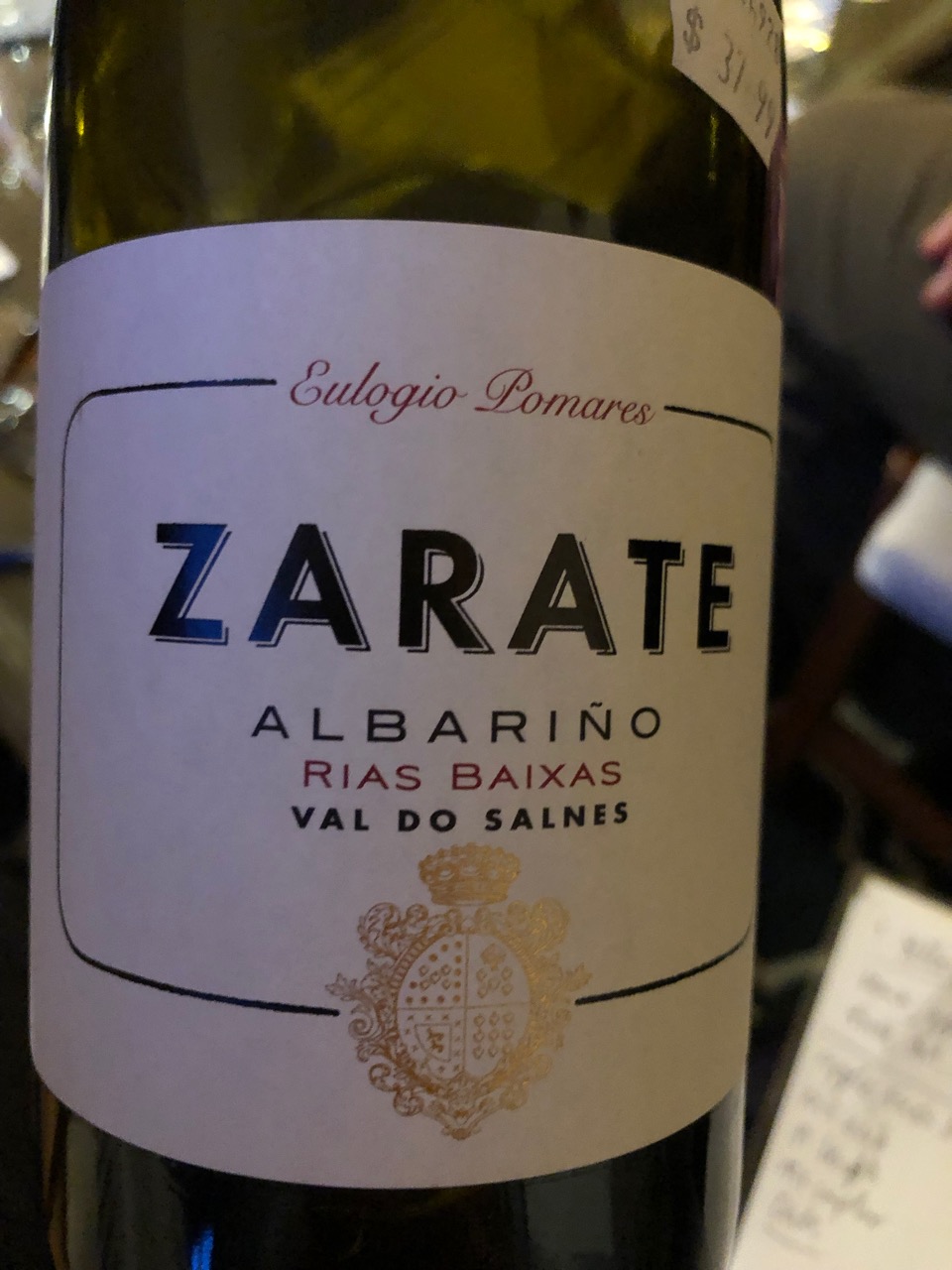

It was a Zarate Rias Baxas Albarino from Spain. It was not a strong wine and was not as full bodied as I thought it would be. 

Yellow, or lemon, in colour, this wine had aromas of lemon, apple, and had a minerality. These aromas were fresh, tart and ripe. On the palate, there were the same flavours - fresh or ripe apples, wet stone,  as well as medium plus acidity, medium length and medium complexity. There was also some oak on this wine.

As for all of the wines that we tasted, we all tried to come up with both the varietal and the place. Most people though this was a Chardonnay although some thought it was a Pinot Gris or something Italian. But we were all wrong. Albarino was just not on our radar! Overall, a Good wine.


Our next wine was another white and, this time, I nailed it. For me, petrol is an unmistakable aroma - and that means Riesling. Interestingly, unlike many of the petrol smelling Rieslings I have had in the past, this one was bone dry. This 2014  Howard Park Porongurup Riesling from Australia had additional aromas of rubber. pear, peach,. apple and a minerality. A complex nose with pronounced aromas.

On the palate, it was bone dry, as I said, with tastes of apple. It did not have the same mineral taste and was medium plus in alcohol and medium plus in acidity. This was a great dry Riesling - and I stated that to the group. Before the reveal I had also written down that I thought it was from Australia but hesitated to share that information. A Very Good to Outstanding wine.

Our final white was a real shocker. Verity described it as a 'giant in a sleeping bag' which means that it did not have a very pronounced aroma but when you got your nose close enough, there was an explosion of complex aromas. On the nose - and on the palate - were aromas like cloves, wood, popcorn, butter and vanilla. In fact, it smelled a little like a buttered popcorn Jelly Belly! It had medium acid, medium body and a very complex flavour.

Still, we didn't think it was all that fancy. We narrowed it down to Chardonnay but thought it was from California. You know, a big, oaky Chardonnay with lots of flavour.

Nope.


It was a Pouilly Fuiissé from the Maconnais region of Burgundy.  This 2014  Chateau Fuissé Le Clos Monopolé was not what we expected! It was probably the most expensive wine of the night, worth over $100. However, none of us found the elegance or refinement that we would expect from this kind of wine, although there was great complexity. I would rate this as Good to Very Good.

On to the reds!

Our first red of the night was a difficult one. Pale ruby in colour, it had aromas of mint and earth and a bit of an underbrush aroma. There were red fruits like cherry and raspberry as well as dried cranberry. On the palate, there were tastes of the same with the addition of some sort of leaf - like tomato leaf. It had medium plus acidity, medium minus tannins, and light bodied.


This Sangiovese wine was a 2015 Noelia Ricci Godenza Superiore from the Romagna area of Italy. It stumped us all. I thought it might be a cru Beaujolais although I couldn't detect the hallmarks of carbonic fermentation. There were some murmurings that it might be from Italy but no one had a strong feeling about that. Pinot Noir was another guess made by many of the group. It was certainly a surprise when the reveal came. This was a Very Good wine.


There next wine was probably my favourite. The 2015 Cannonball Merlot from Sonoma County had aromas of pepper, smoke, dark fruit such as plum and black berry,  jam, cedar and mushrooms. This wine had a pronounced intensity on its rather complex nose. On the palate was the same black, jammy fruits as well as some earthiness with medium acidity, medium plus tannins, and high alcohol. This wine had balance, complexity, length and intensity and I would rate this wine as Outstanding.  I first thought it was a Syrah, possibly from the Northern Rhone. My second guess was Merlot from California.


The final red for the night was another tricky one. The Chateau de Cherrière Bourgogne Pinot Noir was a very structured wine with medium plus acid and medium plus tannins, something I did not expect with a Pinot Noir. There were tastes and aromas of cedar, tobacco, farmyard, leather, mushroom, black fruit and black cherry. This was a real stumper as it had that Pinot Noir taste but such strong structure! I would rate this as Very Good.

One of the members of our group had something to celebrate so Andrew brought out a celebratory champagne style wine. The celebrant, Verity, then used a bread knife to sabre the wine! If you have a nice cold bottle of champagne (or other bubbly), you can use any kind of knife to open it. You simply slide the knife from the middle of the bottle up the seam of the bottle and, voila! The cork and some of the bottle will fly off the top!


Verity sabred a 1996 Summerhill Cipes Traditional Cuvée sparkling wine form the Okanagan ($80). I didn't do a formal tasting note at this point (we had finished the bottle leftovers at this point and were refraining from spitting or dumping) but I do recall that this was more than just a bready, yeasty tasting champagne. It had a beautiful golden colour. a nice fizz, and an exquisite taste that included a bit of a sherry.

A wonderful celebration to finish off a wonderful wine tasting evening!


Sunday, December 2, 2018

Come Together ... Right Now. ... Over Wine...

Red wines from our tasting nigh

I'm actually a bit behind in my WSET blog but I had such an enjoyable time this week, I thought I'd blog about a recent evening.

I was invited to a wine tasting evening with some of the people from my WSET class. Here's what comes to mind:

As the big test date looms nearer (less than two weeks), I have become more and more focussed on memorizing facts, practising questions, making charts and maps, and recording myself talking about important information and then playing it back.

Thursday night was a big break from that - and a reality check. Wine is not just about learning and memorizing information - it is about the social aspects of getting together with people, having a few drinks, talking, laughing and enjoying each others' company. Yes, we tasted and talked about the wines and commiserated about our mutual trepidations of the upcoming test but we also talked about each others' work and lives and history - the wine was a part of the evening but it was not the only part of the evening.

To paraphrase one member of the wine group, at the end of the day, we have learned so much about wine, have been exposed to so many wines, have a much improved palette and nose, and have made friends with a bunch of new people.  I want to do well on the test, but I've already had a rewarding experience, regardless of the result.

A great group of wine-experts-in-training.

There were four others in the group; Sarah, who sits beside me during my WSET class and is originally from London, Greg and Marilyn, also in my class, who are part of the family that owns Deep Roots Winery in Naramata, and Andrew, a very knowledgable wine-o-phile who was able to procure our wines for the evening. I really enjoyed spending the evening with these people and also enjoyed sipping and discussing the wines.


The first wine was a bit of a treat. It was a 1994 (yes, I said, 1994!) Moulin Touchais Coteaux du Layon Chenin Blanc from the Loire Valley ($57 on Vivino). This was a highly acidic, intensely sweet wine with tastes of honey, candied apricot, orange zest, almonds, and some earthiness like mushrooms, probably from botrytis. This Chenin also had the distinctive aroma of lanolin or wet wool. It was an amazing wine to start with but, because I was driving, I ended up dumping some of it in my spit cup (ugh!). Definitely an Outstanding wine. I really have grown to enjoy sweeter wines like this because they are balanced with the strong acidity - as opposed to stick sweet wines I had when I was younger like Baby Duck or Calona White.


The first wine was a bit of a teaser and we just enjoyed it without doing a serious tasting. Our second wine was the first real taste. I sort of sat back and watched what others did during the first two tastings but spoke up more after that. I actually guessed (in my head, of course) that this wine was a Torrontes but never said anything - so much for showing off. This was a 2015 El Porvenir Laroum Torrontes from Cafayate which is in the Salta region of Chile ($30). This had aromas and tastes of citrus fruits like grapefruit and lemon as well as peach and apple. It also had non-fruit aromas of fresh grass and honeysuckle. This youthful wine was medium in intensity, acid, alcohol, body and length and was rated as a Good wine which was ready to drink but not suitable for ageing. And, to be fair, Andrew did help us narrow down the wine varietal before I made my amazing guess (that I kept to myself).


Next was another wine that I guessed correctly after Andrew's coaching, again, in my head (what a chicken!).  This was a 2017 Granbazan Albarino Etiqueta Ambar from Rias Baixas, Spain ($40). I really got pineapple on this wine as well as stone fruits like peach and apricot. Unfortunately, I got a bit of vanilla on this which means I was fooled as this wine did not have any oak on it. When I taste a white wine, I am always trying to taste if there is vanilla or toast on it which is a product of oak ageing - and I seem to find it far too often! There was a floral aroma as well of orange blossom that some of the other tasters got but that I missed. I struggle with floral aromas and I probably should find some of these flowers in the next 10 days before my test! This light bodied wine had medium plus acidity, medium plus intensity, medium alcohol and a medium plus finish. Seafood would be a wonderful accompaniment to this wine and, although it is not suitable for ageing, it is ready to drink and is Very Good.


Every now and then, there is a wine that is so recognizable that I can place it immediately. The bubble gum, banana, and red liquorice aromas are unmistakably a Beaujolais Nouveau - in this case a fresh 2018 Louis Max ($20). This is a low tannin, medium minus body wine that's not strong in intensity and does not have a long finish but it is FUN to drink! I really like this style of wine, even though it is not exactly loved by some wine experts. It is easy to slurp back and is friendly enough to go with food that is really casual. Andrew completed his WSET test earlier this week and a Beaujolais Nouveau was the red wine for the blind tasting. I would be so happy if that were the case for our test! This wine is definitely ready to drink and should not be aged. It was a Good wine.


The next wine was a tasty one - a 2015 Klinker Brick Old Vines Zinfandel from Lodi, California ($40). I actually guessed this one too, but, wonder of wonders, I actually said something!  This had aromas of black currant, blackberry, blueberry, pepper, tobacco, cedar and jam. I thought there were some tertiary aromas of mushroom but that didn't seem to be the consensus of the group. I looked on Vivino later and some people did think there was some tertiary aromas like leather so I really am not sure if this was developing or not. This full bodied, high alcohol wine had a medium plus intensity of flavours and a medium plus finish and deserved a Very Good rating. Could you age it? I thought you could but who knows?


The last 'official' tasting wine was a 2014 Chateau de Jau Jaujau Cote de Roussillon red wine blend from the Languedoc Roussillon region of France ($48). We didn't know this was a blend which showed up in our differing notes. Some of us tasted black fruits and some red fruits and some both. On the nose, I found red plum, blueberry, and blackberry as well as black currant leaf, and cedar. This wine had medium plus body, a medium plus finish, and a medium intensity of flavours. A Very Good wine, it was a blend of Syrah, Grenach and Mourvedre. It was suitable for ageing - but was a bit pricey.


Greg and Marilyn brought a wonderful wine for our final, informal tasting. It was a 2014 Deep Roots Naramata Syrah (I think Greg said it was around $40 when released but there's none left now!).  I was asked, earlier in the evening, what my favourite wine was - I really do like Bordeaux so I went with that initially - but, having this wine, I was reminded that Syrah is another one of my favourite wines - especially Syrah done right - which this was. There were aromas and tastes of blackberry, blueberry, and black plum as well as smoke, tobacco, and a bit of leather. There was also some pepper on the nose. This wine was lovely - full bodied, strong intensity of flavours, and a wonderful long finish. I would rate this Syrah as Outsanding and could probably age for a few more years.

As we sat around and chatted and sipped from the remnants of wine, I reflected on how enjoyable an evening I had. We made some progress on our tasting and we discussed some of the more frightening aspects of our looming test but, by far, the most important thing was a group of people coming together over a common interest and having a great time doing it.

Cheers!


Friday, November 9, 2018

How do you say. "Oh, crap!" in Spanish. WSET 3.10 - Spanish and Portuguese Wines

Courtesy Art of the Table
Things started off pretty well....

I sat down at this week's class and Lynn, the instructor, handed back my blind tasting note - which I nailed - and the mini quiz - which I mostly nailed.

I was feeling pretty damned confident!

Then we did the first tasting.

It was two whites, one from Spain and one from Portugal. After Lynn described some of the characteristics of each one, I smugly came to the conclusion that the first wine was an Albarino and the second was a Vinho Verde.

Wrong.

Oh, crap.


The first wine was actually 2017 Aveleda Vinho Verde from Portugal ($15). It had a fairly complex flavour profile with pear, lime, orange blossom, melon, wet stone and a floral component on both the nose and palate.  This low alcohol, high acid wine had a little bit of spritz which was hard to detect initially since it was a bit of a surprise. This was a blend of mostly Loureiro and Alvarinho grapes.  A 'drink now' wine, this was rated as Good and would go well with cooked or fried white fish.


The second wine (that I thought was not as good) was actually a great Albarino from Spain - it was a 2017 Terras Gauda Albarino from Rias Baixas ($40). This had aromas of peach, apricot and pear and also a savoury or cheesy aroma - maybe even cream cheese. It had extended lees stirring which gives it that cheesy smell. There was similar fruit and savouriness on the palate along with grapefruit. This was a high acid, medium alcohol wine with a medium plus finish (not short, like I thought!). It was balanced and complex so would be rated as Very Good and could be aged for a bit.

Spain is a country with a big wine growing area but most of the vines are spread out so they get enough water. It just can't compete with Italy or France in the amount of grapes grown. There are a variety of climates in Spain with the main difficulties being either too much rain (on the coast) or not enough rain.

The big grape here is Tempranillo. This thick skinned, medium acidity grape is popular on its own or with other grapes. It's grown in Rioja, the Ribera del Duero, Navarra, Toro, and La Mancha.

Another big grape is Garnacha (Grenache). This high alcohol grapes is one that loves the heat and ripens late. It is usually blended with other grapes such as in Rioja, and Navarra. It is also grown in Carinena, Calatayud, Priorat, and Ribera del Duero.

Monastrell (also known as Mourvedre) is a great grape for the heat as it has quite a thick skin and ripens late. It is grown in the Levante area which includes Valencia, Jumilla, and Yecla.

There's also other black grapes such as Graciano (blending grape),  Mencia (a fresh fruit grape grown in Bierzo), and Carignan also known as Carinena and also known as Mazuelo.

Albarino is a popular white grape that is a thick skinned, high acid grape with stone fruit and citrus fruit. It is found is the northwest region of Spain.

Verdejo is the other bigger grape that is used a lot in sherry. It has melon and peach flavours, similar to Sauvignon Blanc, which it also happens to be blended with fairly frequently.

Our next two wines were, in fact, both Tempranillo wines from Spain. I would have been happy to drink both of these wines all night long.


The first was a 2008 La Rioja Alta Reserva Tempranillo ($75). This medium garnet wine was the more delicate of the two with tastes and aromas of red cherry, plum, strawberry, fig, toast, pepper, cedar, mushroom and leather. The finish was long, the intensity was high, and the wine was balanced and complex. An Outstanding wine that could easily age a few more years.


Not only was the first one great, the second was, in my opinion, even better! It was a 2011 Pintia Tempranillo ($104) from the Toro region of Spain. This wine was high in tannins and had flavours and aromas of smoke, black plum, blackberry, black cherry, violet, forest floor, cedar and leather. This wine was high in acidity, high in alcohol, had pronounced intensity, and had a long finish. Another Outstanding wine that could age for years!

I felt that I had redeemed myself with the Tempranillos. I nailed some of the flavours and aromas down and was started to feel smug agin. Then we had the next two wines. One was a Monastrell (Mourvedre) and one was a Mencia. I like Mencia - in fact, I've had three or four bottles. I tasted several at the Wine Festival in the spring! I KNEW my Mencia - I even recommended it to my table mates! I also remembered how tannic the Mourvedre was from Bandol so I thought it would be so easy to figure out which was which. The first one I thought was all black fruit and tannins so was the Monastrell and the second one was all red fruit and lower tannins so was the Mencia.

Wrong again.

Oh, crap. Again.


The first was 2016 Alvaro Palacios 'Petalos' Mencia from Bierzo, Spain ($46). It had aromas of red fruit, savoury, and roast coffee. It had only medium tannins and medium plus acidity with a long finish. It was rated as Very Good.


The second was a 2015 Juan Gil Monastrell from Jumilla ($33). This is the one that had the black fruit as well as vanilla on the palate. It had full body, high tannins, and a medium finish. This was a Good wine.

I'm usually a bit shaky on my tasting notes for white wines but I don't usually struggle so much with reds. I don't know what happened - possibly I decided that the first one was a Monastrell and that coloured the rest of my tasting. I've also listened to podcasts where wine experts have admitted to getting it wrong a bunch of times and that's their job!

Oh well, c'est le vin. On to Portugal.

Portugal doesn't just make Port! It makes lots of wine and many form the 5 varietals that make Port. They are Touriga Nacional (high quality, great flavour, high tannins), Touriga Franca, Tinta Roriz (Tempranillo), Tinta Barroca, and Tinta Cao.

There's also the wine grapes that made the previously mentioned Vino Verde - Loureiro, Arinto, and Alvarinho (same as Spanish Albarino).

There's a ton of other grapes (like Spain, like Italy), but I think we'll just focus in our last two tastings.


The first was 2015 Cabriz Touriga Nacional and others blend from the Dao region ($22). This ruby wine had both red fruit (red cherry, cranberry) and black fruit (blueberry, black currant) was well as savoury notes. This was a mostly medium wine that was rated as Good and was suitable for drinking now.


The final wine was a 2015 Quinta do Crasto Touriga Nacional Reserva and others blend from the Douro region ($54). This was a purple wine that tasted of black fruit including blackberry, forest floor, barnyard, toast and leather. This wine had medium acidity, medium plus tannins, and high alcohol with a medium plus intensity of flavours and a beautiful long finish. This wine was rated as Outstanding.

So, after a rather mediocre tasting night, I felt a little disappointed but I don't think you can accurately taste every wine that's put in front of you. Even the pros get it wrong. Luckily, for the WSET blind tasting, you don't have to guess the wine, just describe it. My challenge is to try to avoid jumping to conclusions when I taste the wine. If I think in the first three seconds, "This is a Chardonnay," I'll probably be hooped.

Oh well, time to study some more.

How do you say, "Oh, crap!" in Spanish?

"Oh, mierda!"


Sunday, March 4, 2018

Vancouver Wine Festival - Awesome Night Out! - Part One

Assorted information from the Wine Festival 


This year is the 40th anniversary of the Vancouver International Wine Fest.

And it is the first year that I have ever gone.

Now that I know a bit about wines and wine countries, I thought I would really get something out of the Wine Festival - and I wasn't wrong.

There were several tips that I read about in different web sites and I did my best to follow them - in one way or another.....

Night view of the harbour from our hotel room. 


1. Stay near the festival or arrange a ride home
We booked a rather pricey room at the Pan Pacific but the accommodations were very nice (the view from the room is above) and we were literally beside the festival venue, the Vancouver Trade and Convention Centre.

2. Eat before you go
Although there was some food available, there was only three hours to taste wine, talk to people, and purchase wine at the on site liquor store. We went out to the Rogue Wetbar and had a variety of appies for dinner - without wine. We wanted to save up for the festival and found the food to be OK but not spectacular. Not sure if that was the lack of wine or the plainness of food. We were nice and full, however, which helped.

3. Stay hydrated
We had, easily, a litre or two of water at the restaurant. At the actual wine festival, we tried to have some water every three or four tastings.

4. Swirl, sniff, sip, and spit
The first three were easy. The last one was a lot harder. I tended to have a small sip of each wine and dump the rest in the spit bowls. That actually worked pretty well.

When we got to the wine festival, we lined up to hand in our tickets and get stamped. While we were waiting, to my surprise, I saw and chatted with three of my fraternity brothers (along with two wives and a daughter) from UBC! I hadn't seen them in over 30 years! I had travelled with one of the guys (Phil) around the USA for four months during a gap year. Happily, we kept running into them at the wine festival and drinking together, talking and catching up. It truly added another dimension to my night.

Onto some wines!


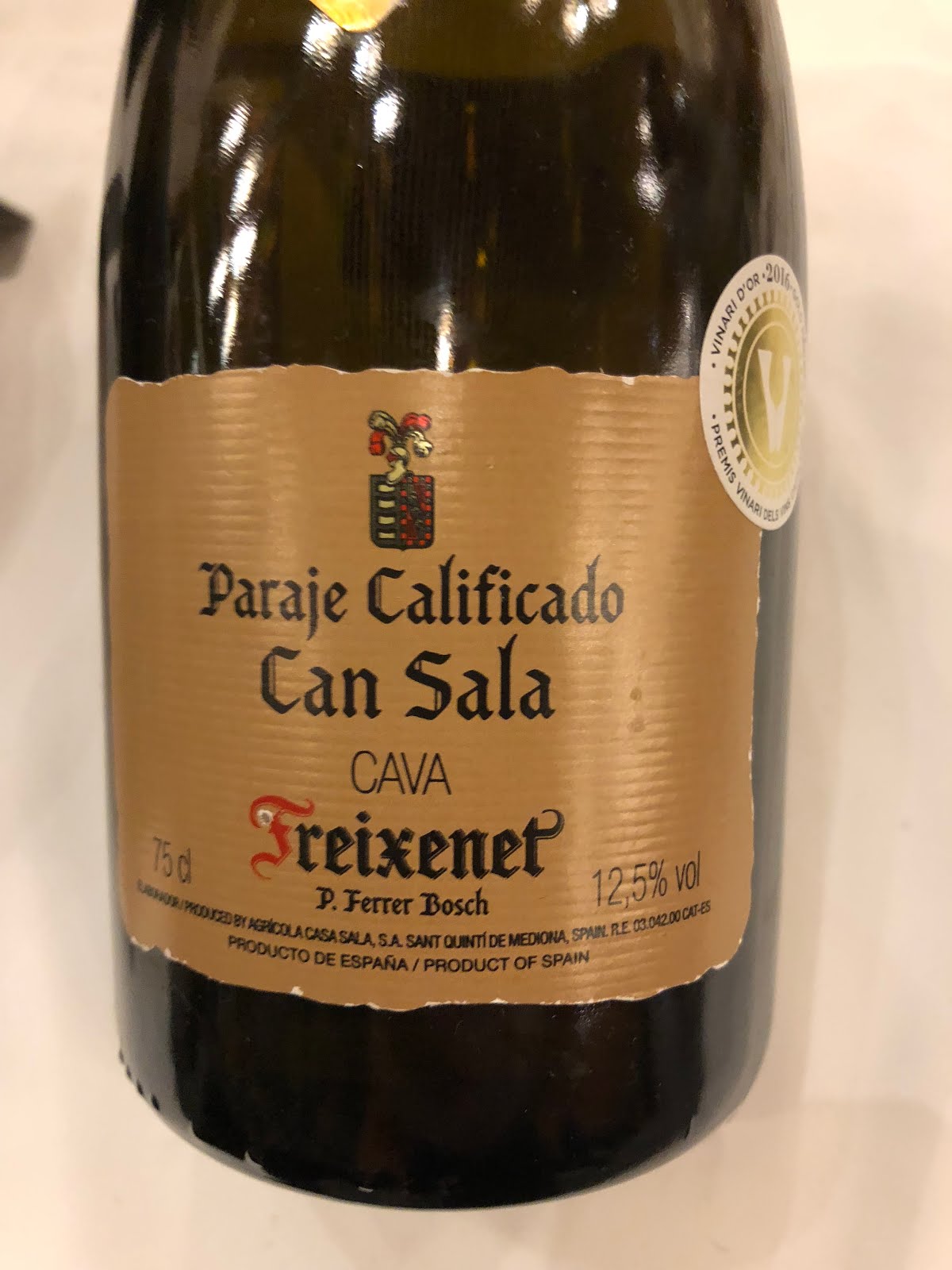
Our first stop was over to Friexenet (pronounced Fresh-net) where we tasted a few glasses of Cava (Spanish sparkling wine made in the traditional style of Champagne) then took a glass and wandered around the festival, observing and planning out our strategy. The Cava was excellent and we ended up buying a couple of bottles later on in the evening.

The theme of the festival was Spain and Portugal so it seemed like Spain was a pretty good place to start.

I had planned on taking notes or at least recording information on each wine I drank but that strategy soon fell apart. I think I needed staff for that and my wife was only there for the wine. I settled for taking photos of the wines that I liked.


The first Rioja that I really liked was from CVNE. This was a 2010 Gran Reserva ($28) which meant that it is aged for 2 years in the barrel and 3 years in the bottle. It is made from Tempranillo from one of the best wine areas in Spain, Rioja. 


I really liked that you could taste a number of wines from the same winery. The booth at Marques de Riscal had a number of wines and these three Rioja wines were all amazing. The 2016 Tempranillo ($16) was OK but needed some more time in the bottle. The 2013 Reserva ($28-available in liquor stores) had really good structure and a very nice taste while the 2007 Gran Reserva ($50) was very smooth and delicious - my favourite Rioja of the evening! 


I recently blogged about the Mencia grape from Spain.  I only found one Ribeira Sacra wine (made from Mencia) from the BC Liquor store, but in my research, I realized that Bierzo was another area that grows the grape. Happily, there was a winery in attendance from Bierzo that specialized in Mencia grape wine. The 2015 Descendientes de J. Palacios  Petalos ($37 - available in BC Liquor stores) was another wonderful Mencia with excellent structure, a touch of minerality and still some strong red and black fruits.

Although the first hour was mostly concentrated on Spanish wines, it was a bit of a blur. However, here are a few of the other really nice wines that we liked:


The favourite wine from Priorat was the Alvaro Palacios 2016 Camins del Priorat ($34). This wine is a blend (as is usual from Priorat) of Cab Sauv, Grenache, Syrah and a Spanish grape called Samso. Wonderful aroma with red and black fruits.


From the Ribera Del Guadiana was another beautiful Tempranillo - the Bodegas Alvear 2015 Palacio Quernado La Zarcita ($30). This wine was another smooth yet structured dark cherry wine.


A real standout was Arinzano which had wines that were all very enjoyable - and we picked up a few of these. This winery has the Pago designation which is a relatively new classification. Instead of a whole region getting a classification (like Priorat or Rioja), individual vineyards can apply to get an equivalent classification. Arinzano is one of only 17 vineyards to have this. There is a certainly a positive as all of their wines were very nice from the 2016 Hacienda Tempranillo to the 2010 La Casona ($44) made from Merlot and Tempranillo to the 2014 Gran Viino Blanco made with Chardonnay to the 2010 Gran Vino Tinto ($91) made from wonderful Tempranillo.


I did try some very nice white wines including a 2016 Marques de Riscal ($19)  from Rueda made with Verdejo grapes that tasted wonderful - fresh, fruity and light. My favourite white, though, was an Albarino from Rias Baixas made by Vionta ($24). The reason? My wife said it tasted like a glass of summer.

How can you beat that?

At this point, we headed to the onsite liquor store and bought some of these fantastic wines.

Next blog is part 2, the rest of the world!


Thursday, June 1, 2017

Now that's Italian! Italian wines from WSET Class #6

Tuesday night's class marked the two thirds mark in our course of nine classes. It seems like time is accelerating - both at my job and at the WSET course!

Ah, Italy! It just seems last week (not two years ago) that my wife and I were spending time in Rome, walking the streets, sampling the food, admiring the amazing variety of ancient wonders, and drinking the wine.

You can have at least some of that experience here - you can cook yourself a wonderful meal, watch a great Italian movie, and sip a Pinot Grigio or a Nebbiolo as you recapture your great memories.

Cin cin!

Tonight's class focussed on a variety of wines but the first half looks at Italian wines.

We started with the whites. Italian whites are, for the most part, pale lemon in colour and tasting of green fruit. There are not a lot of differences between the different white varietals but that made it only more interesting as we proceeded to blind taste two different Italian whites and a Spanish one.

First things first, though - I discovered that Italy has over 1000 indigenous grape varietals. In Soave the grape is Garganega and in Gavi it is Cortese. Trebbiano is the most widely planted grape in Italy but you don't often see it on its own. There is also Verdicchio from Castello di Jesi.

Our first three wines were white wines - one was a Pinot Grigio (lighter than the French interpretation of the grape called Pinot Gris), one was a Soave (Garganega grape) and one was a Spanish grape called Albarino which is the signature white grape of Spain.


It was a pretty good evening for our group - and even for me! We were pretty much bang on with our assessments of the wine - or at least, that's how I remember it! The first wine was a 2015 Tolloy Pinot Grigio which was - well  - pale lemon in colour. It had a medium minus intensity nose and smelled of underripe peach and pear. On the palate, it was dry with high acidity and a medium minus body. I tasted the same fruit with a bit of grapefruit and lemon. It had a medium minus finish, was from the Alto Adige area (famous for Pinot Grigio) and cost a mere $20. It was rated Good.

 
Next was a better wine.Pale lemon in colour, it had medium intensity on the nose, lemon, grapefruit and apricot on the nose with a definite floral aroma. On the palate, there were the tastes of citrus, grapefruit and lemon and it had a dry taste (drier than the Pinot Grigio) with high acidity, light body and a medium plus finish. It was balanced, intense, complex and expressive and therefore earned a rating of Very Good. It was a 2015 Pieropan from Soave (made with Gargenega grapes)  priced at $29. 


The final white of the evening was a Pazo Senoran wine made with the Albarino grape which is the signature white grape of Spain! It was (surprise) pale lemon in colour and had medium intensity on the nose. There were aromas of ripe apple and pear, stone fruit and nectarine. On the palate, it was dry with medium acidity. medium body, and flavours of peach, white pepper, melon, and grapefruit. It had a medium finish, was rated Very Good, and this fabulous wine costs $37 


Switching to reds, we looked at a  famous Italian area. The first was a Chianti (made from Sangiovese grapes) from Castello di Bossi. It was pale garnet in colour and had a medium plus intensity on the nose with aromas of cranberry, cherry, violets, tea, and spices. There were similar flavours on the palate including red fruit such as plum, and high acidity, medium plus body, and medium plus tannins. The finish was medium and the overall rating of this $33 wine was Very Good. It was a pretty nice wine but paled compared to the next one.


This was a 2010 Uccelliera Brunello (di Montalcino), also made from Sangiovese grapes, and made south of Tuscany.  This was also medium garnet and was also clear. It was medium intensity on the nose and was very complex on the nose - red currant, raspberry, red cherry, plum, fig, cloves, spice and smokiness were all apparent. The palate also had plum, back currant, leather and tobacco. This dry wine was high in tannins, high acidity, full body with a fantastic long finish. I would rate this $100 wine as Outstanding. And a great way to finish off our wines of Italy!


Time to Taste a Nero D'Avola from Sicily, Italy

  The 2023 Epicuro Nero d’Avola is a fruit-forward Sicilian red made from one of the island’s signature indigenous grapes, offering ripe che...