My journey to complete my WSET level 2 and my WSET 3 certifications was populated with many tastings and bottles of fine wine. In the older posts, read about my journey in this blog that featured wines in both of the courses. My next stop on my journey was doing my own wine tours in the Okanagan for 6 years. Now I'm retired (again) and just drinking - and tasting - wine! Join me as we taste a new wine every couple of weeks!
Showing posts with label chardonnay. Show all posts
Saturday, August 17, 2019
New to Old - Two Very Different Okanagan Wineries
It’s been a crazy, busy summer.
But I’m happy to say that I have successfully moved from the coast (Maple Ridge) to the Okanagan (Kelowna).
We dealt with the usual things of packing, unpacking, figuring out where the hell everything is going to go, and then making the place livable - the most difficult part being getting rid of a bunch of big, old pots and plants and preparing big, new pots and plants and bags and bags of dirt.
It was a welcome change, then, when we went on a very nice wine tour today, with the first and last of the day
We left Kelowna and headed south - to Checkmate Artisanal Winery just outside of Oliver. This winery is the brainchild of Anthony Von Mandl, owner of Mission Hill and many other wine related ventures. They only make Chardonnay and Merlot.
I had been to Checkmate two years ago and was eager to see how it was growing. Back then, we basically did our tasting in an office - this time, it was in their pop-up tasting room - a temporary building that has been open almost two years but will be replaced by an appointment only tasting room.
The tasting was $20 per person - but you do get the money refunded if you buy a bottle of wine. Mind you, while we were there, a couple came in for a tasting, blanched at the price, and hurriedly left.
It’s a bit different - we were at a table and could sit down. We were tasting four different wines and so had four glasses each in front of us. Our pourer (didn’t catch the name) was friendly and knowledgable.
First up was the 2015 Queen’s Taken Chardonnay ($125). This was an oaked Chardonnay and had a nice, smooth taste. There were stone fruits such as peach on the nose and palate as well as a hint of tropical fruits. There was also a definite mineralogy about the wine. Very Good.
Next was the 2015 Knight’s Challenge Chardonnay ($85). This was a less oaked Chardonnay - and had stronger tastes of citrus fruit as well as butter. It was quite lively on the palate, something I don’t usually mind, but this did not like as much as the first one. Good
The first Merlot was the 2014 Silent Bishop ($85). I have a 2013 vintage of this wine in the cellar and it was easy to see why as this wine had powerful fruit tastes of blackberry, blueberry and black cherry as well as underlying tastes of coffee, vanilla, and tobacco. Outstanding.
The final Merlot was a 2014 Opening Gambit. This was all black fruits like cassis and blackberry with medium tannins and integrated oak. This was a wine to age, as is the other Merlot, and, since it was my wife’s favourite, we bought a bottle. Very Good.
As a bonus, we also got to taste the Bear’s Move Chardonnay ($60). This wine is natural, open ferment. The first year it was made, a bear opened the top of the fermenter but got scared off by the venting gasses! This is a wonderful, funky wine that has the stone fruit that you associate with Chardonnay but has a whole bunch of other, earthy, funky flavours intermingling with the wine. In fact, I bought two bottles! Outstanding.
After visiting two other wineries on the way back towards Kelowna, we stopped in at Hainle Winery in Peachland.
My wife and I had visited Hainle Vineyards about 30 years ago so it was interesting to see what it was like now. ]
When they opened in the 1970s, I believe it was one of the few wineries that actually knew what they were doing and made good wines. They were the first winery to make ice wine in Canada and were the first certified organic winery in Canada in 1988.
The original owner, Walter Hainle, was originally from Germany, and was winemaker and owner until his passing. In 2002, Walter Huber (the other Walter), bought Hainle Winery and combined it with Deep Creek Winery to make one winery. Walter Huber sold the winery in 2006 but has stayed on as winemaker ever since. He is a very charming man and we were privileged to have both Walter and our pourer, Barbie, for our tasting.
We had many different wines there and I don’t quite recall everything about all of the wines but here are my notes
2009 Deep Creek Ehrenfelser ($30)- A very aromatic wine with some stone fruits. A bit subdued in taste, overall. Acceptable.
2016 Gewurztraminer ($25) - Another very aromatic wine. This one did not disappoint in the fruit as the tastes of stone fruit, tropical fruit and roses. Good.
2016 Estate Zweigelt ($31) - This is a crossing between Blaufrankish and St. Laurent in Austria. The wine had definite red and blue berry tastes balanced with high acidity. A good food wine that would satisfy a number of people at a dinner party. Very Good.
2008 Reserve Pinot Noir ($477) - This was an amazing Pinot Noir! There were wonderful aromas and tastes of cherry, strawberry, and even some tropical fruit. There were also underlying earth flavours as well as leather and tobacco. The price was a bit high but the 2009 Reserve Pinot (regularly $370) was on sale for $99 so I bought one (which is why the 2009 is pictured here). Outstanding.
We also tried some fortified wine (OK) and some Madeira that was more of a barrel taste (has potential). I think that’s all we tried….
Overall, it was a good tasting day with our two bookends, Checkmate and Hainle, contrasting as one of the newest wineries versus one of the oldest in the Okanagan. Both of them were well worth the visit.
Cheers
Sunday, April 7, 2019
An Amazing Wine Tasting Evening with Friends
![]() |
| A group of friends in the midst of an amazing wine tasting. |
As I have alluded to before, people make great connections and friendships while doing the WSET course. We were all in it together, trying our best to pass the course, feeling the pressure of learning such a vast amount of information and feeling the pleasure of tasting wine together.
But it finished in December!
Happily, the group that I have tasted with before - the friends that I have tasted with before - are continuing to get together. The first time, since our test, was a couple weeks ago when I was in France.
The next time was just last Thursday.
Andrew was our host. He has taken both his WSET 3 and a comparable level of his CMS - Court of Master Sommeliers. He works at a restaurant but also works at a local independent liquor store and, therefore, can get a great deal on great wines!
Verity and her partner, Joey, were also in attendance. I took my WSET 3 with Verity - in fact, she related the story of our first class together - we had a champagne and some minor bubbles like Prosecco in a blind tasting. Both of us proudly announced that the Prosecco was the great wine, much to our chagrin! We both learned an awful lot more about wine since that first class. Verity also completed a comparable level of her CMS.
When I took my WSET, Sarah sat beside me every class - she was my WSET Buddy! It was great to see her at the tasting and reconnect with her once again.
A new person (for me), Steph, was working on the same level of CMS that Verity and Andrew had achieved. She is an actual Sommelier at a famous Vancouver restaurant!
Finally, my buddy, Stewart, whom I have known since high school (when we used to drank a gallon bottle of Calona Medium White) came along as well. Although he has not completed a formal wine course, Stew is well versed in the wine world (we've both come a very long way).
After everyone arrived, Andrew welcomed us with a glass of 2016 Crescent Hill Glennallyn Private Reserve Gewürztraminer from the Okanagan. As is common with this varietal, it was very aromatic and was a tasty, light way to start off our night.
Andrew always does such a good job!
Our next wines were blind tastings. We had three whites and three reds.
Our first white was described by Steph, who spoke with such confidence that I was drawn in, hook. line and sinker, to what she thought the wines were. We tasted, and swirled, and spat.
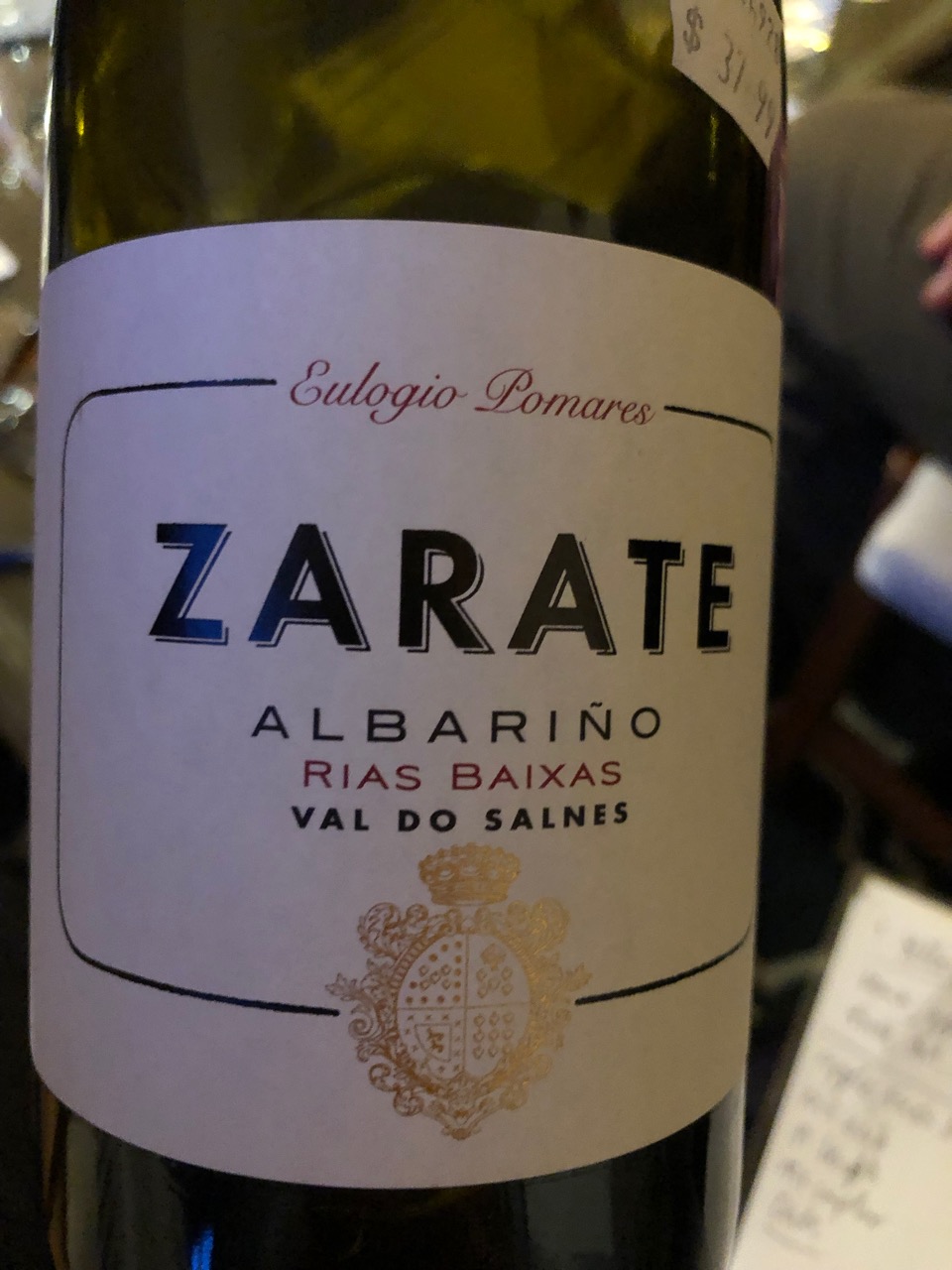
It was a Zarate Rias Baxas Albarino from Spain. It was not a strong wine and was not as full bodied as I thought it would be.
Yellow, or lemon, in colour, this wine had aromas of lemon, apple, and had a minerality. These aromas were fresh, tart and ripe. On the palate, there were the same flavours - fresh or ripe apples, wet stone, as well as medium plus acidity, medium length and medium complexity. There was also some oak on this wine.
As for all of the wines that we tasted, we all tried to come up with both the varietal and the place. Most people though this was a Chardonnay although some thought it was a Pinot Gris or something Italian. But we were all wrong. Albarino was just not on our radar! Overall, a Good wine.
Our next wine was another white and, this time, I nailed it. For me, petrol is an unmistakable aroma - and that means Riesling. Interestingly, unlike many of the petrol smelling Rieslings I have had in the past, this one was bone dry. This 2014 Howard Park Porongurup Riesling from Australia had additional aromas of rubber. pear, peach,. apple and a minerality. A complex nose with pronounced aromas.
On the palate, it was bone dry, as I said, with tastes of apple. It did not have the same mineral taste and was medium plus in alcohol and medium plus in acidity. This was a great dry Riesling - and I stated that to the group. Before the reveal I had also written down that I thought it was from Australia but hesitated to share that information. A Very Good to Outstanding wine.
Our final white was a real shocker. Verity described it as a 'giant in a sleeping bag' which means that it did not have a very pronounced aroma but when you got your nose close enough, there was an explosion of complex aromas. On the nose - and on the palate - were aromas like cloves, wood, popcorn, butter and vanilla. In fact, it smelled a little like a buttered popcorn Jelly Belly! It had medium acid, medium body and a very complex flavour.
Still, we didn't think it was all that fancy. We narrowed it down to Chardonnay but thought it was from California. You know, a big, oaky Chardonnay with lots of flavour.
Nope.
It was a Pouilly Fuiissé from the Maconnais region of Burgundy. This 2014 Chateau Fuissé Le Clos Monopolé was not what we expected! It was probably the most expensive wine of the night, worth over $100. However, none of us found the elegance or refinement that we would expect from this kind of wine, although there was great complexity. I would rate this as Good to Very Good.
On to the reds!
Our first red of the night was a difficult one. Pale ruby in colour, it had aromas of mint and earth and a bit of an underbrush aroma. There were red fruits like cherry and raspberry as well as dried cranberry. On the palate, there were tastes of the same with the addition of some sort of leaf - like tomato leaf. It had medium plus acidity, medium minus tannins, and light bodied.
This Sangiovese wine was a 2015 Noelia Ricci Godenza Superiore from the Romagna area of Italy. It stumped us all. I thought it might be a cru Beaujolais although I couldn't detect the hallmarks of carbonic fermentation. There were some murmurings that it might be from Italy but no one had a strong feeling about that. Pinot Noir was another guess made by many of the group. It was certainly a surprise when the reveal came. This was a Very Good wine.
There next wine was probably my favourite. The 2015 Cannonball Merlot from Sonoma County had aromas of pepper, smoke, dark fruit such as plum and black berry, jam, cedar and mushrooms. This wine had a pronounced intensity on its rather complex nose. On the palate was the same black, jammy fruits as well as some earthiness with medium acidity, medium plus tannins, and high alcohol. This wine had balance, complexity, length and intensity and I would rate this wine as Outstanding. I first thought it was a Syrah, possibly from the Northern Rhone. My second guess was Merlot from California.
The final red for the night was another tricky one. The Chateau de Cherrière Bourgogne Pinot Noir was a very structured wine with medium plus acid and medium plus tannins, something I did not expect with a Pinot Noir. There were tastes and aromas of cedar, tobacco, farmyard, leather, mushroom, black fruit and black cherry. This was a real stumper as it had that Pinot Noir taste but such strong structure! I would rate this as Very Good.
One of the members of our group had something to celebrate so Andrew brought out a celebratory champagne style wine. The celebrant, Verity, then used a bread knife to sabre the wine! If you have a nice cold bottle of champagne (or other bubbly), you can use any kind of knife to open it. You simply slide the knife from the middle of the bottle up the seam of the bottle and, voila! The cork and some of the bottle will fly off the top!
Verity sabred a 1996 Summerhill Cipes Traditional Cuvée sparkling wine form the Okanagan ($80). I didn't do a formal tasting note at this point (we had finished the bottle leftovers at this point and were refraining from spitting or dumping) but I do recall that this was more than just a bready, yeasty tasting champagne. It had a beautiful golden colour. a nice fizz, and an exquisite taste that included a bit of a sherry.
A wonderful celebration to finish off a wonderful wine tasting evening!
As for all of the wines that we tasted, we all tried to come up with both the varietal and the place. Most people though this was a Chardonnay although some thought it was a Pinot Gris or something Italian. But we were all wrong. Albarino was just not on our radar! Overall, a Good wine.
Our next wine was another white and, this time, I nailed it. For me, petrol is an unmistakable aroma - and that means Riesling. Interestingly, unlike many of the petrol smelling Rieslings I have had in the past, this one was bone dry. This 2014 Howard Park Porongurup Riesling from Australia had additional aromas of rubber. pear, peach,. apple and a minerality. A complex nose with pronounced aromas.
On the palate, it was bone dry, as I said, with tastes of apple. It did not have the same mineral taste and was medium plus in alcohol and medium plus in acidity. This was a great dry Riesling - and I stated that to the group. Before the reveal I had also written down that I thought it was from Australia but hesitated to share that information. A Very Good to Outstanding wine.
Our final white was a real shocker. Verity described it as a 'giant in a sleeping bag' which means that it did not have a very pronounced aroma but when you got your nose close enough, there was an explosion of complex aromas. On the nose - and on the palate - were aromas like cloves, wood, popcorn, butter and vanilla. In fact, it smelled a little like a buttered popcorn Jelly Belly! It had medium acid, medium body and a very complex flavour.
Still, we didn't think it was all that fancy. We narrowed it down to Chardonnay but thought it was from California. You know, a big, oaky Chardonnay with lots of flavour.
Nope.
It was a Pouilly Fuiissé from the Maconnais region of Burgundy. This 2014 Chateau Fuissé Le Clos Monopolé was not what we expected! It was probably the most expensive wine of the night, worth over $100. However, none of us found the elegance or refinement that we would expect from this kind of wine, although there was great complexity. I would rate this as Good to Very Good.
On to the reds!
Our first red of the night was a difficult one. Pale ruby in colour, it had aromas of mint and earth and a bit of an underbrush aroma. There were red fruits like cherry and raspberry as well as dried cranberry. On the palate, there were tastes of the same with the addition of some sort of leaf - like tomato leaf. It had medium plus acidity, medium minus tannins, and light bodied.
This Sangiovese wine was a 2015 Noelia Ricci Godenza Superiore from the Romagna area of Italy. It stumped us all. I thought it might be a cru Beaujolais although I couldn't detect the hallmarks of carbonic fermentation. There were some murmurings that it might be from Italy but no one had a strong feeling about that. Pinot Noir was another guess made by many of the group. It was certainly a surprise when the reveal came. This was a Very Good wine.
There next wine was probably my favourite. The 2015 Cannonball Merlot from Sonoma County had aromas of pepper, smoke, dark fruit such as plum and black berry, jam, cedar and mushrooms. This wine had a pronounced intensity on its rather complex nose. On the palate was the same black, jammy fruits as well as some earthiness with medium acidity, medium plus tannins, and high alcohol. This wine had balance, complexity, length and intensity and I would rate this wine as Outstanding. I first thought it was a Syrah, possibly from the Northern Rhone. My second guess was Merlot from California.
The final red for the night was another tricky one. The Chateau de Cherrière Bourgogne Pinot Noir was a very structured wine with medium plus acid and medium plus tannins, something I did not expect with a Pinot Noir. There were tastes and aromas of cedar, tobacco, farmyard, leather, mushroom, black fruit and black cherry. This was a real stumper as it had that Pinot Noir taste but such strong structure! I would rate this as Very Good.
One of the members of our group had something to celebrate so Andrew brought out a celebratory champagne style wine. The celebrant, Verity, then used a bread knife to sabre the wine! If you have a nice cold bottle of champagne (or other bubbly), you can use any kind of knife to open it. You simply slide the knife from the middle of the bottle up the seam of the bottle and, voila! The cork and some of the bottle will fly off the top!
Verity sabred a 1996 Summerhill Cipes Traditional Cuvée sparkling wine form the Okanagan ($80). I didn't do a formal tasting note at this point (we had finished the bottle leftovers at this point and were refraining from spitting or dumping) but I do recall that this was more than just a bready, yeasty tasting champagne. It had a beautiful golden colour. a nice fizz, and an exquisite taste that included a bit of a sherry.
A wonderful celebration to finish off a wonderful wine tasting evening!
Friday, October 12, 2018
Rhone Wines are Da' Bomb! - WSET 3.6
As Bacchus might have said, "All Grapes Lead to Rhone".
This week's class focussed primarily on the Rhone area. But first, we had a test.
It wasn't THE test - this was a mock test. We were given one wine to taste and write notes on. Then we were given four questions to write about.
The tasting was good. I could tell it was a Chardonnay - a Freemark Abbey 2015 Chardonnay from Napa Valley - $41 at Everything Wine (although we don't actually have to identify the wine) and I could taste the fruit as well as the oak on the wine. I'm pretty sure I listed all of the different parts of the tasting note, although I won't know for sure until I get the mock test back next week.
The four questions were good as well. I think I nailed the first three. Example - "What is a Cru Bourgeois wine?" The last one was a tricky one and I didn't get it all. It was - "Describe a wine from Bandol including the grape and region." I got the region (last minute - Provence) but not the grape. I thought it was Grenache but it was actually Mouvedre.
After the mock test was done, we started looking at the Rhone. The Northern Rhone is just Syrah for reds. And some of the Syrahs from there are wonderful! The whites are Viognier and the happy couple of Marsanne and Rousanne. Famous areas include Cote Rotie ('roasted slope'), Hermitage, Cornas (Syrah only), Condrieu (Viognier only) and St. Joseph.
The Southern Rhone, on the other hand, has a bunch of grapes. The reds from this area can have up to 13 different grapes in the blend! This is where you get your famous Chateauneuf de Pape wine which is predominantly Grenache, Syrah and Mourvedre with some other grapes possible such as Cinsault or Carignan. Besides Chateauneuf de Pape, there is Gigondas, Vacqueyras (good value!), Lirac (also good value!) and Tavel (rosé only).
We also looked at Southern France which is basically the Languedoc, Roussilon, and Provence areas. This is a huge area with grapes similar to the Southern Rhone. There are lots of crappy, bulk wines but good wines can be found in areas like Minervois, Corbieres, Picpoul de Pinet (good value!), and Bandol.
When we finally got to the tastings, I have to say that, not only was my palate better tonight, but that I really enjoyed these wines - they were amazing!
The first two were whites from the Rhone area - one a blend and one a single varietal.
The single varietal was a 2016 E. Guigal Viognier from Condrieu ($92). It had a pronounced nose with stone fruits such as peach and apricot as well as vanilla from oak ageing. On the palate were the same flavours but fairly low acidity, high alcohol, an intense taste profile and a medium plus finish. It was, as our instructor, Lynn, said, "A bit fat," so would garner a Very Good rating.
The second wine was a white 2015 Combes D'Arnevel Chateauneuf de Pape ($48). This was a really nice wine that had aromas and flavours of honeysuckle, orange blossom, lemon, apricot, vanilla and minerals. It had time on the lees and had almost high acidity (especially compared to the Viognier). It was a dry wine that was also rated as Very Good - and because of the minerality of the wine, would be suitable for ageing. I have had lots of red Chateauneuf de Pape wines, but not a white one that I can remember - I will have to change that!
Next we had three different wines from the Rhone.
The first was a rosé although it was fairly dark for a rosé. It was a 2015 M. Chapoutier Beaurevior Tavel ($30). This deep salmon coloured wine had smells and tastes of strawberry, cranberry, red cherry, and plum. There weren't any secondary or tertiary notes on this one which meant you should drink it now. This was fairly high in acidity and in alcohol and had a good, strong finish. I rated this one as Very Good.
The next wine was a lovely 2015 Chateau La Nerthe Chateauneuf de Pape ($60). This wine had both red and black fruits such as cherry and black currant on the palate and also had toast, cedar and a wonderful earthiness. The finish was long and the intensity strong in this balanced, complex wine. It was rated Outstanding and would be suitable for ageing.
The last wine of the trio was a fabulous 2013 Jean Luc Colombo Terres Brulées from Cornas ($100). Made of 100% Syrah, this wine had a deep purple colour and aromas and flavours of black currant, black berry, black cherry, green pepper, charred wood, tobacco and earth. It had both high tannins and high acidity and tasted better than most Syrahs I have ever had! It was balanced, intense, complex and had a great, long finish. Suitable for ageing, this was definitely an outstanding wine!
The final two wines were from the big region of South France that covers Languedoc, Roussillon, and Provence.
First up was a Cotes du Roussillon Village - definitely better than just a Cotes du Roussillon and was a 2015 Les Terrasses Regis Bouchabeille from Domaine Bouchabeille ($30). This was a Grenache blend, like the Chateauneuf de Pape but was a LOT easier on the pocketbook. It had both red fruit (red cherry, red plum) and black fruit with secondary aroma and taste of cedar and the tertiary one of earth, meaning that it is still developing. The flavours were pronounced and there was a nice long finish so we gave this one a Very Good rating.
Finally was an extremely interesting 2014 Mas de Rouviere from Bandol. The overwhelming aroma, at first, at least, was the smell of chicken gravy! It took awhile to figure this one out - what we were smelling was a gamey smell, desirable in a developing wine. There were also tastes and smells of black liquorice, black currant, and cedar. A profoundly intense wine made with 100% Mourvedre, I would have this again - it really started to appeal to me as it opened up. A Very Good wine!
And, a very good class! Loved the wines this week!
Friday, October 5, 2018
WTF! Wine Tasting Fiasco! WSET 3.5
This week's class marks the one third point in our course. I have been feeling pretty good about my tasting ability.
Until this week....
Our first wine region was the Loire valley. This is a big area that stretches from the ocean (maritime climate) to the centre of France (continental climate). The main grapes are pretty easy to remember. 3 blancs and a franc - Sauvignon Blanc, Chenin Blanc, Melon Blanc (or Muscadet) and Cabernet Franc. Some of the famous areas in the Loire include Chinon (Cab Franc), Muscadet and Vouvray Chenin Blanc). There's also two really famous Sauvignon Blanc regions, Sancerre and Pouilly-Fumé. A great deal for Sauv Blanc is in Menetou-Salon which has great wine but not the same expensive price.
Our first wines were the three whites. Unfortunately, I had a really difficult time figuring out which was which. For example, I thought the Sauv Blanc was Chenin Blanc until I tasted what I thought was Sauv Blanc - and it was sweet! Threw me off completely!
Oh well, here's the wines:
Our first was a wine that had gooseberry, flint, stone, lemon and grass on the nose. It was definitely a youthful wine that also had apple and pear on the palate. It was a 2017 Domaine Delaporte Chavignol Blanc ($38). This wine had high acidity, medium alcohol, and medium (+) intensity of flavour. We rated this wine as Very Good and was a 'drink now' wine. I initially thought it was the Melon Blanc.
The second of the trio was a 2017 Domaine de la Pepiere Muscadet Sevre et Maine ($26) which is the best of the Muscadets. This Melon Blanc had peach, apricot, melon (ha! melon for a Melon Blanc!), lemon peel and a bit of grassiness on the nose with some yogurt flavours from being on the lees on the palate. Despite the time on the lees, I felt that although this wine was balanced and complex, it did not have a particularly long finish and was not all that intense so was rated as merely Good. This wine is good to drink now and is not suitable for ageing. Unhappily, I thought this was initially a Chenin Blanc.
The final wine of my three initial errors was a 2016 Maison Darragon Hautes des Ruettes Vouvray made from Chenin Blanc ($28). By the way, if it says Vouvray on the label, it has to be Chenin Blanc. I really enjoyed this one as it had pronounced intensity and something that I had a hard time defining, on the nose. The smell was wet wool which is textbook for a Chenin Blanc. There were also aromas and tastes of ripe apple, honeysuckle, honeydew, and honey. It was a balanced wine that was pretty intense, complex, and had a fairly long finish. I would put it between Very Good and Outstanding. When I first smelled this one, I thought it was a Sauvignon Blanc because of the funky smell, By the way, if you're ever in the Okanagan, Road 13 makes an amazing Chenin Blanc sparkler.
As you can see, the first three wines did not go well. I fared better, however, with the next two.
Moving East and South from the Loire valley, we ended up in Burgundy, home to the world's most expensive wines. In Burgundy, they make Pinot Noir and Chardonnay and that's about it. The north part does mainly Pinot Noir and the south part does mainly Chardonnay, although there are exceptions. Beaujolais is actually considered part of Burgundy but it's such a different kind of region, I have separated it out.
The first two wines were Chardonnay wines. Chardonnay is made from such famous places as Chablis, Mersault, Puligny-Montrachet and Chassage-Montrachet. I was able to figure out which was from Chablis and which was from the Cote de Beaunne - thank goodness something went right this week!
The first of these wines was a 2017 Jean-Paul and Benoit Droin Chablis ($58). This had tastes of apple, grapefruit, lemon, butter and stone and was a high acid, bone dry wine. It was balanced, had complexity and was fairly intense but lacked a long finish so we gave it a Very Good rating (and a pat on the back for my first correct wine of the night). Drink this one now as it is not suitable for ageing!
The second wine was heaven! This one was a 2014 Chassagne- Montrachet ($131) and is a Monopole wine which means that this is one that the negociant produces from their own vineyards and is their flagship wine. There was a lot of different fruit going on here but the best was the secondary and tertiary characteristics such as vanilla, butter, roasted nuts, mushroom and popcorn. It had all the hallmarks of an Outstanding wine and was one that you could drink now but wold also really benefit from ageing.
Staying in Burgundy, we then looked at some Pinot Noir. There are many different houses that make first rate Pinot Noir including Gevrey-Chambertin, Nuits St. Georges, and the incredible but incredibly expensive, Pinot Noir. Domaine Romanee Conte which is a winery that demands some of highest prices for a bottle of wine anywhere.
Unfortunately, I was back to my old tricks again and mixed these up!
The first was a 2015 Joseph Faively Bourgogne Pinot Noir ($32). This had a fair bit going on including red plum, cranberry, cedar, smoke, and red cherries. On the palate, there was a pronounced intensity of flavours. It met some of the criteria for the assessment of quality and was rated Good.
The other Pinot Noir was a 2015 Domaine Daniel Rion et Fils Premier Cru from Nuits St. George ($100). This wine also had some great fruit on it including red plum, raspberry, cranberry, strawberry, and something vegetal - mushroom? - as well as strong tannins. This wine was less austere than the first one (which is maybe why we guessed wrong) and has some wonderful fruit flavours. Despite the age on it already, it would definitely benefit from ageing. It was rated Very Good - bordering on Outstanding.
I was on more solid ground for the last two wines. One was from the Loire - from Chinon - so a Cab Franc - and one was from Beaujolais - so a Gamay Noir. Beaujolais is one of those wines (like Pinot Noir) that's a great one to order if everyone at a restaurant orders something different. There's also Beaujolais Nouveau which is released this year on November 15th. It is a super light, bubble gummy wine (from carbonic maceration) and is supposed to be lots of fun - I've never had a Beaujolais Nouveau so I will definitely try it out next month.
The Beaujolais that we did have was a 2016 Close de Roilette from Fleurie ($30), one of the ten crus of Beaujolais. It had flavours of stewed fruit, black cherry, bubble gum, and a bit of pepper. There was medium tannins, alcohol, and intensity with maybe a bit higher than medium acidity, It was very good but should be consumed now.
![]() |
| Courtesy BK Wine Photography |
Fun fact - most vines in Beaujolais are trained in the gobelet style where the spurs are pushed up and tied together - sort of like braiding your hair and tying the braids together on the top of your head.
The final wine was a 2016 Bernard Baudry Les Granges Chinon from the Loire valley ($27). It had flavours and aromas of black currant, red plum, eucalyptus, and smoke. This wine was high in acid and in tannins and had some cedar on it as well that meant it could age. It wasn't all that balanced and the length was OK so the question would be, would you bother ageing it as it was only a Good wine?
Good question.
And so, my evening ended with me mis-identifying 5 of the 9 wines and missing out on a variety of aromas - or just getting them wrong. I will definitely have to refine my palate over the next few weeks.
Will Taste Feverishly.
Friday, September 21, 2018
Hands up! A wine class disaster ends up being sweet - WSET 3.3
My third WSET 3 class was a bit of a disaster - at least at the beginning.
One of the things I look forward to is having a poké rice bowl before class at Pokerito. I left at 4:30, thinking I would get to BCIT in 45 minutes and, because there would be no line up that early, would have a good 30 to 40 minutes to enjoy my tasty dinner.
Unfortunately, it didn't work that way.
By the time I got to BCIT, it was after 5:30. I rushed to Pokerito and there was a line up of about six people. I finally got my bowl and then rushed back to BCIT and started gobbling down my meal. Then, Sarah, from last week, sat down across from me in the outer area and I couldn't be rude so I picked at my dinner while we chatted.
When I went into the room for the study session, things went pretty well until it was time to answer the study question. Unfortunately, I have already lost my name card so the instructor looked my way and called on 'Doug' to answer. I corrected her and then answered - problem is, the guy sitting across from me is actually named Doug and that's who she meant to call on!
Ugh!
This week's focus was on making wine - red, white, rosé and sweet. Although this is an area that I am familiar with, especially since I made wine in my basement for a few years, there are still many things such as winemaking options and the ways that specific varietals are treated that I really have to study. One thing that irked me - I took copious notes on the specific varietals and our instructor didn't go over it that much, although she alluded to the information during the tastings.
My notes that I made from the readings were pretty thorough and I used them to follow along during class. There's a lot of content, especially this past week, but I am hoping that the countries and regions, which are the focus for the next ten weeks or so, will be a bit easier to remember and give some context for what we have learned so far.
Onto this week's tastings....
The idea behind the tastings this week was to try and figure out the choices made in the vineyard and by the winemaker. It was really difficult! Luckily, this isn't a focus on the tasting exam but it was good to try and be aware of the choices.
The first two wines were white wines.
![]() |
| Courtesy Cuvée Corner Blog |
The next two wines were red wines.
The first was a Georges DuBoeuf Beaujolais made from Gamay ($16). I was a bit stumped on what this even was - some of my group thought pinot noir but I thought it was something else - but not merlot, cab sauv, or cab franc. I remember drinking this for a while back before I really knew all that much about wine but near the end of my own wine making experience. It was a wine with black and red fruits as well as a candy or bubble gum taste. The main winemaking option was carbonic fermentation where the bunches of grape ferment in CO2 in a closed vat. This gives fruitiness, more colour and less tannins. Ready to drink, this wine was acceptable.
The second of this set was a 2011 Brovia Villero Barolo Nebbiolo ($124). I tasted a lot of red fruit on it which made me think it was a Pinot Noir but our instructor noted high tannins, mushrooms, violets, liquorice, and roses. This wine had gone through pre and probably post fermentation maceration (where the grape skins stay in the juice), cap management (where the grape must is punched down on a regular basis), oak, and light extraction of flavours. After Elena, our pourer, mentioned that it was an unexpected grape and gave the hint, "it's a wine that's old when it's young," I knew it was Nebbiolo! This wine was good to drink now but could spend lots more time in the cellar. This was an outstanding wine!
The next two wines were the same grape but treated (wildly) different. The grape was Zinfandel.
The first was a 2017 Gallo Family White Zinfandel ($9). This medium sweet Rosé was invented by Bob Trinchero in California and was the result of a mistake! I listened to this podcast recently on Grape Nation and actually enjoyed finding out the story behind this super sweet wine. That said, it is not my favourite wine. This acceptable wine is medium sweet with low alcohol, light body, candy red fruit and vanilla. In the winery. it was directly pressed with a short maceration and had the fermentation stopped so that not all of the sugar turned to alcohol, creating a sweet wine.
The second Zinfandel was a 2014 Ridge East Bench Zinfandel from Dry Creek, Sonoma ($63). This definitely had some oak on it as there were tastes of raspberry, cloves, liquorice, blackberry and spice. This high alcohol wine was dry, had good acid, and medium tannins - it was intense, complex and had a long length. We rated this wine as very good.
Our final two wines were sweet wines. People often think that sweet wines (like the above White Zin) are for beginning drinkers and, if you can't feel the enamel coming off your teeth, it isn't a dry enough wine. I have since discovered, however, that there are sweet wines that are complex and wonderful and are wines for connoisseurs!
The first one, which I guessed correctly, was an ice wine. It was a 2015 Arrowleaf Vidal Ice Wine ($56 for a half bottle). This had some complex flavours including peach, nectarine, honey, fig, raisin and vanilla. Its sweetness was kept in check by its high acidity.The winemaking process included no oak, pure flavour and some pear drop flavours which would indicate lower temperature fermentation. I'm not a huge fan of ice wine but this one was pretty darn good.
The final wine was a lusciously sweet recioto - a 2014 Ben Ryé Donnafugata Passito di Pantelleria from Italy ($54 for half a bottle). With Recioto wines, the grapes are picked, then laid out in the sun and they become raisins, concentrating their sugars. This is called Passito style. When it is fermented, the fermentation is stopped early (unlike Amarone, another Passito style) so it is very sweet - but also highly acidic. This wine, made from Muscat, is definitely oxidized in the winemaking process (the colour was actually amber) and had considerable oak. The flavours including orange peel zest, raisin, fig, and marmalade. It was very tasty! This is my first Recioto but will definitely not be my last! Bonus - it supposedly pairs really well with chocolate!
Friday, September 14, 2018
Tricky Tastings and Sticky Fingers - WSET 3.2
Today's class started out in a very hectic manner, especially for a recently semi-retired guy.
I had two wonderful clients for a wine tour that I was guiding (my part time job which actually uses some of my wine knowledge) and we ended up going a bit late. By the time I dropped them off, dropped the van off and scooted over to BCIT, it was 6:10pm. Why was that a big deal? Lynne, our instructor, is now holding a study session for the first half hour of every class where she puts questions on the board and we try to write down the answer - closed book - and that starts at 6pm sharp!
As it turned out, I had time to answer the questions - except for one. It was, "Name the seven wine faults and odours that they produce". I could name 'cork taint or TCA' (smells like damp cardboard) and 'volatile acidity' (smells like nail polish remover or vinegar) but that was about it. Of course, there was also Brettanomyces (smells meaty or like a bandaid), Reduction (rotten eggs), Out of Condition (stale), Oxidation (dried fruit), and Sulphurt Dioxide (acrid, sharp smell).
Then we went over all the things to do with growing vines including grafting, planting, crossing, and what the vines need (heat, sunlight, CO2, water and nutrients) as well as other things in the growing environment. We also looked at all the parts of the vine and how to prune wine vines - which got a bit complicated - especially as I don't really know how to prune a tomato plant or even flowers!
We talked about the different climates; Continental (biggest difference between hot and cold months, generally cooler temperatures overall - think - the Okanagan), Maritime (low difference between hot and cold months, generally cool to moderate temperatures overall - think Bordeaux or coast of California) and Mediterranean (low difference between hot and cold months, generally hotter temperatures overall - think Southern Rhone or Chile).
It was a lot of information to take in but, luckily, it builds on knowledge that I already have from WSET 2.
For tastings, I sat with Owen again and we had some new people including an English woman, Sarah, who was very nice - although at one point I thought her glasses were mine and I accidentally stole them. We'll see how friendly she is next week after the 'sticky fingers' glasses incident....
There were eight wines for this class. Most were the same wine grape with more subtle differences. One side benefit from WSET 2 - I now realize that I can tell most of the grape varietals from taste! Great party trick....
The first pair were two Chardonnay wines - one was higher quality than the other but both were from the same company. I always struggle with Chardonnay, I think because I'm not overly fond of it and, when I do drink it, prefer the oaky, slightly sweet version rather than the steely, mineral wine that is so valued.
The second was a 2011 Jean Marc Brocard Grand Cru Chablis ($120). It had grapefruit and lemon peel on the nose and lemon and creaminess (from lees stirring) on the palate. It also had some oak. Overall, it was balanced, had a long finish and was complex so was rated as very good. It was also rated ready to drink. Grand Cru wines in Chablis are the best wines to be had.
I faired better on the second pair. This time we were looking at the same grape from the same country but one was grown on a flat area (where there's not the best drainage and sunlight is not as strong) while the better one was grown on the a steep slope with excellent sunshine.
The second Riesling was a 2011 J. J. Prüm Bernkasteler Badstube Auslese ($92). This glorious wine was both delicate and strong at the same time. The Germans have a sweetness system called the Pradikat and an Auslese wine is a fairly sweet wine - but not cloying at all. It would be a nice match for cheese, Asian food (especially Thai or Chinese) and dessert. There were lots of wonderful aromas (mineral, grapefruit, lemon peel, honey) and tastes and this wine was outstanding! You can drink this wine now but it will only get better with age!
The next two wines were supposed to be a comparison between a cool climate and a warm climate but in one of those 'mwa mwa mwaaaa" moments, the second wine had cork taint! We did have to taste it (yuck) and it was the cheaper one that was made in the warm climate (California) but that's all I got on it so I won't give any more information about that wine.
The cooler climate wine was a 2013 Olivier Leflaive Volnay Pinot Noir ($92) from Burgundy (Volnay is near Pommard in the Cote d"Or and has struggled in the past few years from grapes being wiped out due to hail). This pale garnet wine was full of red fruit and was high in acidity - so much so that I thought it seemed a bit astringent. Perhaps it needed some age? It was a good wine overall as it had good length and complexity.
The final two wines were both the same blend.
![]() |
| Courtesy Shopify |
The first was a good wine. It was a 2015 Grand Bateau (made by Chateau Beychevelle - although you can't tell from their website) Merlot blend from Bordeaux ($24). There was some red fruit on the nose, high acid, medium tannins, and medium body. Not a terrible wine but not overly balanced or complex.
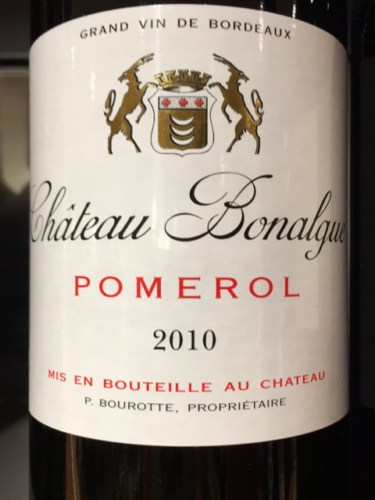
The second was much better. It was a 2010 Chateau Bonalgue from Pomerol ($115). It was complex with red currants, green pepper, coffee, leather, black cherry, vanilla, plum, chocolate and fig flavours and aromas. Do I need to say more than it was COMPLEX? I had a struggle telling what grape this one was, but then we were told it was a Bordeaux blend. Most of the class thought it was from the Left Bank (Cab Sauv dominant) but I could tell it was a Merlot based, velvety Right Bank wine. Also, I had had a Left Bank style wine from Township 7 just a couple days previous and remembered the difference!
I am enjoying the course very much (especially the wine tastings) and look forward to next week's class!
Subscribe to:
Posts (Atom)
Time to Taste an Albariño from Catalonia, Spain!
Today we're drinking an Albariño — but there's an interesting twist. This 2024 Raimat Albariño doesn't come from the cool, Atl...
-
It's been a while..... School had to end, then we were off on a trip to Eastern Canada for a couple of weeks Then a fishing trip ...
-
Way back, when I was first exposed to alcohol (I must have been legal, right?) I drank hideous wines. They were cheap and sweet and ...
-
This time we try a Provence Rosé - beautiful light pink wine from the South of France. This 2024 Miraval Studio is a very good wine with a...