Showing posts with label chablis. Show all posts

Friday, September 14, 2018

Tricky Tastings and Sticky Fingers - WSET 3.2


Today's class started out in a very hectic manner, especially for a recently semi-retired guy.

I had two wonderful clients for a wine tour that I was guiding (my part time job which actually uses some of my wine knowledge) and we ended up going a bit late. By the time I dropped them off, dropped the van off and scooted over to BCIT, it was 6:10pm. Why was that a big deal? Lynne, our instructor, is now holding a study session for the first half hour of every class where she puts questions on the board and we try to write down the answer - closed book - and that starts at 6pm sharp!

As it turned out, I had time to answer the questions - except for one.  It was, "Name the seven wine faults and odours that they produce".  I could name 'cork taint or TCA' (smells like damp cardboard) and 'volatile acidity' (smells like nail polish remover or vinegar) but that was about it. Of course, there was also Brettanomyces (smells meaty or like a bandaid), Reduction (rotten eggs), Out of Condition (stale), Oxidation (dried fruit), and Sulphurt Dioxide (acrid, sharp smell).

Then we went over all the things to do with growing vines including grafting, planting, crossing, and what the vines need (heat, sunlight, CO2, water and nutrients) as well as other things in the growing environment. We also looked at all the parts of the vine and how to prune wine vines - which got a bit complicated - especially as I don't really know how to prune a tomato plant or even flowers!

We talked about the different climates; Continental (biggest difference between hot and cold months, generally cooler temperatures overall - think - the Okanagan), Maritime (low difference between hot and cold months, generally cool to moderate temperatures overall - think Bordeaux or coast of California) and Mediterranean (low difference between hot and cold months, generally hotter temperatures overall - think Southern Rhone or Chile).

It was a lot of information to take in but, luckily, it builds on knowledge that I already have from WSET 2.

For tastings, I sat with Owen again and we had some new people including an English woman, Sarah, who was very nice - although at one point I thought her glasses were mine and I accidentally stole them. We'll see how friendly she is next week after the 'sticky fingers' glasses incident....

There were eight wines for this class. Most were the same wine grape with more subtle differences. One side benefit from WSET 2 - I now realize that I can tell most of the grape varietals from taste! Great party trick....

The first pair were two Chardonnay wines - one was higher quality than the other but both were from the same company. I always struggle with Chardonnay, I think because I'm not overly fond of it and, when I do drink it, prefer the oaky, slightly sweet version rather than the steely, mineral wine that is so valued.


The first was a 2015 Jean Marc Brocard Chablis ($42). I felt it had stone fruits on the nose, tropical fruit on the palate, but wasn't a very balanced or complex wine with a medium finish and medium plus intensity. It was rated as ready to drink now.


The second was a 2011 Jean Marc Brocard Grand Cru Chablis ($120). It had grapefruit and lemon peel on the nose and lemon and creaminess (from lees stirring) on the palate. It also had some oak. Overall, it was balanced, had a long finish and was complex so was rated as very good. It was also rated ready to drink. Grand Cru wines in Chablis are the best wines to be had.

I faired better on the second pair. This time we were looking at the same grape from the same country but one was grown on a flat area (where there's not the best drainage and sunlight is not as strong) while the better one was grown on the a steep slope with excellent sunshine.


First up was the 'bunny wine' - a 2016 Rudolf Müller Riesling from Pfalz, Germany ($17). This was a merely acceptable wine with some simple flavours and tastes of honey, pear and lime. It had a short length, was not all that intense and was not complex - the flavours that were there were fairly balanced. Drink it now!


The second Riesling was a 2011 J. J. Prüm Bernkasteler Badstube Auslese ($92). This glorious wine was both delicate and strong at the same time. The Germans have a sweetness system called the Pradikat and an Auslese wine is a fairly sweet wine - but not cloying at all. It would be a nice match for cheese, Asian food (especially Thai or Chinese) and dessert. There were lots of wonderful aromas (mineral, grapefruit, lemon peel, honey) and tastes and this wine was outstanding! You can drink this wine now but it will only get better with age!

The next two wines were supposed to be a comparison between a cool climate and a warm climate but in one of those 'mwa mwa mwaaaa" moments, the second wine had cork taint! We did have to taste it (yuck) and it was the cheaper one that was made in the warm climate (California) but that's all I got on it so I won't give any more information about that wine.


The cooler climate wine was a 2013 Olivier Leflaive Volnay Pinot Noir ($92) from Burgundy (Volnay is near Pommard in the Cote d"Or and has struggled in the past few years from grapes being wiped out due to hail). This pale garnet wine was full of red fruit and was high in acidity - so much so that I thought it seemed a bit astringent. Perhaps it needed some age? It was a good wine overall as it had good length and complexity.

The final two wines were both the same blend.

Courtesy Shopify

The first was a good wine. It was a 2015 Grand Bateau (made by Chateau Beychevelle - although you can't tell from their website) Merlot blend from Bordeaux ($24). There was some red fruit on the nose, high acid, medium tannins, and medium body. Not a terrible wine but not overly balanced or complex.
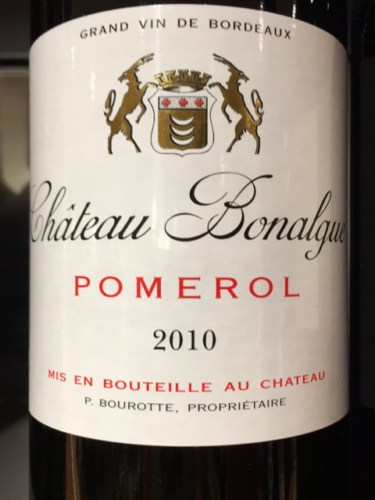

The second was much better. It was a 2010 Chateau Bonalgue from Pomerol ($115). It was complex with red currants, green pepper, coffee, leather, black cherry, vanilla, plum, chocolate and fig flavours and aromas. Do I need to say more than it was COMPLEX? I had a struggle telling what grape this one was, but then we were told it was a Bordeaux blend. Most of the class thought it was from the Left Bank (Cab Sauv dominant) but I could tell it was a Merlot based, velvety Right Bank wine. Also, I had had a Left Bank style wine from Township 7 just a couple days previous and remembered the difference!

I am enjoying the course very much (especially the wine tastings) and look forward to next week's class!


Wednesday, May 3, 2017

Why are the glasses so weeny? WSET Class 2 - Part 1

Yesterday, I rushed into Vancouver, picked up the car from the dealership after some repairs, spotted my youngest waiting for a bus and picked her up, had a lovely dinner for two at McDonalds, then breezed into WSET class number two - early!

Back it up.

Why McDonald's?

Both my youngest and I had courses in Vancouver. She is taking a bridal makeup course (on the way to certification in movie makeup) and I, of course, had my wine course.

We both needed something to sustain ourselves and were in a hurry and ended up in my favourite place to hate - McDonalds. I do like how you can tap a screen to order and I really like how they have the calories for each item which helped me make a less horrible choice.

Regular glass on left, weeny glass on left...

After I dropped off Jude, it was off to WSET and I was pleased to be a bit early. Part of my wanted to be the "keep it fresh" teacher and sit with totally different people but entropy took hold and I sat down with my group from the previous week. This turned out to be a good thing because we were all more social this week and had opportunities to discuss each pair of blind wines as the night went on. I  also heard about a couple of great poke places (fish and rice dish that is sort of Hawaiian take on sushi) that I will have to try next week.

Onto my big beef - the weeny glasses. The glasses we use for tasting is my biggest complaint about the course. Yes, I understand that you need the same glass for every wine to reliable tell the difference but, damn, they are so weeny?

Why do I care? Because it is difficult for me to figure out the nose with such weeny glasses. I just can't get my big honker far enough down the bowl of the glass! I find that I am struggling a bit with accurately discerning the nose with such a small glass....

Onto the wines....

The first two wines were an interesting blind tasting challenge. They were both whites and were both from the same region.


The region they were both from was Alsace. Alsace is famous for three main wines - Riesling, Pinot Gris, and Gerwürztraminer. 

The first one was a Pinot Gris  (obviously from Alsace) which was a Muré 2014 ($27). It was a clear, medium, lemon coloured wine with apple and citrus fruit on the nose. Interestingly, our teacher, Dave, said that it was off dry but I would say half the room thought it was a dry wine. However, I think Dave is correct.

The wine had high acid and a medium finish. Overall a good wine. 


The second was also from Alsace and was a better wine. It was a Gerwürztraminer Grand Cru which means it is the top of the producers in the region. The Pfaff Gerwürztraminer Steinert ($31) had a deep colour as well as a floral and tropical nose. The taste was off dry (and it actually tasted off dry!) and was much more complex with nectarine, mango, and caramel. It had medium acidity (which was why you could taste the sweetness) and a medium + finish. This full bodied wine was rated as Very Good. 

I do like a good Gerwürztraminer and have bought it many times in the Okanagan. I might be inclined to snap up a bottle of this for a special occasion....

By the way, when we taste, we are asked to guess the varietal of the wine. I think that is something that comes with practice but I did do better on the next one. 

This time the two wines had a similar grape - both were, in fact, made with the same varietal. 


The first was a Chablis (Chardonnay grapes grown in the Chablis area of France) made by Garnier and Fils and was a Premiere Cru (which is between Villages and Grand Cru). It was a 2015 vintage and goes for $48.

It was a pale wine (so a cooler climate) and was clean with apples and pears on the nose. The taste was pretty complex being dry with citrus, lemon, grapefruit and a chalkiness. It was high in acidity, light bodied, and had a medium plus finish. This was a Very Good wine.


The last wine before the break was a Trefethen 2014 Chardonnay from Napa Valley in California. It was a medium wine in colour and medium intensity in the nose where I smelled apple and peach. It was a warmer climate wine. 

On the palate was medium acidity and it was dry with higher alcohol (14%). I tasted lemon, peach, tropical flavours as well as some associated with oak such as vanilla and toast. Dave did mention banana but I didn't taste it. This was rated as Very Good. 

After we tasted each pair of wines and before Dave told us what they were, we discussed in our table what we thought the wines were. I am new to this game and I find it super challenging but I did get these ones - probably thanks to the two Chardonnay wines I had a few blog entries ago! Sadly, someone else in the group mentioned Chardonnay first to our group - but I am a bit reticent to blurt out what I think wines are - at least at this point. 

More wines to come on the next blog entry including something zinfully good! If only I had a decent sized glass....


Sunday, April 23, 2017

You say Chablis, I say Chardonnay

Chardonnay map - from Wine Folly
Chardonnay is a white wine grape that's grown frickin' everywhere! Well, everywhere in the wine world, that is....

I start my WSET Level 2 course on Tuesday so I looked at the course outline sent to me a few days ago. The first two weeks seem to cover general aspects of wine, wine production, wine pairings, etc. It's not until week 3 that we start looking at specific varietals. During week 3, Chardonnay and Pinot Noir are the main events.

In my readings and Youtube viewings, I've learned a little about Chardonnay. It can be produced in hot,  moderate and cool climates, each giving the wine a different characteristic. The other interesting thing for me is that Chablis is actually a region where Chardonnay is grown, not the grape (Check out this humorous article, "I don't like Chardonnay, but I do like Chablis". There are many other examples of this region/grape confusion and I will touch on it again in later entries.

Areas of Chablis from Winefolly
I want to get a bit of a jump on things, so I decided to buy a couple of Chardonnay wines and try them out.

This time I went to the Signature liquor store in Pitt Meadows (for those not in the know, a Signature liquor store is sort of an enhanced version of our regular government liquor store). My wife and I looked around and I went over to the fancy wine section and tried to figure out what wines to choose. Luckily, the wine expert (he has been extremely helpful in the past) showed up and I explained my predicament. He suggested two wines, and I bought them both.


The first wine he suggested was a Chablis that was more or less typical for a good example. I haven't drunk a lot of Chablis, so I really didn't know what to expect. The wine was a Drouhin Vaudon Reserve de Vaudon Chablis 2014 ($36.99). Hey, with wine names like that, I'm already sounding like an expert!

After chilling the wine (but not freezing it to a Chablis-sicle) I pulled the wine from the freezer. I grabbed a corkscrew and expectantly punctured the cork. As the cork slowly came out of the bottle, I wondered how it would taste - and then the cork broke! Three-quarters of the cork was on the corkscrew and a quarter was left in the bottle! that made me think back years ago to the cheap corks used for homemade wine where a similar thing would happen and the wine would become saturated with tiny bits of cork. I shuddered. Luckily, after re-puncturing the cork, the final quarter came out smoothly.

The wine was clear and pale golden in colour. The aroma was apples and apricots which was also very evident in the taste. There was an overall fruity taste as well.

There was also something else - herbal? no... spicy? no.... ahh, acidity!

All wine has some acidity but with the Chablis, it was really noticeable. Not that it was bad - it was just noticeable.

It was light bodied (and unoaked, like all Chablis) and had a crisp clear finish.

Overall, it was a very nice wine to drink - a refreshing wine with some delicate flavours. The wine expert suggested seafood with a cream sauce so I whipped up a garlic shrimp cream sauce over homemade linguine. It was a fabulous pairing! The recipe is here - the only difference I made was to only put the shrimp in boiling water for one minute.

I also bought a typical oaked Chardonnay from the US which I intended to try out at a later date. Then our good friends Greg and Sheila called us and we invited them to drop by for a drink. Out came the next Chardonnay!


This one was the Toasted Head Barrel Aged 2015 Chardonnay. This wine is from California with grapes mostly from a place called Dunnigan Hills (20 miles - or 30 km - east of Napa Valley).  It rocked in the label department.

Dunnigan Hills, California - from SVB on Wine

This one was certainly bolder than the first. It seemed a bit sweeter and I could taste apricot (again), butter, maybe some butterscotch (that, after reading the label) and some peach. It was definitely more full bodied than the first one and I think that the order I drank them in was good. I couldn't taste so much apple this time. The acidity was definitely there, however.

Overall, the two Chardonnays were very different. The oaking made a difference but there was also a boldness in the California wine that was contrasted with the subtleness of the Chablis. I think the Chablis was a good one to have with the seafood cream sauce but would be overwhelmed by other, stronger dishes. The California Chardonnay, on the other hand, seemed a bit more versatile, as it had a bolder flavour and could stand up to a variety of different foods - off the top of my head - maybe fish, chicken, and even pork but might overwhelm a seafood with a cream sauce.

This kind of homework, I could get used to!


Time to Taste an Albariño from Catalonia, Spain!

  Today we're drinking an Albariño — but there's an interesting twist. This 2024 Raimat Albariño doesn't come from the cool, Atl...