Showing posts with label bordeaux. Show all posts

Wednesday, May 29, 2019

Small Wineries Equals Great Wines - St. Emilion Wines -Bordeaux Wineries Part 6


St. Emilion is wonderful. It is nestled on the Right Bank of the Bordeaux region and is a beautiful medieval town with narrow, twisty roads, a wonderful church spire and is not overrun by tourists.


The day we went, it was a beautiful, warm, sunny day without a cloud in the sky.


We weren't even sure what some of the ruins were - this one looks like it might have been from another church - and we didn't have a lot of time as it was actually a stop between our visits to two wineries that day.


Many of the streets were cobblestoned and were a bit challenging to walk on, especially this steep downhill street. It must have been very exciting in times of old when it rained and residents had to negotiate the slippery streets. 


As I said, we stopped here for lunch, We booked online at Lard et Bouchon and had a wonderful meal.


My favourite part of the meal was the Oeufs en Meurette - basically a special wine sauce with bits of Beef Bourgignon in it with a couple of toasted bread crostinis which had a slab of foie gras on each one topped by a poached egg. I have never had anything like it before and it was heavenly! We both had a tasty piece of duck next and then, my wife's favourite, the deconstructed lemon tart. 


So, what did we do to earn such a wonderful meal? Visited some wineries, of course!

The Right Bank is not so showy as the Left Bank was. The chateaux are often just houses, not castles. The wine production is smaller. The wines are less expensive. 

But the wines are just as good. 

Practical information - unless you take a wine tour, you will need to rent a car. You will also need a good GPS (I used my iPhone and wayyy too much data) to find the wineries. It's also important to book ahead which I was able to do online by sending an email.


When we rolled up to the first winery, Chateau Cantenac, we knew it was a different. The chateau was nice but looked, well, lived in! We were greeted by our host, A.J., who was from California. When we asked her how she ended up in St. Emilion, she told us this story. 

The parents, who own the winery, have three sons. A few years ago, they had interns come each summer to help with the wine season. A.J. came from California - and married one of the sons. Another intern came from Toronto - and married another one of the sons. Another intern came from the States - and married the last son! By that time, the parents had asked that no more female interns be sent, but it was too late! All of the sons have had daughters so, in a few years, maybe there will be some male interns sent to the winery!


A.J. took us out to the vineyard and we spent at least a half hour schlepping around the vines while A.J. regaled us with stories of the wine. My wine nerd meter was at 10 - I loved every minute of it - but even my distinctly less nerdy wife also enjoyed this part.


A.J. talked about the different types of pruning, wine varietals, and grafting among other things. She really knew her stuff and I wish I'd been able to see all of this when I was doing my WSET. It all made so much more sense, because we were actually in the vineyard!

Founded in 1870, Chateau Cantenac has always been a family winery with the current family purchasing the winery in 1937.  They grow predominantly Merlot and some Cab Franc with a little Cab Sauv on just 19 hectares. 


Inside the winery, we first saw their concrete tanks. These are used to ferment the wines at the beginning of the wine cycle and used to blend the different wines near the end.  A.J. told us how the intern has to clean out all of the grape skins and other leftovers after the wine has finished fermenting. It's a crappy job, with the additional danger of carbon dioxide asphyxiation, which necessitates oxygen being pumped into the tank during cleaning. 


The barrel room in Chateau Cantenac is not only for wines. There are concerts (of the classical type) held in the barrel room during different times of the year. What a great idea! 

The wines were, overall, more approachable than the Left Bank wines - meaning that they don't require a lot of ageing.


The first wine we tried was from another St. Emilion winery in the family, a 2015 Chateau Moulin de Grenet ($20) from Lussac. This wine is 75% Merlot and 25% Cab Sauv and was aged for 18 months. This was the most approachable wine of the tasting, being a fruity and fresh wine that was ready to drink now. It had aromas of blackberry, black currant, and cherries as well as some earthiness. On the palate, there was medium acidity, a slight taste of oak, medium tannins, and a medium finish,. Overall, a Good wine. 


The next wine was a 2015 Chateau Cantenac Grand Cru Selection Madame ($32).  This wine is made with 95% Merlot selected by the mom of the winery (the other 5% is Cab Sauv).  This wine has lots of dark fruit like plum and blackberry as well as cedar, vanilla spice, and some earthy characteristics like leather. This is another fruity wine that should be drunk in the next couple of years rather than waiting ten years. There were some medium to medium plus tannins, medium acidity , and a medium plus finish. I felt this wine was balanced, complex and fairly intense - so I would give it a rating of Very Good. 


The final wine of this chateau was the 2015 Chateau Cantenac Grand Cru Grand Vin ($34) - the best wine of the property.  This wine was 70% Merlot, 18% Cab Sauv and 12% Cab Franc.  On the nose, this wine had black cherry, blueberry, plum and blackberry. On the palate, this wine had additional flavours of oak, cedar, smoke and earth and had medium tannins and acidity. It had complexity, balance, and a nice medium plus finish. I would rank this wine as Very Good. 

They had a deal at the winery - all three wines for €50 - guess what we bought?

In the afternoon, we went to Chateau Coutet for our final tasting. Luckily, we had my iPhone because it was hard to find - narrow roads, dirt roads, and finally driving by the vineyards on what seemed like a trail, we managed to find winery. We got out of the car and were greeted by a couple of smelly farm dogs and the sound of bird song in the air. What a great start!


We finally found the entrance to the winery and we were given a private tour by Capuchine, an intern.  Dating from Roman times, the current family has owned this chateau for 400 years.

She first took us to the vineyard where she showed us that tulips were able to co-exist with the vines due to the organic nature of the winery. In fact, the property had a thick hedge going all the way around it, preventing contamination from other farms. They have been organic for a long time and are proud of their legacy.


This grape press is over one hundred years old and is still used today to extract the juice from the grapes. The 13 hectares of grapes are 60% Merlot,  30% Cab Franc, 5% Cab Sauv and 5% Malbec. 


This winery did not have such a fancy place to store their barrels. However, the room smelled good and the wine ended up being a great product.


Ah, again, the dusty collection of amazing old wines. One that isn't here is a bottle that was found recently under a pile of dirt when a winery worker was fixing a broken wine rack. The bottle has been determined to be from around 1750! During this era, most wine was aged and sold in barrels, not bottles - but some special bottles were made - with glass stoppers. Because glass is airtight, the wine inside that bottle will taste just like it did when it was bottled over 250 years ago.  


Capuchine gave us a very interesting tour but the best part, of course, was in the modest tasting room. 


The first wine we tried was a 2015 Chateau Belles-Cimes Saint Emilion ($25). It was a fruity wine with aromas of black plum and black pepper. It had medium tannins and medium acidity and had some vanilla on the palate. It was a balanced wine, but not overly complex, with a medium finish but good intensity. I would rate this wine as Good.


The second wine was the 2015 Chateau Coutet Grand Cru ($42). This somewhat tannic wine had aromas and tastes of blackberry, black cherry, blueberry, plum, cedar, tobacco, coconut, as well as mushroom, smoke and leather. What a complex wine! With medium plus acidity, a long finish, intense flavours, and a balance of flavours, I would rate this as Outstanding and will hold onto it for a few years.


The final wine we tried was the 2015 Chateau Coutet St. Emilion Grand Cru Cuvée Desmoiselles ($98).  This wine is made the traditional way - including interns' bare feet to work the cap during fermentation! This wine had aromas of blackberry and black currant as well as black plum, cedar and vanilla. It was bit more tannic than the last wine so would benefit from more ageing time. This had a long finish, was balanced and had good intensity of flavours. I would give this wine a rating of Very Good. 

We ended up with a bottle of the Grand Cru - a wine I think was a great deal for the money. 


As we left the winery, we emerged outside into the wonderful sounds of birds chirping and dogs romping around in the sunshine. If you look closely, you'll see some ducks and geese in the distance at the top of the photo. 

We both loved St. Emilion. We would definitely come back here to explore the village some more and to try out more of the great wineries in this region. A great day!

Santé!


Monday, April 22, 2019

Best Wine in Bordeaux! Bordeaux Wine Tour Part 3 - Pichon Baron


When we arrived in Bordeaux, we were thrilled that our AirBnB was roomy, clean and well situated. But what really impressed us was our balcony. The building had many apartments and had previously been a seminary. The only balcony in the entire place, however, was the one outside our front window!


The weather was warm enough to enjoy lunch and some rosé the first couple of days we were in Bordeaux. Our view down the street was oh, so French, and gave us a true appreciation of what it might be like to live there.

Bordeaux is a fantastic city and we really enjoyed our visit.

So... why is Bordeaux even there? Originally a Celtic settlement, then came the Romans (who introduced wine to the region), Vandals, Visgoths, Franks, Aquitaines, Charlemagne, Basques, and Vikings until the 12th Century when Eleanor of Aquitaine and King Henry II of England married and wine became the main industry in Bordeaux.

Although there were blips, Bordeaux continued to feature wine and, in 1855, Napoleon III was responsible for the famous Classification where Left Bank wineries were classified as first, second, third, fourth or fifth growths.

We didn't go to Chateau Margaux but did get this nice photo...
Chateau Margaux, for example, is a first growth - sadly, we only stopped by for a photo - it is incredibly difficult to get into a first growth.

We did however, go to another excellent second growth - Pichon Longueville Baron - or just Pichon Baron.  This winery was in Paulliac - think the solid brother Paul - not super strong like Stephen (Estephe) nor overly relaxed like Julien.


This chateau is absolutely stunning from the outside. The black roofs on the towers contrasting with the stone used to build the chateau are gorgeous. The pool in front actually has a partial glass bottom - below which is one of the barrel rooms where you can look up and see the water. Very cool.

Like so many other chateaux in Bordeaux, this winery is owned by a big company - this one is an insurance company - so no one actually lives in the chateau - I wonder if they'd rent me a room?  The winery has 73 hectares with the average age of the vines being 30 years. 


Our guide, Lucas, gave an interesting tour and was actually from Australia. It was weird to listen to him speak French to his colleagues as he sounded fluent but had a definite Aussie accent when speaking! He took us to the giant oak fermenters and I was impressed by how clean and bright everything was!


Some of the wine was aged in oak barrels. Again, the winery sourced several different barrels form different barrel makers because each variety of French oak and each level of toasting inside the barrel imparts a different taste to the finished wine.


Many of these wineries have a library of different vintages. Pichon Baron had this as well but I don't recall being able to schlep around the bottles - I think the wines were all locked up in the glass enclosure. Looking carefully around the photo, I found a date of 1937 - pretty old - and according to wine-searcher worth between $749 and $2268!

Cheers, mate! Our winery guide, Lucas.
After our tour, Lucas took us to the very chic tasting room. I forget his exact story but he had returned to Pichon Baron in the past few days after a hiatus where he was either travelling or working at an Australian winery. 

We tasted their two second label wines and then, their glorious first label. 


Our first wine was the 2016 Les Tourelles de Longueville ($75). This wine struck me as fruity with aromas and tastes of black fruit like black currant, blackberry, and plum. This had medium acidity, medium plus tannins, and a medium finish. This wine was made form 52% merlot, 30% cab sauv and the rest petit verdot and cab franc. 30% of the wine was aged in barrels that were new while the rest of the wine was aged in year old barrels. The barrels gave the wine tastes of tobacco, vanilla and cedar. This wine should be aged at least 10 years as it was definitely young. This was fairly complex, was a bit too tannic to be balanced, was intense in its black fruit flavours, and had a medium finish. I would rate this as somewhere between Good and Very Good.


Wine number two was another second label wine, the 2016 Les Griffons de Pichon Baron ($95). This wine was 52% Cab Sauv and 48% Merlot. Les Griffons was grippier than the first one - having strong tannins and probably requiring 10 to 15 years in the cellar. There were aromas and tastes of black fruit like plum and cassis (although not as fruity as the first one) with oak notes of cedar and chocolate. There was also a wonderful vegetal-earthy-smoky taste to this wine.

Les Griffons had medium plus acidity, intense flavours, complex taste, a medium plus finish, and was fairly balanced. I would rate this wine as Very Good.


Saving the best for last, we had the 2016 Chateau Pichon Baron ($240). This wine was 85% Cab Sauv and 15% Merlot - now we're talking! The wine was aged in 80% new oak. There were aromas and tastes of black fruit like cassis, blackberry, and black currant as well as tobacco and cedar from the oak. The tannins were strong but not overpowering. This wine could keep for 20 years but I certainly couldn't wait that long! There were tertiary flavours of leather, mushroom, earth and smoke.

Just listing the taste profile, however, does not do this wine justice. It was an amazing wine which tasted so good. In a day of tasting so many great wines, it was easily the best of the day. This wine was so very complex, beautifully balanced, definitely intense and had a great, long finish. It was simply one of the best wines I have ever tasted.

I ended up buying one - but it wasn't the 2016 - it was the 2015 which is rated even higher (and has a price of $280 - although we spent a bit less than that).  I'm not sure if I can leave it in the cellar for 10 months, let alone 10 years! Definitely rated Outstanding.


Wednesday, April 17, 2019

Amazing Wines from St. Estephe - Bordeaux Wine Tour Part 2

Chateau Lafon-Rochet

While in Bordeaux, we visited an interesting museum that has only been open since 2016. The Cité du Vin is part museum, part propaganda for the wine industry, part science world, and part wine bar.


For €20, we had access to the main exhibit which was the story of wine. There was a lot here - history, geography, different countries that make wine, different wine makers, advertising in wine, the aromas in wine - it was a very comprehensive exhibit that was interactive.

Enjoying a glass atop the Cité du Vin

The best part, however, was reminiscent of the Guinness Brewery in Dublin, We were given a special ticket at the beginning of our visit. At the top of the building, that ticket was good for one wine from a selection of many around the world. After we made our choice, we enjoyed our glass while we looked out over Bordeaux. Of course, I had picked a wine from Bordeaux...

Our second stop on our wine tour was Chateau Lafon-Rochet. I was looking quite forward to this as I bought a bottle of their 2015 wine at the Bordeaux release last year (and it currently resides in my cellar).


Chateau Lafon Rochet is in St. Estephe (Big brother Steven, when studying for my WSET). The wines here characteristically have a higher percentage of Cab Sauv and are higher in tannins that most other Bordeaux wines. I really enjoy them, even when they are young.

Our excellent guide, Bogdan, drove up to the chateau and we got out and met our winery guide, Mathilde. She spoke English well but had a wonderful French accent that was a pleasure to listen to.

After introductions, we talked about the grapes in the vineyard (just 45 hectares - not huge for Bordeaux) and about the different owners. The current owners, the Tesseron family, apparently did not think that it was that easy to see the winery from the road so they painted the chateau yellow - it is very easy to see from the road now! In fact, the labels on the wines are all bright yellow as well.

While stomping through the grounds, we were fortunate enough to meet the owner, Basile Tesseron. He was a very approachable man and took time to chat with us for a couple of minutes.


In the winery, we saw something that was not uncommon in some of the places we visited - concrete fermenters.

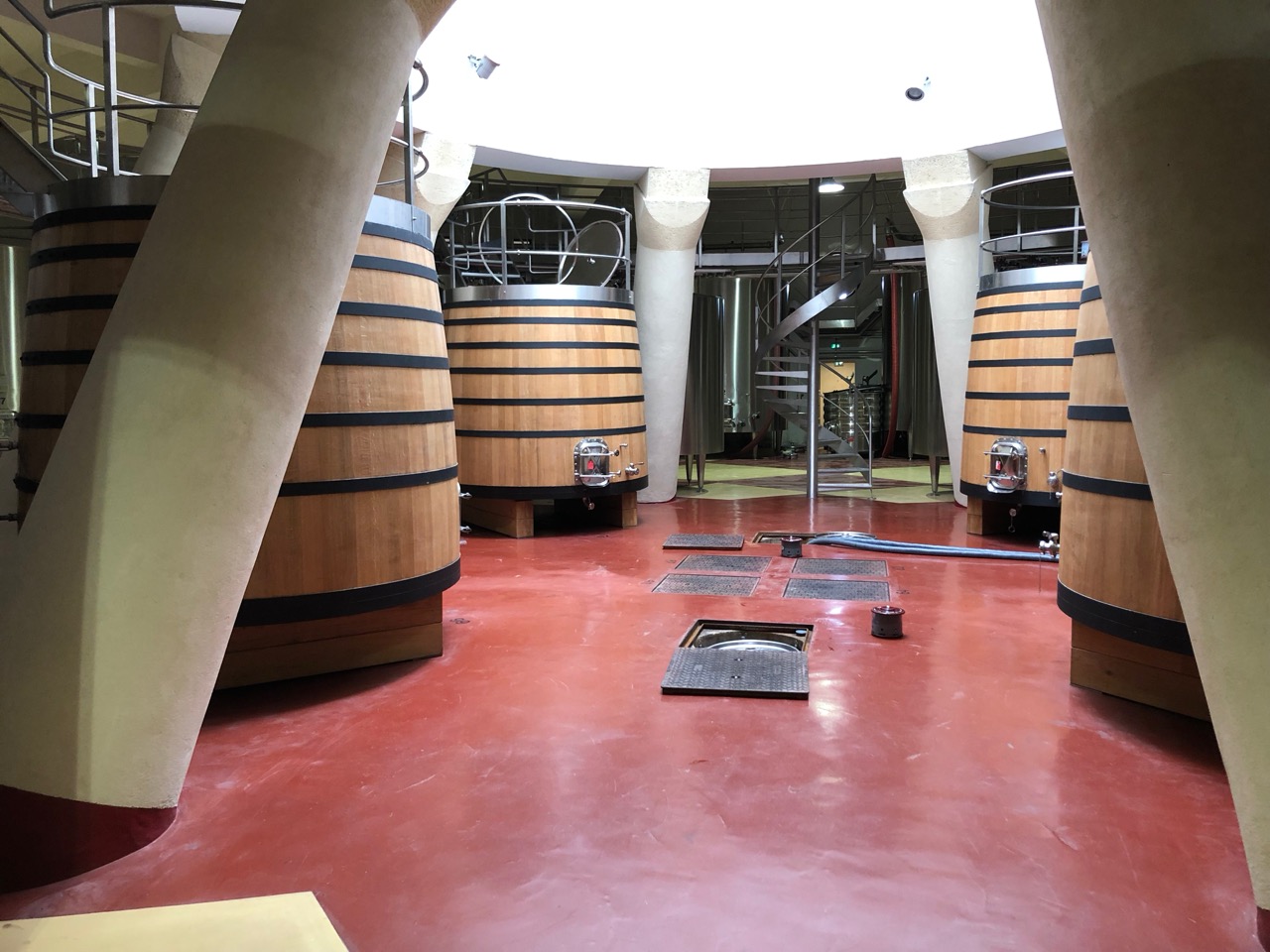
At home, in the Okanagan, most wineries use stainless steel to ferment their wines. In Bordeaux, we saw stainless steel but also those giant oak fermenters and, in Chateau Lafon Rochet, big concrete fermenters. They were popular many years ago and then fell out of favour but are becoming popular once again as a choice for fermenting at least part of the juice.


As you can see, stainless steel is also used in this chateau. This vat is 68 hectolitres which is 6800 litres and the wine, Les Pelerins, is the name of their second label.


They had quite the nifty computer terminal which showed all of the temperatures for all of the fermenters. There are alarms and other safeguards if there is a problem with the temperature at any point.


Mathilde was also able to use the screen to show us the different grapes planted in the different parts of the vineyard. Mostly Cabernet Sauvignon, followed by Merlot, with some Petit Verdot and just a soupçon of Cab Franc.


The barrel rooms may all look pretty similar, but I love them all. The smell and the feel of these areas are so distinct and enjoyable.


As with most of the wineries, they choose several different barrel makers from different regions of France to make slightly different barrels of wine which are carefully blended before bottling.


Ageing in this big barrel imparts less spicy oak flavour and tannins. The wineries are always trying out new things. We had the added benefit of being able to do a barrel tasting at Lafon Rochet! I find this fascinating as the wine is still very young and, while not ready to drink, you get an indication of where it is going. This wine will likely be an excellent vintage as there was definite fruit flavours as well as strong tannins.

If you ever get a chance to do a barrel tasting, I would strongly suggest that you go ahead. It really helps give you an understanding of the whole wine making process.


This clay amphora is another experiment that the winery is working on. I'm not sure why I was so surprised that even the most successful wineries of the world were busy trying to make their wines better.


After another excellent tour, Mathilde took us into the tasting room where we had three tastings - one of their second label, Les Pelerins, and a vertical of two of their first label, a 1997 and a 2008.


The first wine we had was their second label, Les Pelerins de Lafon-Rochet ($35). This was a 2015, the same year as the first label I bought last year. My first impression was - this is just their second label? Ooh la la!

There was a lot of fresh, black fruit on the nose and on the palate including black currant, plum, blackberry and blueberry. There were some oak flavours like tobacco, coffee and other spices. There were also wonderful ageing flavours like mushroom and leather. This wine had high alcohol, medium tannins, and a medium finish. It is suggested that you decant this wine an hour before serving.

This wine had definite fruit flavours that were quite tasty. It was not an overly complex wine or a wine that had astringent tannins. This was definitely the second label but that was fine - I enjoyed it and feel that it was one to drink now. Overall, I would rate this as Very Good.

I enjoyed this one so much that I decided to purchase one, considering I already have a first label at home.


The second wine was a bit of a treat - a wine from all the way back to 1997! The 1997 Chateau Lafon-Rochet ($164) is probably a drink now kind of wine although it could possibly spend a couple more years in the cellar. Mathilde said that this wine was a difficult vintage - it was a big challenge to get the grapes successfully off the vines - but they did it.

This wine had aromas and tastes of  cassis, black cherries,. plum, blueberry, and just a hint of jam.  There were oaky notes of cedar and tobacco and tertiary flavours of mushroom, forest floor, leather, and smoke. This was a complex and rich wine and was settling down nicely in terms of tannins thanks to 22 years in the bottle. A nice long finish helps give this wine a rating of Outstanding.


The final wine was a 2008 Chateau Lafon-Rochet ($60). This year was good in Bordeaux and this wine is a classic vintage that could be cellared for a while longer.

This was a good wine - not quite as tasty as the 1997, but still good. This wine was spicy  - along with black fruits like black currant and blackberry, there were tastes of cedar and pepper that really made themselves known. This highly tannic wine also had a bit of salinity which was a bit unusual. I would rate this wine as Very Good.

As I noted in my last entry about my guided trip, when I studied the four areas of Bordeaux (St. Estephe, Paulliac, St. Julien, and Margaux) I used the analogy of the three brothers (big, tough Steven, strong Paul, relaxed Julien) and their sister (soft and velvety Marg). While Lafon-Rochet wines did have some definite tannins, they were not overly extracted or too strong.

Maybe I don't have to wait until 2030 to have that first label from 2015?

Time to Taste an Albariño from Catalonia, Spain!

  Today we're drinking an Albariño — but there's an interesting twist. This 2024 Raimat Albariño doesn't come from the cool, Atl...