
When we arrived in Bordeaux, we were thrilled that our AirBnB was roomy, clean and well situated. But what really impressed us was our balcony. The building had many apartments and had previously been a seminary. The only balcony in the entire place, however, was the one outside our front window!

The weather was warm enough to enjoy lunch and some rosé the first couple of days we were in Bordeaux. Our view down the street was oh, so French, and gave us a true appreciation of what it might be like to live there.
Bordeaux is a fantastic city and we really enjoyed our visit.
So... why is Bordeaux even there? Originally a Celtic settlement, then came the Romans (who introduced wine to the region), Vandals, Visgoths, Franks, Aquitaines, Charlemagne, Basques, and Vikings until the 12th Century when Eleanor of Aquitaine and King Henry II of England married and wine became the main industry in Bordeaux.
Although there were blips, Bordeaux continued to feature wine and, in 1855, Napoleon III was responsible for the famous Classification where Left Bank wineries were classified as first, second, third, fourth or fifth growths.
 |
| We didn't go to Chateau Margaux but did get this nice photo... |

This chateau is absolutely stunning from the outside. The black roofs on the towers contrasting with the stone used to build the chateau are gorgeous. The pool in front actually has a partial glass bottom - below which is one of the barrel rooms where you can look up and see the water. Very cool.
Like so many other chateaux in Bordeaux, this winery is owned by a big company - this one is an insurance company - so no one actually lives in the chateau - I wonder if they'd rent me a room? The winery has 73 hectares with the average age of the vines being 30 years.
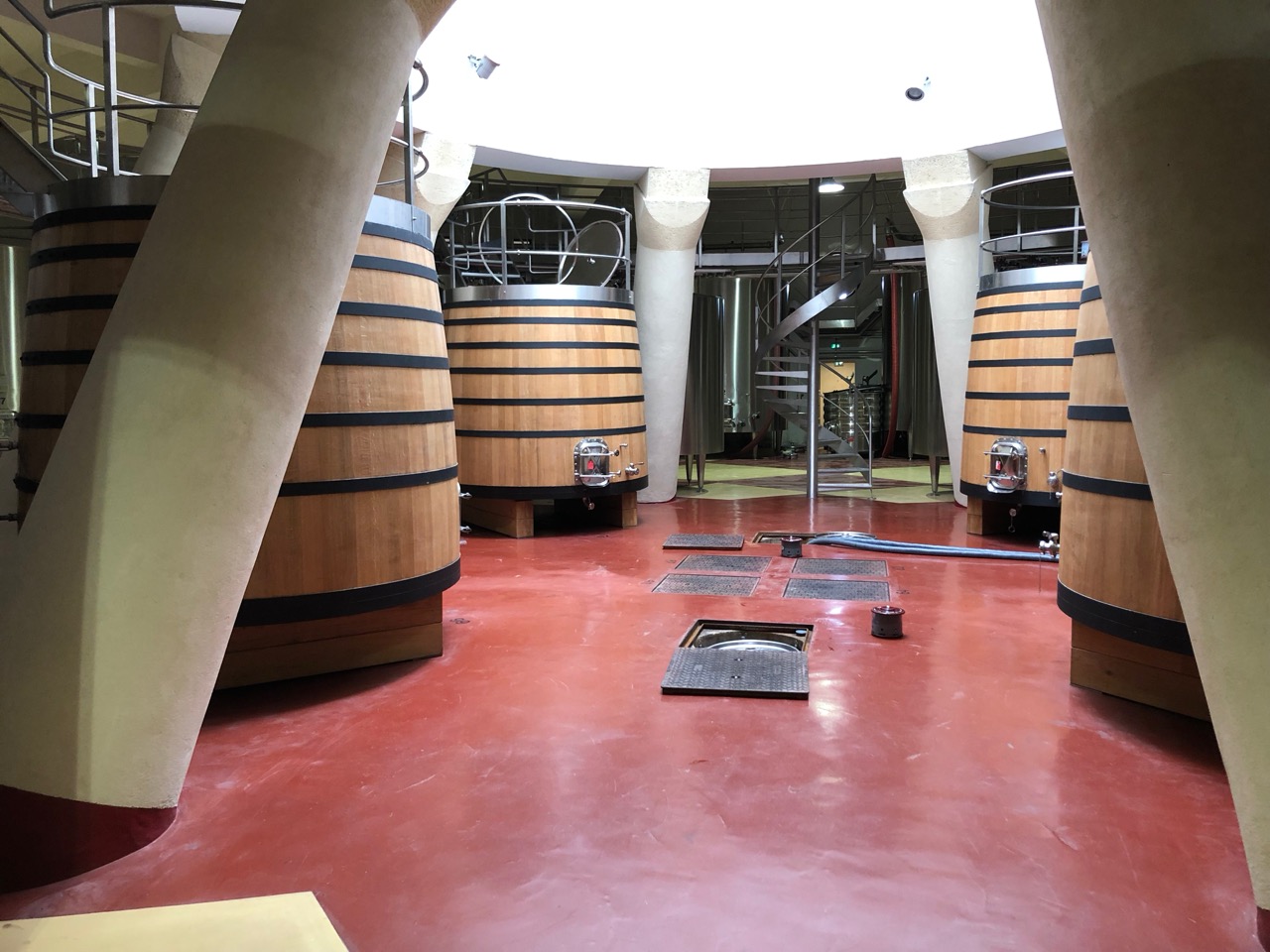
Our guide, Lucas, gave an interesting tour and was actually from Australia. It was weird to listen to him speak French to his colleagues as he sounded fluent but had a definite Aussie accent when speaking! He took us to the giant oak fermenters and I was impressed by how clean and bright everything was!

Some of the wine was aged in oak barrels. Again, the winery sourced several different barrels form different barrel makers because each variety of French oak and each level of toasting inside the barrel imparts a different taste to the finished wine.

Many of these wineries have a library of different vintages. Pichon Baron had this as well but I don't recall being able to schlep around the bottles - I think the wines were all locked up in the glass enclosure. Looking carefully around the photo, I found a date of 1937 - pretty old - and according to wine-searcher worth between $749 and $2268!
 |
| Cheers, mate! Our winery guide, Lucas. |
After our tour, Lucas took us to the very chic tasting room. I forget his exact story but he had returned to Pichon Baron in the past few days after a hiatus where he was either travelling or working at an Australian winery.
We tasted their two second label wines and then, their glorious first label.

Our first wine was the 2016 Les Tourelles de Longueville ($75). This wine struck me as fruity with aromas and tastes of black fruit like black currant, blackberry, and plum. This had medium acidity, medium plus tannins, and a medium finish. This wine was made form 52% merlot, 30% cab sauv and the rest petit verdot and cab franc. 30% of the wine was aged in barrels that were new while the rest of the wine was aged in year old barrels. The barrels gave the wine tastes of tobacco, vanilla and cedar. This wine should be aged at least 10 years as it was definitely young. This was fairly complex, was a bit too tannic to be balanced, was intense in its black fruit flavours, and had a medium finish. I would rate this as somewhere between Good and Very Good.

Wine number two was another second label wine, the 2016 Les Griffons de Pichon Baron ($95). This wine was 52% Cab Sauv and 48% Merlot. Les Griffons was grippier than the first one - having strong tannins and probably requiring 10 to 15 years in the cellar. There were aromas and tastes of black fruit like plum and cassis (although not as fruity as the first one) with oak notes of cedar and chocolate. There was also a wonderful vegetal-earthy-smoky taste to this wine.
Les Griffons had medium plus acidity, intense flavours, complex taste, a medium plus finish, and was fairly balanced. I would rate this wine as Very Good.

Saving the best for last, we had the 2016 Chateau Pichon Baron ($240). This wine was 85% Cab Sauv and 15% Merlot - now we're talking! The wine was aged in 80% new oak. There were aromas and tastes of black fruit like cassis, blackberry, and black currant as well as tobacco and cedar from the oak. The tannins were strong but not overpowering. This wine could keep for 20 years but I certainly couldn't wait that long! There were tertiary flavours of leather, mushroom, earth and smoke.
Just listing the taste profile, however, does not do this wine justice. It was an amazing wine which tasted so good. In a day of tasting so many great wines, it was easily the best of the day. This wine was so very complex, beautifully balanced, definitely intense and had a great, long finish. It was simply one of the best wines I have ever tasted.
I ended up buying one - but it wasn't the 2016 - it was the 2015 which is rated even higher (and has a price of $280 - although we spent a bit less than that). I'm not sure if I can leave it in the cellar for 10 months, let alone 10 years! Definitely rated Outstanding.


