 |
| A group of friends in the midst of an amazing wine tasting. |
As I have alluded to before, people make great connections and friendships while doing the WSET course. We were all in it together, trying our best to pass the course, feeling the pressure of learning such a vast amount of information and feeling the pleasure of tasting wine together.
But it finished in December!
Happily, the group that I have tasted with before - the friends that I have tasted with before - are continuing to get together. The first time, since our test, was a couple weeks ago when I was in France.
The next time was just last Thursday.
Andrew was our host. He has taken both his WSET 3 and a comparable level of his CMS - Court of Master Sommeliers. He works at a restaurant but also works at a local independent liquor store and, therefore, can get a great deal on great wines!
Verity and her partner, Joey, were also in attendance. I took my WSET 3 with Verity - in fact, she related the story of our first class together - we had a champagne and some minor bubbles like Prosecco in a blind tasting. Both of us proudly announced that the Prosecco was the great wine, much to our chagrin! We both learned an awful lot more about wine since that first class. Verity also completed a comparable level of her CMS.
When I took my WSET, Sarah sat beside me every class - she was my WSET Buddy! It was great to see her at the tasting and reconnect with her once again.
A new person (for me), Steph, was working on the same level of CMS that Verity and Andrew had achieved. She is an actual Sommelier at a famous Vancouver restaurant!
Finally, my buddy, Stewart, whom I have known since high school (when we used to drank a gallon bottle of Calona Medium White) came along as well. Although he has not completed a formal wine course, Stew is well versed in the wine world (we've both come a very long way).

After everyone arrived, Andrew welcomed us with a glass of 2016 Crescent Hill Glennallyn Private Reserve Gewürztraminer from the Okanagan. As is common with this varietal, it was very aromatic and was a tasty, light way to start off our night.
Andrew always does such a good job!
Our next wines were blind tastings. We had three whites and three reds.
Our first white was described by Steph, who spoke with such confidence that I was drawn in, hook. line and sinker, to what she thought the wines were. We tasted, and swirled, and spat.
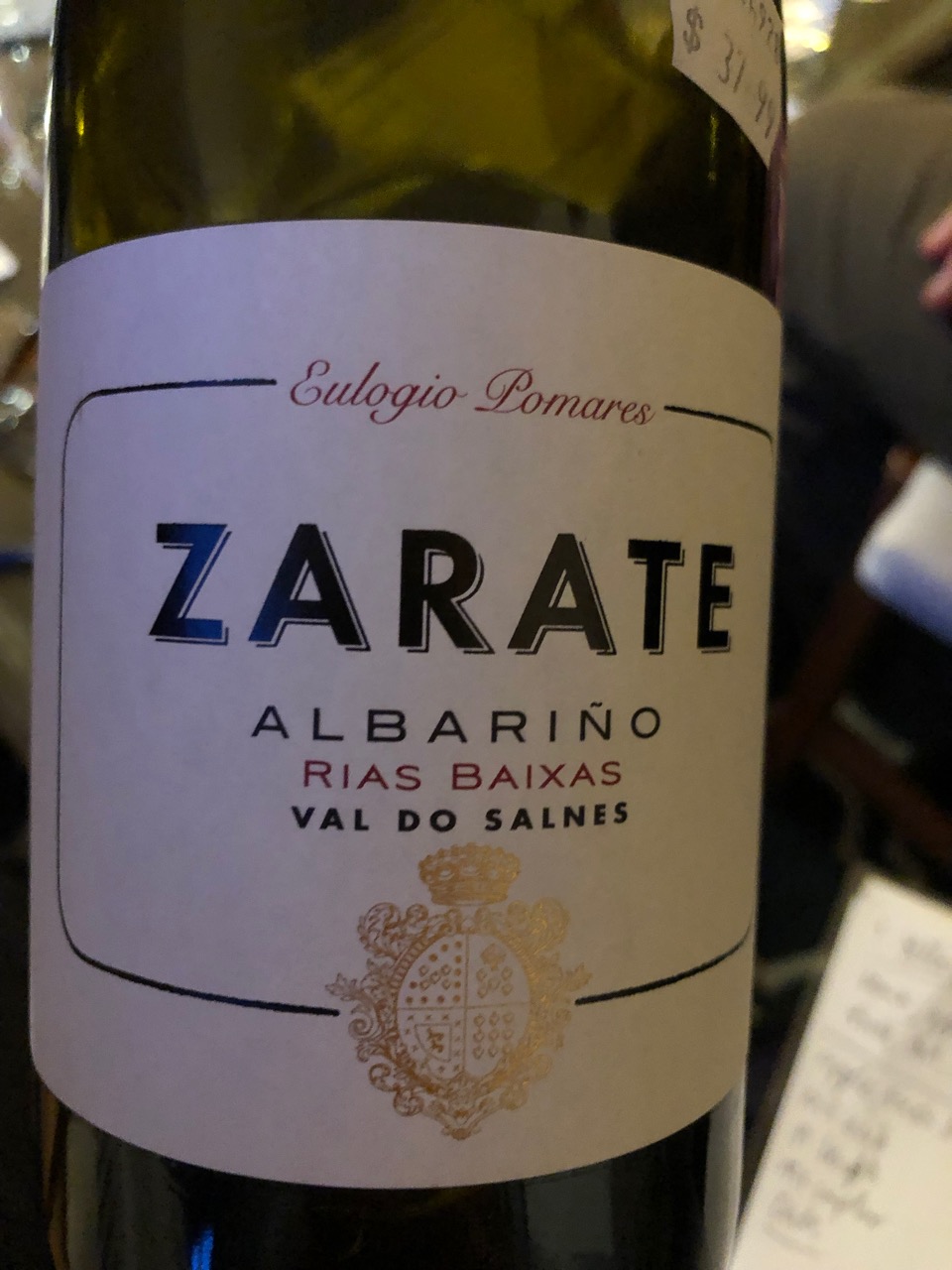
It was a Zarate Rias Baxas Albarino from Spain. It was not a strong wine and was not as full bodied as I thought it would be.
Yellow, or lemon, in colour, this wine had aromas of lemon, apple, and had a minerality. These aromas were fresh, tart and ripe. On the palate, there were the same flavours - fresh or ripe apples, wet stone, as well as medium plus acidity, medium length and medium complexity. There was also some oak on this wine.
As for all of the wines that we tasted, we all tried to come up with both the varietal and the place. Most people though this was a Chardonnay although some thought it was a Pinot Gris or something Italian. But we were all wrong. Albarino was just not on our radar! Overall, a Good wine.

Our next wine was another white and, this time, I nailed it. For me, petrol is an unmistakable aroma - and that means Riesling. Interestingly, unlike many of the petrol smelling Rieslings I have had in the past, this one was bone dry. This 2014 Howard Park Porongurup Riesling from Australia had additional aromas of rubber. pear, peach,. apple and a minerality. A complex nose with pronounced aromas.
On the palate, it was bone dry, as I said, with tastes of apple. It did not have the same mineral taste and was medium plus in alcohol and medium plus in acidity. This was a great dry Riesling - and I stated that to the group. Before the reveal I had also written down that I thought it was from Australia but hesitated to share that information. A Very Good to Outstanding wine.
Our final white was a real shocker. Verity described it as a 'giant in a sleeping bag' which means that it did not have a very pronounced aroma but when you got your nose close enough, there was an explosion of complex aromas. On the nose - and on the palate - were aromas like cloves, wood, popcorn, butter and vanilla. In fact, it smelled a little like a buttered popcorn Jelly Belly! It had medium acid, medium body and a very complex flavour.
Still, we didn't think it was all that fancy. We narrowed it down to Chardonnay but thought it was from California. You know, a big, oaky Chardonnay with lots of flavour.
Nope.

It was a Pouilly Fuiissé from the Maconnais region of Burgundy. This 2014 Chateau Fuissé Le Clos Monopolé was not what we expected! It was probably the most expensive wine of the night, worth over $100. However, none of us found the elegance or refinement that we would expect from this kind of wine, although there was great complexity. I would rate this as Good to Very Good.
On to the reds!
Our first red of the night was a difficult one. Pale ruby in colour, it had aromas of mint and earth and a bit of an underbrush aroma. There were red fruits like cherry and raspberry as well as dried cranberry. On the palate, there were tastes of the same with the addition of some sort of leaf - like tomato leaf. It had medium plus acidity, medium minus tannins, and light bodied.

This Sangiovese wine was a 2015 Noelia Ricci Godenza Superiore from the Romagna area of Italy. It stumped us all. I thought it might be a cru Beaujolais although I couldn't detect the hallmarks of carbonic fermentation. There were some murmurings that it might be from Italy but no one had a strong feeling about that. Pinot Noir was another guess made by many of the group. It was certainly a surprise when the reveal came. This was a Very Good wine.

There next wine was probably my favourite. The 2015 Cannonball Merlot from Sonoma County had aromas of pepper, smoke, dark fruit such as plum and black berry, jam, cedar and mushrooms. This wine had a pronounced intensity on its rather complex nose. On the palate was the same black, jammy fruits as well as some earthiness with medium acidity, medium plus tannins, and high alcohol. This wine had balance, complexity, length and intensity and I would rate this wine as Outstanding. I first thought it was a Syrah, possibly from the Northern Rhone. My second guess was Merlot from California.

The final red for the night was another tricky one. The Chateau de Cherrière Bourgogne Pinot Noir was a very structured wine with medium plus acid and medium plus tannins, something I did not expect with a Pinot Noir. There were tastes and aromas of cedar, tobacco, farmyard, leather, mushroom, black fruit and black cherry. This was a real stumper as it had that Pinot Noir taste but such strong structure! I would rate this as Very Good.
One of the members of our group had something to celebrate so Andrew brought out a celebratory champagne style wine. The celebrant, Verity, then used a bread knife to sabre the wine! If you have a nice cold bottle of champagne (or other bubbly), you can use any kind of knife to open it. You simply slide the knife from the middle of the bottle up the seam of the bottle and, voila! The cork and some of the bottle will fly off the top!

Verity sabred a 1996 Summerhill Cipes Traditional Cuvée sparkling wine form the Okanagan ($80). I didn't do a formal tasting note at this point (we had finished the bottle leftovers at this point and were refraining from spitting or dumping) but I do recall that this was more than just a bready, yeasty tasting champagne. It had a beautiful golden colour. a nice fizz, and an exquisite taste that included a bit of a sherry.
A wonderful celebration to finish off a wonderful wine tasting evening!

As for all of the wines that we tasted, we all tried to come up with both the varietal and the place. Most people though this was a Chardonnay although some thought it was a Pinot Gris or something Italian. But we were all wrong. Albarino was just not on our radar! Overall, a Good wine.

Our next wine was another white and, this time, I nailed it. For me, petrol is an unmistakable aroma - and that means Riesling. Interestingly, unlike many of the petrol smelling Rieslings I have had in the past, this one was bone dry. This 2014 Howard Park Porongurup Riesling from Australia had additional aromas of rubber. pear, peach,. apple and a minerality. A complex nose with pronounced aromas.
On the palate, it was bone dry, as I said, with tastes of apple. It did not have the same mineral taste and was medium plus in alcohol and medium plus in acidity. This was a great dry Riesling - and I stated that to the group. Before the reveal I had also written down that I thought it was from Australia but hesitated to share that information. A Very Good to Outstanding wine.
Our final white was a real shocker. Verity described it as a 'giant in a sleeping bag' which means that it did not have a very pronounced aroma but when you got your nose close enough, there was an explosion of complex aromas. On the nose - and on the palate - were aromas like cloves, wood, popcorn, butter and vanilla. In fact, it smelled a little like a buttered popcorn Jelly Belly! It had medium acid, medium body and a very complex flavour.
Still, we didn't think it was all that fancy. We narrowed it down to Chardonnay but thought it was from California. You know, a big, oaky Chardonnay with lots of flavour.
Nope.

It was a Pouilly Fuiissé from the Maconnais region of Burgundy. This 2014 Chateau Fuissé Le Clos Monopolé was not what we expected! It was probably the most expensive wine of the night, worth over $100. However, none of us found the elegance or refinement that we would expect from this kind of wine, although there was great complexity. I would rate this as Good to Very Good.
On to the reds!
Our first red of the night was a difficult one. Pale ruby in colour, it had aromas of mint and earth and a bit of an underbrush aroma. There were red fruits like cherry and raspberry as well as dried cranberry. On the palate, there were tastes of the same with the addition of some sort of leaf - like tomato leaf. It had medium plus acidity, medium minus tannins, and light bodied.

This Sangiovese wine was a 2015 Noelia Ricci Godenza Superiore from the Romagna area of Italy. It stumped us all. I thought it might be a cru Beaujolais although I couldn't detect the hallmarks of carbonic fermentation. There were some murmurings that it might be from Italy but no one had a strong feeling about that. Pinot Noir was another guess made by many of the group. It was certainly a surprise when the reveal came. This was a Very Good wine.

There next wine was probably my favourite. The 2015 Cannonball Merlot from Sonoma County had aromas of pepper, smoke, dark fruit such as plum and black berry, jam, cedar and mushrooms. This wine had a pronounced intensity on its rather complex nose. On the palate was the same black, jammy fruits as well as some earthiness with medium acidity, medium plus tannins, and high alcohol. This wine had balance, complexity, length and intensity and I would rate this wine as Outstanding. I first thought it was a Syrah, possibly from the Northern Rhone. My second guess was Merlot from California.

The final red for the night was another tricky one. The Chateau de Cherrière Bourgogne Pinot Noir was a very structured wine with medium plus acid and medium plus tannins, something I did not expect with a Pinot Noir. There were tastes and aromas of cedar, tobacco, farmyard, leather, mushroom, black fruit and black cherry. This was a real stumper as it had that Pinot Noir taste but such strong structure! I would rate this as Very Good.
One of the members of our group had something to celebrate so Andrew brought out a celebratory champagne style wine. The celebrant, Verity, then used a bread knife to sabre the wine! If you have a nice cold bottle of champagne (or other bubbly), you can use any kind of knife to open it. You simply slide the knife from the middle of the bottle up the seam of the bottle and, voila! The cork and some of the bottle will fly off the top!

Verity sabred a 1996 Summerhill Cipes Traditional Cuvée sparkling wine form the Okanagan ($80). I didn't do a formal tasting note at this point (we had finished the bottle leftovers at this point and were refraining from spitting or dumping) but I do recall that this was more than just a bready, yeasty tasting champagne. It had a beautiful golden colour. a nice fizz, and an exquisite taste that included a bit of a sherry.
A wonderful celebration to finish off a wonderful wine tasting evening!


