Showing posts with label syrah. Show all posts

Friday, August 30, 2019

Cedar Creek - Renovated, Re-Opened, and Refined


Cedar Creek winery in Kelowna just re-opened - and it is well worth visiting!

Apparently the soft opening (for wine club members only) was last weekend but lots of other people caught wind of it and there were line ups out the door and down the path of the wine tasting room! I wasn't there that day but did go mid week and, I have to tell you, I was impressed!

In the whole Okanagan wine picture, I had previously considered Cedar Creek to be sort of in the middle to lower bracket. I hadn't tried a lot of their wine because of that and really didn't have an accurate reading on the winery.


Cedar Creek is owned by the Mark Anthony group, Anthony Von Mandl's company which also owns Mission Hill, Road 13, Checkmate and Martin's Lane, among others. The restaurant at Cedar Creek, Home Block, was also recently given a facelift but has been open for a while. I haven't eaten there but people that have are very positive about the food and service.

We were lucky enough to have both a tasting and a tour around the vineyard. Going through the vineyard was fabulous but it was a rather special opportunity that is not part of the standard wine tasting!

Cedar Creek has two levels of wine - their Estate series and their Platinum series.We had mostly the Estate level with the exception of our first tasting.

Courtesy Cedar Creek website

We started our wine tasting with a wonderful 2018 Block 1 Pinot Noir Rosé ($29.99). I love a good rosé, and this one was one of the best of summer. This had tastes and aromas of grapefruit, strawberries, cherries (those yellow and red Rainier ones) and watermelon and was made with two different pickings of grapes. Some was placed in neutral oak and was on the lees as well. This wine was not too sweet - it had good acidity but was still nice and fruity. This was my favourite wine of the day, perhaps enhanced by our racing along the vineyards in a golf cart while I was sipping on my rosė. Outstanding.

We then tried the 2018 Estate Sauvignon Blanc and the 2017 Gewürztraminer  (both were $18.99). I enjoyed both of these and thought the price point was pretty good. The Sauvignon Blanc was not too citrusy and had some grapefruit flavour that didn't overpower this bone dry wine. The Gewürztraminer was off dry and had a wonderful nose of pear and peach. It would be great with Asian food as well as slurping on the patio with your friends - or even by yourself! Both were Very Good.
Courtesy Cedar Creek website

Next was the 2016 Meritage ($24.99) which was Merlot dominant with about a quarter each of Cab Sauv and Cab Franc. I was quite excited to try this as the price point seemed rather reasonable but I was a little disappointed with the wine. There were flavours and aromas of cassis, plum, blackberry and vanilla but there was also a bit of roughness to the wine that I didn't enjoy. Maybe a year or two in the cellar might round out this wine a bit. Acceptable to Good.


The final wine was the 2016 Syrah ($24.99). The grapes for this wine are grown in the same place as the grapes for the Meritage (Haynes Creek Vineyard near Osoyoos) but these grapes were destined for greatness! The Syrah is made in a Rhone style, with a small bit (1%) of Viognier added. This wine had wonderful aromas and tastes  of violet, blueberries and plums. There were some vanilla notes amongst the explosion of red and black fruit. You could probably age this 5 or 6 years but I would be hard pressed to do so as it is so wonderfully tasty right now! Outstanding.


Next time, I think I'll have to cough up for a Platinum tasting - by the way, the Estate tasting has no charge!

By the way, I have started a wine touring business in the Okanagan. I do have this blog on my company website, but it just doesn't look as good as it is here! Please feel free to check out my website at wineandthensommwinetours.com !

Cheers

Tuesday, May 21, 2019

Rosé All Day - A Friendly Rosé Challenge - France vs BC!

Some tasty Rosés from the cellar.

Every week, my friend Keith and I try to get out in the great outdoors and paint.

Neither of us is an expert - in fact, we both have so much to learn - but we enjoy getting out and trying to paint. The idea is not to make a great painting; the idea is to do some aspect of the painting well - or at least improve. Sometimes that happens, and sometimes it doesn't.

Today's plein air attempt at Mission Heritage Park.

Today was not a bad day for painting. I was happy with my tree - especially the leaves - and with the grass in front. The background wasn't so bad, either. A good couple of hours spent.

So then, it was time to have some Rosé.

A much younger version of me and wife with Rosé and Pastis.

Rosé is so popular now but it wasn't always that way. I discovered Rosé (not the sugary stuff like Mateus) in 2005 when my family was on a house exchange in Nimes, France. It was August and it was hot. Really hot.

At that time, my wife and I were red wine drinkers exclusively. But it was not red wine weather. Too hot! We looked around and people in Nimes tended to drink Kir (wine and cassis), Pastis (Pernod or Richard and water), beer, or Rosé. So we adapted.

After that, it became (and still is) our summer wine drink.

Two weeks ago, I was in Kelowna at the Salt and Brick restaurant for lunch with family. I had their Rosé flight which I really enjoyed. For today's tasting, I thought we'd do a mini flight of Rosé - one from France and one from BC.


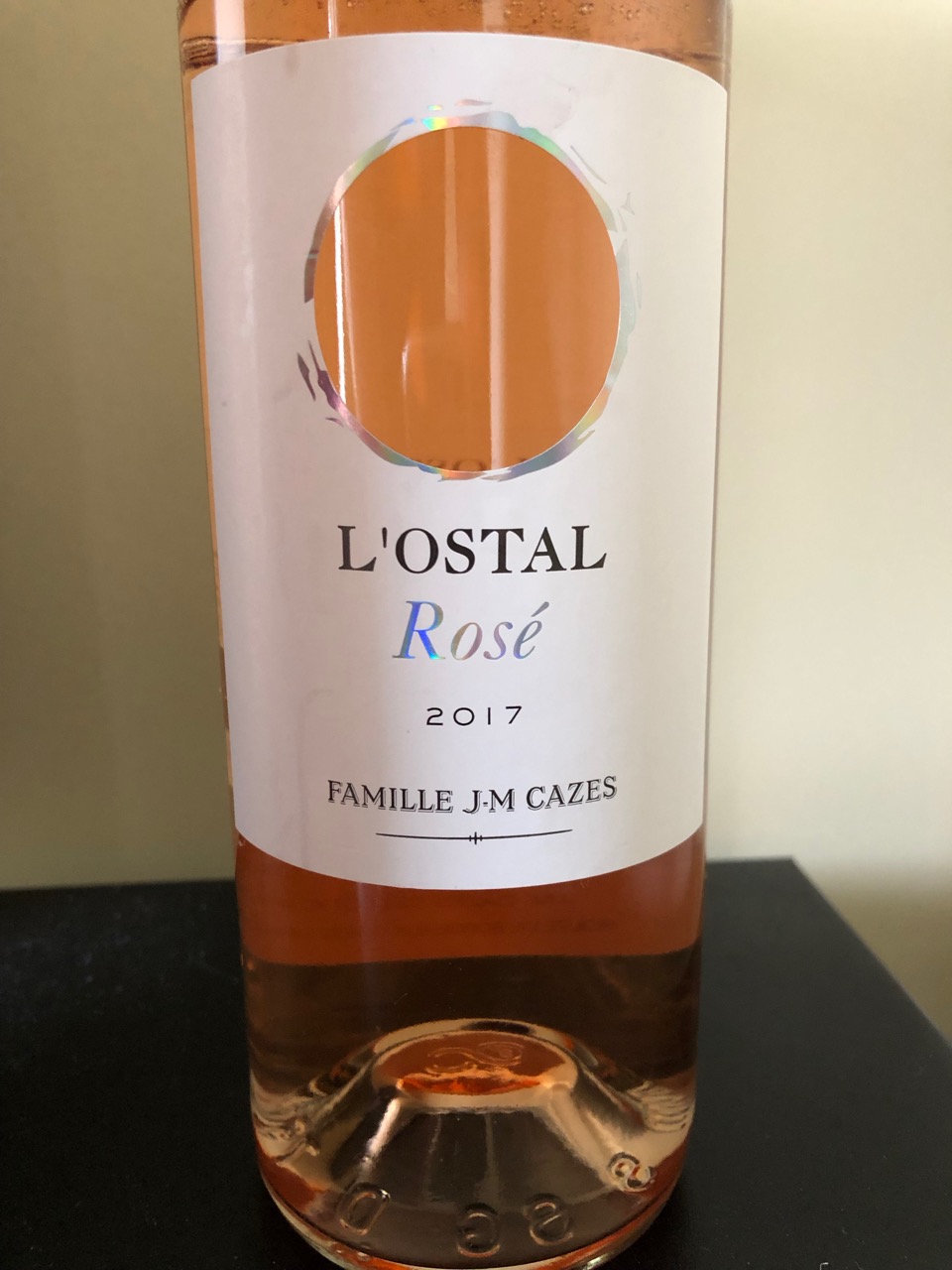
The French wine was our first wine of the tasting. It was a 2017 Domaine De L'Ostal Rosé ($16)  from Pays D'Oc which is basically country wine from the Roussilon-Languedoc Region of France - just west of Nimes. This pale salmon wine made of 50% Grenache and 50% Syrah had a medium intensity aroma and smelled of cherry, strawberry, red liquorice, cinnamon and red jujubes. You can see that I struggled to use the usual descriptors!

On the palate there were some tastes of the same as the aroma as well as a bit of cotton candy and a slight syrupy flavour. Interestingly, the fruitiness of the aromas were not nearly that strong on the palate. It actually tasted just a hint off dry but on second tasting, that went away. This had medium acidity, a medium minus finish, medium alcohol and medium intensity. I would say this is between Acceptable and Good.


The BC wine in this friendly battle was a 2018 Mt. Boucherie Rosé ($22)  from West Kelowna.  I'm not sure what grape is in it but the 2017 was made with Zweigelt (an Austrian crossing of St. Laurent and Blaufrankisch)  so it's likely the 2018 was made with the same grape.

On the nose, which was pronounced in intensity, there were aromas of grapefruit, lemon, blood orange, strawberry and a minerality. On the palate, there were these same flavours as well as watermelon. This high acidity wine was dry,. intense, had a short finish, and medium alcohol. It was a great patio sipping wine and was very refreshing. I would give it a Very Good rating,.

Both wines had their pluses but the BC wine was overall a better wine, in our humble opinion. The French wine would make a nice pairing to different summer foods, especially grilled food. The BC wine was great on its own and would probably stand up to most light summer meals. The only problem with the BC wine is that it is only available online or at the winery. Road trip...

Rosé all day!


Friday, March 8, 2019

Vancouver Wine Festival 2019

wine from the festival
Wine from the festival!

This year I went to my second Vancouver International Wine Festival. Last year was my first year and, armed with the knowledge I had gleaned from having taken my WSET Level 2, I thoroughly enjoyed the event. 

This year, with the news that I had passed my level 3 fresh in my mind, I had another wonderful experience.

One of the unexpected pleasures last year was bumping into some of my fraternity brothers from UBC (almost 40 years later) - including Phil, who I spent four months with travelling around the US back in 1982 (precise details elude me as the entire trip is shrouded in a haze of comradery, frat parties and alcohol). This year, we all met up at Al Porto in Gastown for a pasta dinner, and a chance to catch up, before wandering over to the festival. 

Once we arrived at the festival, we bumped into even more people I knew including first, yet another fraternity brother and his wife, a sorority sister from years ago, second, the son of our close neighbours as well as his friends and girlfriend (who, incidentally, also has her WSET Level 3), and, third, two of the people from my WSET 3 course that were in my tasting group (and who also successfully completed Level 3)!

The Wine Festival has a diverse and interesting crowd. Some of the people  sip, swirl and then spit each glass. Others just slurp back every wine they sample, a sure recipe for wobbly legs and sore heads. I take the middle path - swirl, sip, drink a bit, and then dump the rest. I do feel a little relaxed by the end of the night but am still able to identify and process the different tastes and aromas of the wines. 

The featured wine region this year was California. We spent some time in Napa almost eight years ago and enjoyed their bold, flavourful wines. Unfortunately, we did not end up purchasing a lot of California wine at this year’s festival as some of the wines we tasted (including the St. Supery 2014 Napa Valley Estate Elu) were not available in the wine shop while others were very pricey (such as the Stag’s Leap Artemis at $85). We did end up with two that we were very happy with.


The first was the Benziger 2015 Cab ($25.49). While having dinner and trading notes before the festival, Dave, another one of my fraternity brothers, showed me his notes on this wine and I am very glad that I visited their booth. This wine is a steal for the price. A fantastic, black fruit, aged and rich Cab that is going to be wonderful to drink. I would enjoy this one on its own, or with a rich meal.


We visited Hess a few years ago in Napa and I’ve always enjoyed their wines. The Hess 2015 Allomi Cab Sauv ($38.99)  was probably our favourite of the evening. I’m not sure why we didn’t buy more! It had rich black fruit including black currants and blackberry as well as a nice long finish, with a smoothness that is so California!

Just a little side note - you may wonder why we bought so many different wines. In all, we ended up with 17 bottles (some we bought two of) at a little over $500. This is not a common occurrence (believe me!). However, most of the wines that we bought are not usually available at the BC Liquor store. Even the ones from the Okanagan were only available for the festival or direct from the winery.  You might not find these at the BC Liquor Store but you may see them at Everything Wine or one of the many private liquor stores.


Moving up the coast, we ended up in the Willamette (rhymes with damn it) Valley in Oregon. We really enjoyed our visit there last year and loved the Domaine Serene Evenstad Pinot Noir we bought - although the $75 US price tag was a bit steep. Happily, we found the Elk Cove 2016  Pinot Noir ($43.99). The Willamette Valley style of Pinot Noir that we have grown to love is a fruity but minerally wine. Some of the Pinot Noir that we tried at the festival was almost too dry or too smoky or lacked fruit but this one had punchy fruit and was not overly austere. There were two other wines made by this producer that were specialty Pinot Noir but their price point was significantly higher.


Who says you can’t have reruns? Closer to home was the Wines of Substance K Vintners 2015 Motor City Kitty ($52.99) from Walla Walla, Washington). We had this one last year at the wine festival and ended up making an eight hour detour on the way back from Las Vegas a few weeks later so that we could buy this wine at the winery. Not only was this on sale this year but we found out that this will now be available at the BC Liquor store! Really enjoyed Motor City Kitty  (oh, that's what MCK stands for!) as it is a very tasty and bold Washington State Syrah.

We ended up with a few wines from right here in BC. That’s because a lot of the smaller wineries only sell their wines at the winery or only produce a small amount of wine each year. 


The first wine we tried was the Time 2017 White Meritage ($22.99) in Penticton. This one was a blend of Sauvignon Blanc and Semillon and was one of the recommendations that Gismondi wrote about in the newspaper. Interestingly, when we were having dinner before the festival, Dave was telling me how he had spent time in a wine course in the 80s that was taught by Anthony Gismondi before he became famous! This white Meritage was delicious with tastes of pear and apple and had a nice acidity.


The Wild Goose 2017 Gewürztraminer ($19.99) was also another Gismondi recommendation and it is a fresh, spicy and slightly off dry wine that cries out for some tasty white meat, or fish…. or just a nice sunny patio! Their winery is located in Okanagan Falls. 


Roussanne is a grape that I’ve always wanted to buy as I have only tasted it in my WSET course - until now! I was excited to have the Lake Breeze 2017 Roussanne ($22.49) as it did not disappoint. Although not that acidic it had very nice stone fruit and apple flavours. Looking forward to having this accompany some tasty dish at home like chicken, pork or even salmon. This winery is also located in Naramata. 


My wife absolutely loves 8th Generation Winery and is a big Riesling fan. Their 8th Generation 2018 Riesling ($19.99) was crisp and a touch off dry. It would be a wonderful accompaniment to spicy foods or barbecued white meats.


Going a little more international, we went over the Uraguay’s lone participant. The Garzon 2016 Tannat $24.49 was another suggestion from Gismondi. I love Tannat and its super strong, tannic nature. Looking forward to popping this one with something really rich or fatty or, hopefully, both!


Italy is home to more grapes than anywhere else in the world. How many? Over 350 "authorized" varieties and another 500 documented varieties. I was keenly aware of that when I tried the Savian Lison Pramaggiore Refosco ($18.49). This  organic wine was a very interesting one because it was made from the Refosco grape which I have never had before. It had a taste of mostly red fruits like red cherry and raspberry, but also had some hints of dark fruit as well. An easy drinking wine, this would be great for pizza or pasta. Nice price, too!


Who doesn’t like Prosecco? Mionetto had four different Proseccos and we got to try them all. The Mionetto Valdobbiadene Prosseco ($22.99) was my favourite because of its crispness and hint of fruitiness with an overall dryness to the bubbles. This wine is a great sparkler that would go with just about anything!


The Italian wine with the most amount of body that I bought was the Nerube 2016 Montepulciano d'Abruzzo Riserva ($30.99). This wine, which is made from the Montepulciano grape, is very nice and would be a great one to bring to an Italian restaurant when you want to have a nice red wine to accompany your meal. Both red fruits and black fruits are evident along with some spice! It’s not one to age but it is one to enjoy!

I still think that France is one of my favourite - if not my very favourite - areas for wine in the world. There weren’t a ton of producers from France but I still managed to find some stunning wines.


The Haut Medoc is located on the Left Bank of the Gironde Estuary in Bordeaux - think Cab Sauv dominate with Merlot and Cab Franc. The Medoc is the general wine area with the Haut Medoc being the better part of that region. The 2015 Chateau Lachesnay ($31.99) was one of the four wines that we tasted from Ulysse Cazabonne (also a great year).  The company owns at least four châteaux and we had a chance to talk to the winemaker of this particular wine (notice the winemaker's signature on the bottle!). Although it was not a wine that is a cru , it was still very tasty and the price was quite good. The other wines that we tasted were also excellent but were a bit pricey. This one was a touch austere with lovely dark fruit flavours and aromas and a beautiful long finish. Probably a special occasion wine that could stand a few years ageing. 


Finally, the Chateau Pesquié 2016 Cote du Ventoux Artemia ($48.99) was a Syrah and Grenache blend. It was delicious with blackberry, black cherry, and other black fruits on the nose and on the palate. There was also some vanilla, tobacco, and even a hint of chocolate. Another excellent French wine that might deserve a special occasion or at least a special dinner. 

About to unbox our festival shipment!

Our wine ordered (the BC Liquor store will box and ship your order to your local liquor store for free - ours arrived less than a week later), my wife and I stumbled back to our hotel after having a late night snack along the way. We reflected, not only on the great wines that we had sampled, but also on the interesting mix of people, the friends that we had seen the we knew, and the conversations with the producers and winemakers. 

An extraordinary event. I already can’t wait until next year!

Cheers!


Thursday, January 24, 2019

Mini Wine Tasting - Four wines under $30 from around the world

Wine and Plein Air DO mix!

Ah, my WSET course is a faint wisp of smoke that has gone. It's been over a month since I've written my exam.

But I still don't know if I passed!

One thing that I did during my WSET course was weekly wine tastings with my friend, Keith, usually after a plein air painting session. We have continued to do so and have tasted some pretty interesting wines, as well as paint3ed some fairly good little studies. We taste two different wines each week and the last two weeks have had us taste some of the best.

So I thought I'd share them....

Last week was my week - and I picked two wines from two very different places.


The first was a 2013 Unanimé Gran Vino Tinto ($30) from the Uco Valley in Argentina. This was a Bordeaux-ish style blend of 60% Cab Sauv, 15% Cab Franc and 25% Malbec and was a delicious wine. It definitely had some strong tannins but also had enough fruit to back it up. Medium plus acidity, black fruits, and a nice long finish. Incidentally, this wine was a present from the parents of a student I taught for two years - and I think this wine was from the first year. Vivino rates it as one of the top 1% of wines in the world and I'm not surprised with its aromas and tastes of blackberry, plum, cassis, tobacco, and leather.  This wine would age well for a few more years but I liked the boldness of it right now! A complex, intense wine, I would rate this as Outstanding.

Unfortunately, for some reason, I didn't take a photo of the next wine. That's too bad because this wine is a bit hard to track down.


For taking care of their dog, my daughter and son-in-law gave us a bottle of Jabulani (not 100% sure of the year) MCM blend ($25?) from Ottawa in Ontario. This wine was very interesting because it is a blend of Merlot, Cab Sauv and Marquette grapes. Marquette is a hybrid grape which means that it is a hybrid of Vitas Vinifera (the wine grape species) and another, North American grape. This is like crossing  a wine grape like Merlot with Welch's Concorde grapes.

The result is a fruit forward, easy drinking, interesting wine. Unlike some other non-wine-grape grapes, Marquette is not 'foxy' or musky in it's taste - it is just fruity! This wine is low in acidity with medium tannins and is great to slurp away, despite its shorter finish. I'm not sure you can buy this outside of Ontario but if you find it, grab a bunch! It's a lovely red patio sipper.  A Very Good wine.

This week was my friend's turn. He picked a couple of excellent wines. Interestingly, they both tasted quite fruity and I mistook the first one for a new world wine.


The first one was an 2016 Zabu Il Passo Nerello Mascalese from Sicily in Italy.($23). The il passo might refer to the passito method. In this wine, the grapes are left on the vine to wither and raisinate, which concentrates the flavours and sugars. As a result, this wine is a little sweet (although I had a hard time telling if it was fruity or sweet), and quite rich in flavour. The Nerello Mascalese grape is one of the two main grapes in the Mount Etna appellation but it appears that this wine is made in the Sambuca di Sicilia area which is on the west side of Sicily while Mt. Etna is on the east side.

There were aromas and tastes of blackberry, plum, and black cherry as well as vanilla and some tobacco. This had medium tannins and medium minus acidity. The finish was medium and it was a fairly intense wine. This would go well with a number of dishes from steak to duck to pasta with meat sauce. I commented to my friend that I would prefer this with a pasta dish over many of the Chianti wines I have tasted! I would rate this wine as Very Good.


The other wine that we tasted this week was a 2014 Gerard Bertrand Saint Chinian from Languedoc, France ($24). The Languedoc region has a bit of a bad name for wine as it is part of the 'wine lake' of France where an ocean of cheap wine (like Fat Bastard and Arrogant Frog) is made. There are, however, some areas of really good wine and the region is making progress towards reinventing itself as a quality region. Saint Chinian is the name of the village and also the appellation so this is better quality wine. The grapes used to make this wine are Syrah and Mourvédre which are destemmed, pressed, and then a third of the grapes are aged in oak for nine months.

This was another wonderfully fruity wine although a bit more austere than the Sicilian wine. You could definitely taste the Syrah but the Mourvédre added some complexity to the mix. There were aromas and flavours of blackberry, plum, and black currant and, perhaps, some cherry. There was also tobacco, oak, a spiciness - including pepper - and some earthy, leathery characteristics with this wine. It had medium tannins (a bit surprising as Mourvédre can be a tannin bomb), medium plus acidity, and a medium plus finish. I really enjoyed this wine and felt it performed above its price point. I would rate it as Outstanding.

Continuing to swirl, sniff, sip, and slurp after my WSET is done is an important way to keep up the tasting skills I have (hopefully) developed. And, no matters how the painting goes, I always have something to look forward to!


Wednesday, January 9, 2019

Amazing holiday wines - for anytime!


Holidays are the time to bring out the big guns in terms of wine.

Now that things have settled down, it's time to reflect on the past couple of weeks and think about the wonderful wines that I drank. There were many, many excellent wines but three definitely stood out.

California Dreaming

I had my retirement bash at the end of June and, what a number of my friends and colleagues did was, give me a bottle of wine that was special to them.

Fast forward to just before Christmas - our anniversary. After (mumble mumble) years of wedded bliss, we thought we'd stay in downtown Vancouver (the Four Seasons, no less, but we got a killer deal). We decided to go to the Absinthe Bistro on Commercial Drive for, what turned out to be, a spectacular - and I mean spectacular - French meal.

When I was booking our reservation, I had asked if it was OK to bring our own bottle of wine and what the corkage fee was (corkage means the price charged by the restaurant to serve your wine - to basically to take the cork out and pour it). The cost was $24 so I figured it would have to be a pretty darn good bottle of wine. Then I thought of the special wine my friends Dale and Jodi gave to us.


The wine was a 2014 Emmolo Merlot from Oak Knoll in the Napa Valley ($64). We had the server decant it and could only wait about 20 minutes before we had to have some. It was a superb wine - much better than any other Merlot I've ever had. On the nose there were plenty of black fruits, a fig or raisin scent as well as definite leather and smoke. These were also apparent on the palate with chocolate, liquorice and toast adding to the experience. This medium tannin, medium minus acidity wine was Outstanding - it was balanced, had a long finish, was super intense with its fruit flavours and was definitely a complex wine. 

What did we accompany it with? We had a couple different appetizers and it went fine with those but the real winner was the main course. We ordered cassoulet - which is a wonderful French stew with sausages,. duck, white beans and a bunch of other stuff. Every restaurant has a slightly different version and Absinthe did not disappoint. The fruitiness of the wine combined with the elegant structure was a great complement to the salt and fat of the meats. 

A postscript on this wine - I am not usually such a big fan of Merlot but I liked this one so much that, just before Christmas, I bought another bottle. It currently resides in my cellar.

Happy New Year

My son-in-law, Dan, is a big wine lover - and actually completed his WSET level 3 a couple of years ago. For Christmas, his parents gave him a nice bankroll of money to buy wine. I was lucky enough to come along to the BC Signature Liquor Store and see what he was picking.

That night was New Year's Eve and we spent it with my daughter and Dan. We drank champagne, watched some of the festivities on TV, played Settlers of Catan, drank some more wine, and played a movie version of Cards Against Humanity. At one point, Dan opened up one of the wines he had bought - and it was excellent!


The wine was a 2000 Chateau Clarke Baron Edmond de Rothschild Listrac-Medoc Bordeaux ($70). First of all, after it was opened, I thought to myself - wow - 19 years old! Incredible! And it was another Outstanding wine! This medium plus tannin, medium plus acid wine had mellowed over time and would probably be good to drink for a few more years. This wine had aromas and tastes of black currant, black berry, leather, liquorice, toast, and a host of spices. Although the tannins were still in evidence, I still thought it was a wonderful wine and not too strong. It was balanced, had incredibly intense flavours, was complex and had a nice long finish. 

We probably should have had it with beef bourguignon but ended up having it with a charcuterie board which was still a good match. I sipped and smelled and savoured this wine and it happily took me a lot longer to drink than it would usually. This wine was decanted but we probably should have left it for an hour or so. I may have to pick me up a bottle of this one! The grapes in this wine were Cab Sauv, Merlot, and Cab Franc. 

Local hero

The three kings of the holiday were crowned with a wine made from a grape that my wife and I have always enjoyed - even before I started studying wine in earnest. Syrah is a grape that I love as it makes wines that are so drinkable and have character, in my humble opinion. 

\

The one we discovered was a 2016 Le Vieux Pin Syrah Cuvée Violette ($40) made from mostly Syrah with a little bit of Viognier. This wine, from our own Okanagan, had aromas and tastes of blueberry, blackberry, pepper, raspberry, leather, and, yes, violets. This is a fairly fruity wine with medium tannins and medium acid. I think it has the capacity to age for several years - my problem is that it tastes so wonderful now, I don't want to lay it down! This is another Outstanding wine from Le Vieux Pin as it has everything you would want in a great wine - balance, complexity, length and intensity.

I became aware of this wine when listening to a blog or reading a wine column in the newspaper. It sounded like a good fit so I searched on the BC Liqour Store app - nothing,. Then I went to Everything Wine - nothing. I checked the winery - sold out. Then I thought - well, Save On sells wine - what are the chances? Rather good, it seems, as the Lakeshore Save On in Kelowna had some. As part of our stay over New Years, I picked up a few bottles of this wine. Now, to cellar or not to cellar?

All three of these wines were fantastic. They are certainly priced higher than most wines I drink but their exceptional quality makes them well worth the money.

Have a happy and wine filled new year!

Sunday, December 2, 2018

Come Together ... Right Now. ... Over Wine...

Red wines from our tasting nigh

I'm actually a bit behind in my WSET blog but I had such an enjoyable time this week, I thought I'd blog about a recent evening.

I was invited to a wine tasting evening with some of the people from my WSET class. Here's what comes to mind:

As the big test date looms nearer (less than two weeks), I have become more and more focussed on memorizing facts, practising questions, making charts and maps, and recording myself talking about important information and then playing it back.

Thursday night was a big break from that - and a reality check. Wine is not just about learning and memorizing information - it is about the social aspects of getting together with people, having a few drinks, talking, laughing and enjoying each others' company. Yes, we tasted and talked about the wines and commiserated about our mutual trepidations of the upcoming test but we also talked about each others' work and lives and history - the wine was a part of the evening but it was not the only part of the evening.

To paraphrase one member of the wine group, at the end of the day, we have learned so much about wine, have been exposed to so many wines, have a much improved palette and nose, and have made friends with a bunch of new people.  I want to do well on the test, but I've already had a rewarding experience, regardless of the result.

A great group of wine-experts-in-training.

There were four others in the group; Sarah, who sits beside me during my WSET class and is originally from London, Greg and Marilyn, also in my class, who are part of the family that owns Deep Roots Winery in Naramata, and Andrew, a very knowledgable wine-o-phile who was able to procure our wines for the evening. I really enjoyed spending the evening with these people and also enjoyed sipping and discussing the wines.


The first wine was a bit of a treat. It was a 1994 (yes, I said, 1994!) Moulin Touchais Coteaux du Layon Chenin Blanc from the Loire Valley ($57 on Vivino). This was a highly acidic, intensely sweet wine with tastes of honey, candied apricot, orange zest, almonds, and some earthiness like mushrooms, probably from botrytis. This Chenin also had the distinctive aroma of lanolin or wet wool. It was an amazing wine to start with but, because I was driving, I ended up dumping some of it in my spit cup (ugh!). Definitely an Outstanding wine. I really have grown to enjoy sweeter wines like this because they are balanced with the strong acidity - as opposed to stick sweet wines I had when I was younger like Baby Duck or Calona White.


The first wine was a bit of a teaser and we just enjoyed it without doing a serious tasting. Our second wine was the first real taste. I sort of sat back and watched what others did during the first two tastings but spoke up more after that. I actually guessed (in my head, of course) that this wine was a Torrontes but never said anything - so much for showing off. This was a 2015 El Porvenir Laroum Torrontes from Cafayate which is in the Salta region of Chile ($30). This had aromas and tastes of citrus fruits like grapefruit and lemon as well as peach and apple. It also had non-fruit aromas of fresh grass and honeysuckle. This youthful wine was medium in intensity, acid, alcohol, body and length and was rated as a Good wine which was ready to drink but not suitable for ageing. And, to be fair, Andrew did help us narrow down the wine varietal before I made my amazing guess (that I kept to myself).


Next was another wine that I guessed correctly after Andrew's coaching, again, in my head (what a chicken!).  This was a 2017 Granbazan Albarino Etiqueta Ambar from Rias Baixas, Spain ($40). I really got pineapple on this wine as well as stone fruits like peach and apricot. Unfortunately, I got a bit of vanilla on this which means I was fooled as this wine did not have any oak on it. When I taste a white wine, I am always trying to taste if there is vanilla or toast on it which is a product of oak ageing - and I seem to find it far too often! There was a floral aroma as well of orange blossom that some of the other tasters got but that I missed. I struggle with floral aromas and I probably should find some of these flowers in the next 10 days before my test! This light bodied wine had medium plus acidity, medium plus intensity, medium alcohol and a medium plus finish. Seafood would be a wonderful accompaniment to this wine and, although it is not suitable for ageing, it is ready to drink and is Very Good.


Every now and then, there is a wine that is so recognizable that I can place it immediately. The bubble gum, banana, and red liquorice aromas are unmistakably a Beaujolais Nouveau - in this case a fresh 2018 Louis Max ($20). This is a low tannin, medium minus body wine that's not strong in intensity and does not have a long finish but it is FUN to drink! I really like this style of wine, even though it is not exactly loved by some wine experts. It is easy to slurp back and is friendly enough to go with food that is really casual. Andrew completed his WSET test earlier this week and a Beaujolais Nouveau was the red wine for the blind tasting. I would be so happy if that were the case for our test! This wine is definitely ready to drink and should not be aged. It was a Good wine.


The next wine was a tasty one - a 2015 Klinker Brick Old Vines Zinfandel from Lodi, California ($40). I actually guessed this one too, but, wonder of wonders, I actually said something!  This had aromas of black currant, blackberry, blueberry, pepper, tobacco, cedar and jam. I thought there were some tertiary aromas of mushroom but that didn't seem to be the consensus of the group. I looked on Vivino later and some people did think there was some tertiary aromas like leather so I really am not sure if this was developing or not. This full bodied, high alcohol wine had a medium plus intensity of flavours and a medium plus finish and deserved a Very Good rating. Could you age it? I thought you could but who knows?


The last 'official' tasting wine was a 2014 Chateau de Jau Jaujau Cote de Roussillon red wine blend from the Languedoc Roussillon region of France ($48). We didn't know this was a blend which showed up in our differing notes. Some of us tasted black fruits and some red fruits and some both. On the nose, I found red plum, blueberry, and blackberry as well as black currant leaf, and cedar. This wine had medium plus body, a medium plus finish, and a medium intensity of flavours. A Very Good wine, it was a blend of Syrah, Grenach and Mourvedre. It was suitable for ageing - but was a bit pricey.


Greg and Marilyn brought a wonderful wine for our final, informal tasting. It was a 2014 Deep Roots Naramata Syrah (I think Greg said it was around $40 when released but there's none left now!).  I was asked, earlier in the evening, what my favourite wine was - I really do like Bordeaux so I went with that initially - but, having this wine, I was reminded that Syrah is another one of my favourite wines - especially Syrah done right - which this was. There were aromas and tastes of blackberry, blueberry, and black plum as well as smoke, tobacco, and a bit of leather. There was also some pepper on the nose. This wine was lovely - full bodied, strong intensity of flavours, and a wonderful long finish. I would rate this Syrah as Outsanding and could probably age for a few more years.

As we sat around and chatted and sipped from the remnants of wine, I reflected on how enjoyable an evening I had. We made some progress on our tasting and we discussed some of the more frightening aspects of our looming test but, by far, the most important thing was a group of people coming together over a common interest and having a great time doing it.

Cheers!


Thursday, November 22, 2018

Half the World in an Evening? Preposterous! Wines of North and South America - WSET 3.11

This week's map homework - nice map but maybe on blank paper next time?

This week's readings were insane - all of North and South America!

How the heck am I going to remember all of this info?

With just four weeks to go, it's pretty intimidating. Not at all like WSET 2.

In the mega-wine week, we covered bits about Canada, Oregon, New York, and Washington but spent most of our time looking at California, Chile, and Argentina.

Yes, we did leave out lots of areas but I guess those are the main ones.


The first wine we are going to look at, however, came all the way from the Okanagan, Mission Hill. We tried a 2016 Mission Hill Reserve Viognier ($22). This youthful wine had peach, melon and ginger spice aromas. On the palate, it was a really medium wine with medium acidity, body, intensity, and finish but did have high alcohol (just). It was rated as a Good wine and one that was good to drink now but not suitable for ageing.


I've already done a whole blog posting about our trip to the Willamette (rhymes with, "Damn it") Valley in Oregon - if you are interested in that, it is here. We tried one wine from there - a 2015 Sokol Blosser Pinot Noir ($48). This wine had aromas of red cherry, red plum, smoke, vanilla, and perfume. On the palate, I also tasted some leather. This wine had medium body, medium minus tannins, medium plus acidity, and a long finish. It was balanced, complex and pretty intense and would garner a Very Good rating.


If you want to try an outstanding wine from the Willamette Valley, try the 2014 Domaine Serene Evenstad Reserve that we had on our trip to Oregon. Although it cost close to $100, my wife and I opened a bottle we had squirrelled away from the trip last weekend and it was an intense, wonderful wine. I might have to buy it again, despite the hefty price.

On to California.

Courtesy Wine Folly
California was the most detailed area of the night but also the one I related to the most since I've actually been to Napa. Napa is just one of the wine counties that includes, in the North Coast, Sonoma and Mendocino as well. There are also many AVAs (American Viticultural Areas) which are the smaller wine area inside the region.

Napa County is probably the most highly regarded region with a multitude of different AVAs. The wines here are expensive and prestigious. For example, there's Los Carneros which extends into Sonoma and is famous for its Pinot Noir and Chardonnay - both still wine and high end sparkling. Three big AVAs that are famous for Cabernet Sauvignon are Stags Leap, Oakville, and Rutherford, although wines from these areas are super pricey. St. Helena and Calistoga AVAs are home to Cab Sauv, Syrah, and, California's grape, Zinfandel.

Zinfandel is a tricky grape - it ripens unevenly so it has to be hand picked but when it dries a bit and turns into a bit of a raisin, it is concentrated, full bodied, with wonderful red and black fruit as well as liquorice.

Sonoma County is the other big region with AVAs such as Russian River (Pinot Noir and Chardonnay), Dry Creek Valley (Zinfandel and Sauvignon Blanc), Alexander Valley (Cab Sauv), and Sonoma Coast (elegant Chardonnay and Zinfandel). The area of Sonoma County is actually bigger than Napa.

Mendocino County includes Anderson Valley which is very cool and is home to aromatic wines like Riesling and Gewürztraminer while Mendocino AVA has full bodied Cab Sauv, Zinfandel, and Syrah.

The Central Coast hosts the Santa Cruz Mountains AVA (elegant Cab Sauv), cool Monterey (Pinot Noir and Chardonnay), Pablo Robes AVA (Cab Sauv, Merlot, and Syrah), and Santa Maria Valley (Pinot Noir and Chardonnay - concentrated fruit and high acidity).

The last area we checked out was the Central Valley. This is a mostly flat area that is hot and dry and is a lake of cheap jug wine. However, the Lodi AVA has cooling breezes from San Francisco Bay and has some of the oldest and best Zinfandel vines in California. I would LOVE to try a Zin from Lodi!


So, let's look at the Zinfandel we did try! It was a 2015 Ridge Dry Creek Zinfandel ($74). This wine burst with aromas of black plum, cassis, raspberry, violet, vanilla, and liquorice. On the palate, there was also tobacco and plum - both red and black. It was a high alcohol wine with a long finish and pronounced flavours as well as medium body and tannins. Due to its lower tannins, it was not considered suitable for ageing but it would definitely be a wine to drink now! Although our instructor rated it as Very Good, I would have to go with Outstanding.


We also tried a 2013 Darioush "Caravan" Cab Sauv from Napa Valley ($89) and it was spectacular. It had aromas of black plum, cedar, forest floor, earth, black pepper, black currant, and coffee. On the palate, this developing wine had addition tastes of tobacco and mushroom. It was a high alcohol, high acidity, medium plus tannin wine with a pronounced intensity of flavours and a long finish - a classic Napa Cab! We rated this wine as Outstanding.


Before we leave North America, we did try a wine from Washington State - if you are interested in that blog entry, it is here. I would definitely revisit that area, as I would with Oregon. The wine we tried in class was a 2013 K.Vintners Syrah from the Columbia Valley ($67). This was another really enjoyable wine with black plum. black currant, white pepper, cedar and leather on the nose. This developing wine had cedar, blackberry and cooked fruits on the palate and was a high tannin, high alcohol, medium plus body, medium plus intensity, high acid wine. It was a bit astringent with the high acid as it could have been a little more plush or ripe. This was rated as a Very Good wine with ageing potential.

For such a skinny country, Chile has a fair number of wine regions to know. First, though, the grapes that are grown there. Cab Sauv and Merlot are big grapes in Chile as well as their signature grape, Carmenere. An interesting thing about Carmenre is that it is originally a French grape that fell out of favour after Phyloxera hit. Meanwhile, in Chile, thanks to being surrounded by ocean, mountains, desert, and ice fields, Phyloxera never came there. Wine growers in Chile thought they were growing a lot of Merlot but realized that it tasted different than other Merlots. That's because it was Carmenere!

White grapes of Chile are mainly Sauvignon Blanc and Chardonnay.

The regions of Chile are hard to remember so I will just review the four big areas - Coquimbo (Sauvignon Blanc, Syrah and Chardonnay), Aconcagua (Carmenere, Syrah, Cab Sauv and some Sauvignon Blanc), Central Valley (Cab Suav, Syrah, Carmenere) and Curico and Maule Valleys (Carignan). The smaller areas to watch for when you buy wines from Chile are Casablanca, San Antonio, Leyda Valley, Maipo, Cachapoal Valley, and Colchagua Valley.


We tried just one wine from Chile. It was a Carmenere and, if you want to revisit the Carmenere in a blog post that I thought was amazing, the link is here. This one was a 2016 Calina Carmenere from the Central Valley ($24). It definitely tasted of red fruit such as cherry, plum and cranberry as well as red liquorice. It had a certain herbaceousness about it that detracted from the overall flavour. It hit all the medium spots in acid, tannins, body, etc. and was just rated as a Good wine.

There is so much to learn about Argentina but I will just hit the things that relate to the wines I tried. First, the white grape that Argentina is famous for is the Torrontes grape. It is an intensely fruit and floral grape and is definitely and aromatic grape. It is found in a number of areas including Mendoza, San Juan, La Rioja and Salta.


We tried an 2015 El Porvenir Torrontes from La Cafayate in Salta ($22). I had a difficult time deciphering the aromas of this one so I will go with the group's descriptors. On the nose were honeysuckle, melon, elderflower and orange blossom aromas in a pronounced intensity. On the palate it was dry with medium plus acidity, medium body, finish and alcohol. This 'drink now' wine was rated as Very Good.

The black grape from Argentina that is their flagship grape is Malbec. This deep purple, oaked grape is grown in Argentina more than anywhere else in the world. If the flavours are extracted gently, it can be a very elegant wine with floral aromas and spice. It can also be blended with Cab Sauv, Merlot, Cab Franc, and Petit Verdot. I have had lots of Malbecs before form Argentina and have not been overly impressed by them.


The last wine we tried, however, did impress me. It was a 2014 Bramare Malbec from the Lujan de Cujo in Mendoza ($67). Name a black fruit and it was there. I loved this wine. Black plum, blueberry,  black currant - and more. It was definitely oaked with lovely cedar and tobacco but it also had that ageing flavour of barnyard, mushrooms, and earth. It was our last wine of the night so I just leaned back and sipped the contents of my tasting glass - no spitting with this one! This full bodied wine had intense  aromas on the nose and pronounced flavours on the palate. This wine was balanced, had length and was complex, deserving an Outstanding rating.

Now, back to my studying!

Time to Taste an Albariño from Catalonia, Spain!

  Today we're drinking an Albariño — but there's an interesting twist. This 2024 Raimat Albariño doesn't come from the cool, Atl...