Showing posts with label rioja. Show all posts

Wednesday, February 27, 2019

Great wines under $20 - Italy, Spain and France

This week's painting - a vineyard - from a photo on my iPad...

Each week, my friend, Keith, and I go out somewhere into nature and we paint - it's called plein air painting.

Lately, we've been painting in Keith's basement - when it's below freezing, it's just too darned cold to paint outside!

After we paint, we taste a couple of wines while we eat lunch. Thanks to my Coravin, we only have a small sample of wine while the rest of the bottle stays fresh.

The past few weeks have been really quite good for wine tasting so I thought I'd briefly share the wines that we've tried. In most cases, the wines are under $20.


When I backpacked in Europe at the tender age of 24, I recall taking a ferry from Brindisi, Italy, to Greece. I remember it being rather chaotic getting on and off the ferry and having to share a cabin with a couple of strangers as well as my friend. Little did I know that they make a very nice wine there - the 2015  Corte Ottone Brindisi Riserva ($16.99). 

Riserva, happily, means something in Italy - it is a better wine that has to meet certain minimum requirements in ageing (unlike most countries where it has no legal definition). In this case, it means that it has been aged a minimum of two years. Brindisi is in the Puglia region of Italy so it should be no surprise that this wine is mostly Negroamaro (with some Sangiovese and Malvasia Nera). There were tastes of dark fruit like black cherry, black plum, and maybe a hint of dark fruit with vanilla and spice on the nose.Tannins were medium with medium acidity and a medium finish. I would definitely suggest this one with food - especially Italian - anything from pasta to pizza. It was also quite drinkable all by itself. Rated Very Good.  


Staying in Puglia, there is the Codici Masserie Fiano ($14.99) which was a fresh and floral wine, with aromas and tastes of peach, pear and apple. There was also a minerality - like a stone taste - that was a bit unusual. The Fiano grape is usually found a bit farther north, in Campagnia, so I'm not certain if this is the typical taste for Fiano. High in acidity, this would be a great food wine. Interestingly, when I poured this wine, I accidentally poured it again for our second wine. By this time, the wine had opened up considerably and the floral nature and complex flavours were much more apparent - we initially thought it was a different wine! Rated Very Good.


The actual second wine we tried that day was another Italian, a 2016 Bolla Soave Classico. Soave is the name of a wine made in Veneto where wine is made from mostly the Garganega grape. Classico means that this wine is made in the original area of the DOC (designated wine area - sort of like VQA) and is the better wine of the area. 

This wine was an absolute steal at $12.99. It has lots of wonderful fruity aromas and tastes including pear, apple, honey, lemon and pear. It also had medium acidity that would help it be a wonderful food pairing wine. I wouldn't count this out as a sipper, though, as it had a nice, round flavour that would be excellent for slurping on the patio - or maybe in the kitchen, considering the weather right now. I would rate this one as Good to Very Good - and suggest that it would be a good one to stock up on. 

Yesterday's tasting was one where I thought it would be interesting to try two wines that were made from the same grape but from different countries. This can be challenging as we try to limit our purchases to under $20 a.bottle and we also need a wine with a cork so we can Coravin the wine. The grape I decided on was Grenache (or Garnacha) - particularly became Keith had stated that he really didn't like Southern Rhone wines because they were a bit dull and boring. He was a bit surprised by our tasing!


From the Rioja region of Spain, we tried a2016  La Maldita Garnacha ($18.99). This wine tasted of dark cherries, black plums, and had an earthiness and spiciness that was good. It had high acidity, a medium finish, and some smokey notes as well. This wine was a food friendly wine but was bit rustic in its spiciness - almost a bit too strong - but it would go well with a strongly flavoured dish. I would rate this wine as Good. 


The second Grenache wine we tried wasn't actually just Grenache. It was a blend of Grenache and Syrah and was a 2015 Boutinot Les Coteaux Côtes du Rhône Villages ($19.99). This wine had all of the wonderful black fruiit flavours of the the Garnacha - black cherry, black plum - but also had a roundness and sophistication that the Syrah brought to it. There were medium tannins along with medium plus acidity and additional flavours like vanilla and spice - but not too much spice. The flavours were much more integrated with this wine. This wine would be an excellent food wine as it would go with a fairly wide range of food - from pork chops to lamb to steak to duck. It is also very nice to drink on its own. I reviewed the 2013 vintage of this wine a couple years ago and was a bit lukewarm on the rating - the 2015 vintage, however, is much better - even Vivino agrees with me, giving its best rating for the 2015 vintage.  A great deal for a wine that is almost as good as some more expensive Chateau Neuf des Papes wines, I would rate this wine as Very Good to Excellent. Fill your boots!

Cheers.


Friday, November 9, 2018

How do you say. "Oh, crap!" in Spanish. WSET 3.10 - Spanish and Portuguese Wines

Courtesy Art of the Table
Things started off pretty well....

I sat down at this week's class and Lynn, the instructor, handed back my blind tasting note - which I nailed - and the mini quiz - which I mostly nailed.

I was feeling pretty damned confident!

Then we did the first tasting.

It was two whites, one from Spain and one from Portugal. After Lynn described some of the characteristics of each one, I smugly came to the conclusion that the first wine was an Albarino and the second was a Vinho Verde.

Wrong.

Oh, crap.


The first wine was actually 2017 Aveleda Vinho Verde from Portugal ($15). It had a fairly complex flavour profile with pear, lime, orange blossom, melon, wet stone and a floral component on both the nose and palate.  This low alcohol, high acid wine had a little bit of spritz which was hard to detect initially since it was a bit of a surprise. This was a blend of mostly Loureiro and Alvarinho grapes.  A 'drink now' wine, this was rated as Good and would go well with cooked or fried white fish.


The second wine (that I thought was not as good) was actually a great Albarino from Spain - it was a 2017 Terras Gauda Albarino from Rias Baixas ($40). This had aromas of peach, apricot and pear and also a savoury or cheesy aroma - maybe even cream cheese. It had extended lees stirring which gives it that cheesy smell. There was similar fruit and savouriness on the palate along with grapefruit. This was a high acid, medium alcohol wine with a medium plus finish (not short, like I thought!). It was balanced and complex so would be rated as Very Good and could be aged for a bit.

Spain is a country with a big wine growing area but most of the vines are spread out so they get enough water. It just can't compete with Italy or France in the amount of grapes grown. There are a variety of climates in Spain with the main difficulties being either too much rain (on the coast) or not enough rain.

The big grape here is Tempranillo. This thick skinned, medium acidity grape is popular on its own or with other grapes. It's grown in Rioja, the Ribera del Duero, Navarra, Toro, and La Mancha.

Another big grape is Garnacha (Grenache). This high alcohol grapes is one that loves the heat and ripens late. It is usually blended with other grapes such as in Rioja, and Navarra. It is also grown in Carinena, Calatayud, Priorat, and Ribera del Duero.

Monastrell (also known as Mourvedre) is a great grape for the heat as it has quite a thick skin and ripens late. It is grown in the Levante area which includes Valencia, Jumilla, and Yecla.

There's also other black grapes such as Graciano (blending grape),  Mencia (a fresh fruit grape grown in Bierzo), and Carignan also known as Carinena and also known as Mazuelo.

Albarino is a popular white grape that is a thick skinned, high acid grape with stone fruit and citrus fruit. It is found is the northwest region of Spain.

Verdejo is the other bigger grape that is used a lot in sherry. It has melon and peach flavours, similar to Sauvignon Blanc, which it also happens to be blended with fairly frequently.

Our next two wines were, in fact, both Tempranillo wines from Spain. I would have been happy to drink both of these wines all night long.


The first was a 2008 La Rioja Alta Reserva Tempranillo ($75). This medium garnet wine was the more delicate of the two with tastes and aromas of red cherry, plum, strawberry, fig, toast, pepper, cedar, mushroom and leather. The finish was long, the intensity was high, and the wine was balanced and complex. An Outstanding wine that could easily age a few more years.


Not only was the first one great, the second was, in my opinion, even better! It was a 2011 Pintia Tempranillo ($104) from the Toro region of Spain. This wine was high in tannins and had flavours and aromas of smoke, black plum, blackberry, black cherry, violet, forest floor, cedar and leather. This wine was high in acidity, high in alcohol, had pronounced intensity, and had a long finish. Another Outstanding wine that could age for years!

I felt that I had redeemed myself with the Tempranillos. I nailed some of the flavours and aromas down and was started to feel smug agin. Then we had the next two wines. One was a Monastrell (Mourvedre) and one was a Mencia. I like Mencia - in fact, I've had three or four bottles. I tasted several at the Wine Festival in the spring! I KNEW my Mencia - I even recommended it to my table mates! I also remembered how tannic the Mourvedre was from Bandol so I thought it would be so easy to figure out which was which. The first one I thought was all black fruit and tannins so was the Monastrell and the second one was all red fruit and lower tannins so was the Mencia.

Wrong again.

Oh, crap. Again.


The first was 2016 Alvaro Palacios 'Petalos' Mencia from Bierzo, Spain ($46). It had aromas of red fruit, savoury, and roast coffee. It had only medium tannins and medium plus acidity with a long finish. It was rated as Very Good.


The second was a 2015 Juan Gil Monastrell from Jumilla ($33). This is the one that had the black fruit as well as vanilla on the palate. It had full body, high tannins, and a medium finish. This was a Good wine.

I'm usually a bit shaky on my tasting notes for white wines but I don't usually struggle so much with reds. I don't know what happened - possibly I decided that the first one was a Monastrell and that coloured the rest of my tasting. I've also listened to podcasts where wine experts have admitted to getting it wrong a bunch of times and that's their job!

Oh well, c'est le vin. On to Portugal.

Portugal doesn't just make Port! It makes lots of wine and many form the 5 varietals that make Port. They are Touriga Nacional (high quality, great flavour, high tannins), Touriga Franca, Tinta Roriz (Tempranillo), Tinta Barroca, and Tinta Cao.

There's also the wine grapes that made the previously mentioned Vino Verde - Loureiro, Arinto, and Alvarinho (same as Spanish Albarino).

There's a ton of other grapes (like Spain, like Italy), but I think we'll just focus in our last two tastings.


The first was 2015 Cabriz Touriga Nacional and others blend from the Dao region ($22). This ruby wine had both red fruit (red cherry, cranberry) and black fruit (blueberry, black currant) was well as savoury notes. This was a mostly medium wine that was rated as Good and was suitable for drinking now.


The final wine was a 2015 Quinta do Crasto Touriga Nacional Reserva and others blend from the Douro region ($54). This was a purple wine that tasted of black fruit including blackberry, forest floor, barnyard, toast and leather. This wine had medium acidity, medium plus tannins, and high alcohol with a medium plus intensity of flavours and a beautiful long finish. This wine was rated as Outstanding.

So, after a rather mediocre tasting night, I felt a little disappointed but I don't think you can accurately taste every wine that's put in front of you. Even the pros get it wrong. Luckily, for the WSET blind tasting, you don't have to guess the wine, just describe it. My challenge is to try to avoid jumping to conclusions when I taste the wine. If I think in the first three seconds, "This is a Chardonnay," I'll probably be hooped.

Oh well, time to study some more.

How do you say, "Oh, crap!" in Spanish?

"Oh, mierda!"


Thursday, April 19, 2018

There's a World of Wine Out There!


One thing that I've learned since taking my WSET course is that there is a world of wine. Just because you've had a Shiraz from Australia, doesn't mean that you know what all Shiraz (or Syrah) wines taste like. There's Syrah from the Côtes du Rhone, Syrah from the Okanagan, Syrah from the Columbia Valley, and Syrah from California. You can also find Syrah from Argentina, South Africa, and Spain, just to name a few - and it all tastes different!

There were times when I looked down at Okanagan wines for being too bland and times when I drank only Okanagan wines because they were so spectacular!  I've also gone through other periods such as  my French phase, where I would only look at the French wine aisle in the liquor store.

I have learned from my errors and now, I try to drink a variety of different wines with different grapes from different parts of the world. I do have a bit of a soft spot for BC wines but I am aware that there are so many other wines out there that I would be remiss if I were to not try as many of them as I can!

Over the past three weeks, three wines have really stuck out - one from France, one from Spain and one from the Okanagan. All were excellent wines that I will definitely have again.


First was a Cru Bourgeois from France. A little history; basically mon ami Napolean asked for a system of  classifying wines (in Bordeaux) for the 1855 Frnech Expo and his underlings came up with the current classification system in France. There have been a few updates since then but hardly any. Coming much later, Cru Bourgeois are, ostensibly, a level below cru, premier cru and grand cru. But these vineyards did not have the wines assigned in 1855. Producers actually have to apply every year and, if they get the Cru Bourgeois designation, it is a sign that this is a really good wine! It only applies to Medoc and the wines are much better priced than other Bordeaux wines.

The Cru Bourgeois I had as a 2010 Chateau Bel Orme Tronquoy de Lalande Cru Bourgeois from Haut Medoc ($30).  I decanted it for an hour before we drank it and it was marvellous! It did not have the fruitiness that I used to think was necessary for a good wine but, instead, had an intensity and a minerality that I have grown to value in an aged wine. There were good tannins and black fruit but also tastes of tobacco, leather and earth. It is a blend of Cab Sauv, Cab Franc and Merlot.

Ah, but once I had it with a rich duck sausage and mushrooms, the taste was extraordinary. The tannins in the wine cut nicely into the richness of the duck and the funky earthiness of the wine complemented the earthiness of the mushrooms. It was truly a food friendly wine - but also tasted great as I sipped it while I cooked.


The next wine was one that I picked up at the Wine Festival in Vancouver. It was a 2013 Herederos del Marques de Riscal Rioja ($30). I didn't decant this initially but. after the first sip or two, I realized that this needed some opening up. I decanted the rest while my wife and I madly swirled our glasses to get some air into the wine. It was another excellent wine with some tobacco and leather taste but there was also some fruitiness - mostly red fruit - that was on the palate.

This wine was great to sip and was also a food friendly wine. We enjoyed beef sausages (is there some pattern here?) that tasted great with the wine. To be honest, 3/4 of the bottle was gone before dinner was ready, and it was fantastic just to sip away on. This wine was a blend of mostly Tempranillo with some Graciano and some Mazuelo (also known as Carignan).


The last wine was brought by good friends who came over for a special birthday dinner. We served a great Daydreamer wine (that was very nice) but that was trumped by the 2014 Painted Rock Syrah ($35). This wine was a special bottle that our friends had kept for around a year, saving for a special occasion.

The Syrah was so smooth - yet also had definite fruit tastes of blueberries and raspberries as well as some black fruit. It was accompanying grilled leg of lamb with potatoes and was a perfect match. And what a finish! Long and rich - this was a wine that wanted you to remember it! I was really impressed with this wine and would give it top marks.

These three wines were all excellent wines from different parts of the world. They were all what I consider a bit of a splurge at around $30 but, for what you get, they were definitely worth it!


Sunday, March 4, 2018

Vancouver Wine Festival - Awesome Night Out! - Part One

Assorted information from the Wine Festival 


This year is the 40th anniversary of the Vancouver International Wine Fest.

And it is the first year that I have ever gone.

Now that I know a bit about wines and wine countries, I thought I would really get something out of the Wine Festival - and I wasn't wrong.

There were several tips that I read about in different web sites and I did my best to follow them - in one way or another.....

Night view of the harbour from our hotel room. 


1. Stay near the festival or arrange a ride home
We booked a rather pricey room at the Pan Pacific but the accommodations were very nice (the view from the room is above) and we were literally beside the festival venue, the Vancouver Trade and Convention Centre.

2. Eat before you go
Although there was some food available, there was only three hours to taste wine, talk to people, and purchase wine at the on site liquor store. We went out to the Rogue Wetbar and had a variety of appies for dinner - without wine. We wanted to save up for the festival and found the food to be OK but not spectacular. Not sure if that was the lack of wine or the plainness of food. We were nice and full, however, which helped.

3. Stay hydrated
We had, easily, a litre or two of water at the restaurant. At the actual wine festival, we tried to have some water every three or four tastings.

4. Swirl, sniff, sip, and spit
The first three were easy. The last one was a lot harder. I tended to have a small sip of each wine and dump the rest in the spit bowls. That actually worked pretty well.

When we got to the wine festival, we lined up to hand in our tickets and get stamped. While we were waiting, to my surprise, I saw and chatted with three of my fraternity brothers (along with two wives and a daughter) from UBC! I hadn't seen them in over 30 years! I had travelled with one of the guys (Phil) around the USA for four months during a gap year. Happily, we kept running into them at the wine festival and drinking together, talking and catching up. It truly added another dimension to my night.

Onto some wines!


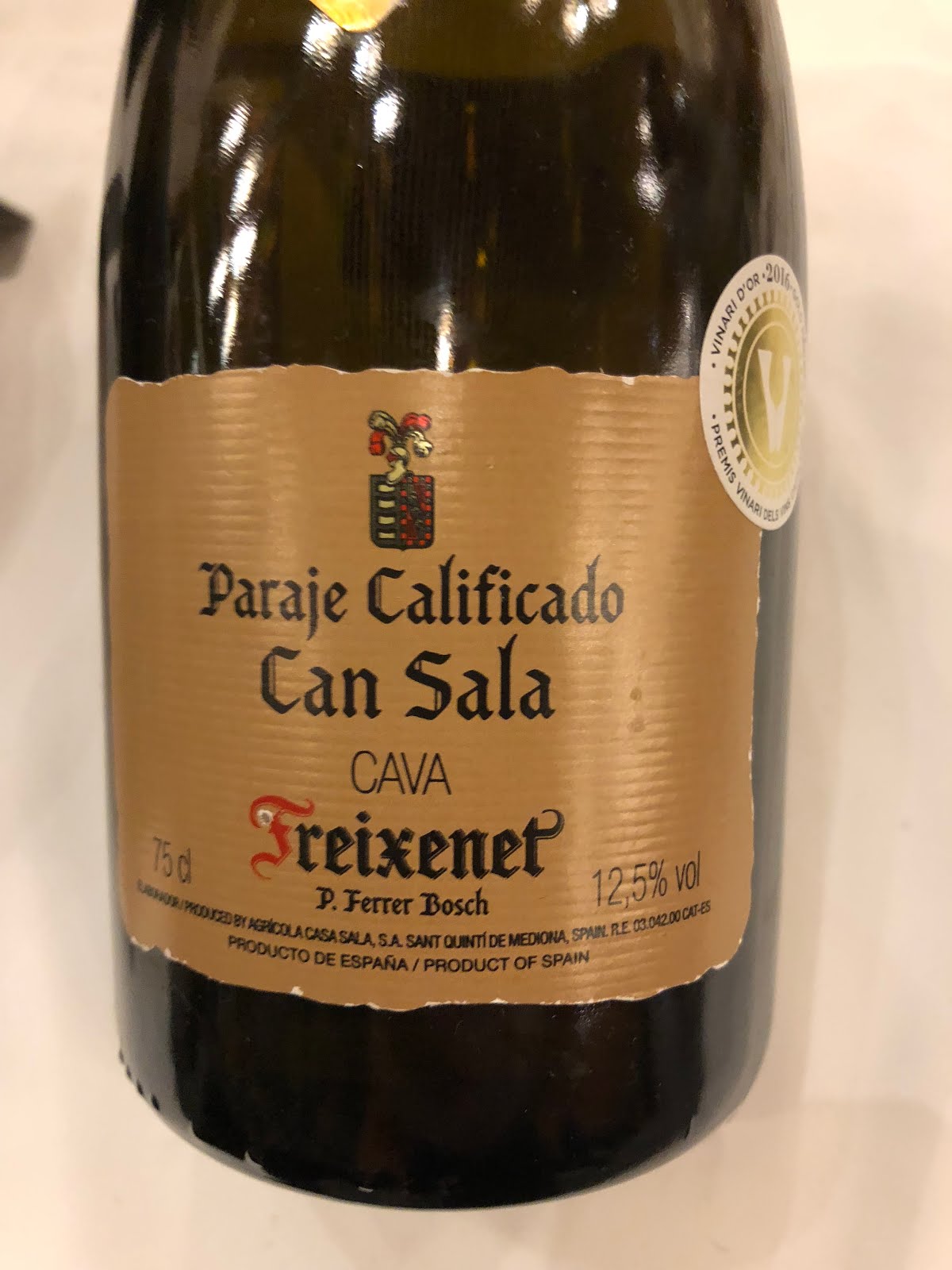
Our first stop was over to Friexenet (pronounced Fresh-net) where we tasted a few glasses of Cava (Spanish sparkling wine made in the traditional style of Champagne) then took a glass and wandered around the festival, observing and planning out our strategy. The Cava was excellent and we ended up buying a couple of bottles later on in the evening.

The theme of the festival was Spain and Portugal so it seemed like Spain was a pretty good place to start.

I had planned on taking notes or at least recording information on each wine I drank but that strategy soon fell apart. I think I needed staff for that and my wife was only there for the wine. I settled for taking photos of the wines that I liked.


The first Rioja that I really liked was from CVNE. This was a 2010 Gran Reserva ($28) which meant that it is aged for 2 years in the barrel and 3 years in the bottle. It is made from Tempranillo from one of the best wine areas in Spain, Rioja. 


I really liked that you could taste a number of wines from the same winery. The booth at Marques de Riscal had a number of wines and these three Rioja wines were all amazing. The 2016 Tempranillo ($16) was OK but needed some more time in the bottle. The 2013 Reserva ($28-available in liquor stores) had really good structure and a very nice taste while the 2007 Gran Reserva ($50) was very smooth and delicious - my favourite Rioja of the evening! 


I recently blogged about the Mencia grape from Spain.  I only found one Ribeira Sacra wine (made from Mencia) from the BC Liquor store, but in my research, I realized that Bierzo was another area that grows the grape. Happily, there was a winery in attendance from Bierzo that specialized in Mencia grape wine. The 2015 Descendientes de J. Palacios  Petalos ($37 - available in BC Liquor stores) was another wonderful Mencia with excellent structure, a touch of minerality and still some strong red and black fruits.

Although the first hour was mostly concentrated on Spanish wines, it was a bit of a blur. However, here are a few of the other really nice wines that we liked:


The favourite wine from Priorat was the Alvaro Palacios 2016 Camins del Priorat ($34). This wine is a blend (as is usual from Priorat) of Cab Sauv, Grenache, Syrah and a Spanish grape called Samso. Wonderful aroma with red and black fruits.


From the Ribera Del Guadiana was another beautiful Tempranillo - the Bodegas Alvear 2015 Palacio Quernado La Zarcita ($30). This wine was another smooth yet structured dark cherry wine.


A real standout was Arinzano which had wines that were all very enjoyable - and we picked up a few of these. This winery has the Pago designation which is a relatively new classification. Instead of a whole region getting a classification (like Priorat or Rioja), individual vineyards can apply to get an equivalent classification. Arinzano is one of only 17 vineyards to have this. There is a certainly a positive as all of their wines were very nice from the 2016 Hacienda Tempranillo to the 2010 La Casona ($44) made from Merlot and Tempranillo to the 2014 Gran Viino Blanco made with Chardonnay to the 2010 Gran Vino Tinto ($91) made from wonderful Tempranillo.


I did try some very nice white wines including a 2016 Marques de Riscal ($19)  from Rueda made with Verdejo grapes that tasted wonderful - fresh, fruity and light. My favourite white, though, was an Albarino from Rias Baixas made by Vionta ($24). The reason? My wife said it tasted like a glass of summer.

How can you beat that?

At this point, we headed to the onsite liquor store and bought some of these fantastic wines.

Next blog is part 2, the rest of the world!


Sunday, February 18, 2018

Tapas and Tastings - Another Great Wine Tasting Evening


Last night, we were invited to our friends' house for an evening of wine tasting and tapas - and it was a great time!

Each couple was responsible for bringing a bottle of wine. We were given the tapas dish in advance and were asked to bring something that would go with the food.

When we arrived, we secretly put our bottle in a paper bag and labelled the bag with the number that corresponded to the tapas course.

For each wine, there was a score sheet ( à la WSET 2) and a page that gave descriptors for the different characteristics of wine. Our host, Keith, popped open the wine, shared it around, and then we spied, sniffed, swirled, sipped and slurped the wine. After a few minutes, our other host, Lynn, brought on the tapas that went with the wine which we proceeded to nibble on while sipping the wine yet again.

Finally, after all of this drinking and eating, we would make our guesses and then Keith would reveal the bottle.

I absolutely loved it!

There were five wines and five tapas. Here's what we had.

The first wine received an interesting reaction from the table. One of the guests said, right off, that she didn't like it. Another said that he couldn't smell anything. I was able to smell citrus fruits like grapefruit as well as some green apple. This continued on the palate where I also tasted what I thought was a little yeast and high acidity. It was also quite mineral-y - and had almost a stone taste to it.

It was paired with Deviled Eggs with Shrimp. The pairing was great - it really meshed very well with the wine. Both the egg and shrimp came alive with the minerality of the wine.

I decided that because it was a great food pairing that this was an Old World wine. The minerality and lack of real fruitiness on the nose led me to Chardonnay. I guessed that is was either a Chablis or a Burgundy Chardonnay.


It was, in fact, a French Premier Cru Chardonnay from Burgundy - a 2014 Mont-Palais Rully Premier Cru ($50 - not sure where to buy in BC). I haven't drunk a lot of Premier Cru wines so far so it is a special honour to be able to drink one. On its own, it was a good wine, but with the food, it was amazing!

Next was a red wine. I recused myself from this one because my friend had phoned me a few days before and asked for a recommendation - so I knew what it was! Even so, I think that I would have been able to get this one. It had a lighter ruby colour with just a hint of garnet around the edge. The taste was definitely black fruits and there was medium structure and acidity. This was unmistakable as a Pinot Noir.

The tapa for this wine was a mushroom crostini with roasted red pepper and gruyere cheese. The wine paired very nicely with the food.

I had given my friend two possibilities - an Old World Pinot from France and a New World from the Okanagan. Since the wine tasted so darned good on its own, I, naturally, assumed it was the New World Pinot.


Wrong! It was a French Jean-Claude Boisset Les Ursulines 2016 Burgundy (Bourgogne) Pinot Noir ($26). I found it to be a very nice Pinot and would pair with a very nice range of dishes - the perfect wine when everyone orders something different!

The third wine was tricky. It was a fairly pale lemon white wine with a somewhat fruity nose and smelled of apple, honey, and stone fruit. The tapa that we had with it was an amazing Mu She chicken wrapped in lettuce. The fruitiness of the  wine paired well with the spices in the chicken.

My wife and I have had a couple of bottles of Gewürztraminer lately and I didn't think the nose was floral enough. That still left others like Pinot Gris or Viognier - so that's what I guessed - Pinot Gris.


Nope! It was a 2016 Gray Monk Gewürztraminer ($16) from the Okanagan. I was fooled by the less floral nose! Fooled or not, it was a good wine to have with the food.

Fourth was the wine that we had brought. It was well received as it was a bit bold, had some nice red and black fruit, had soft tannins and medium acid, and paired well with the tapa which was potato skins with chorizo and queso (cheese). The food was unbelievably delicious (well, it all was, actually) and I was tempted to find a yogurt container so I could steal all the left overs. The wine really stood up well to the chorizo but didn't overpower the subtler flavours in the skins or the cheese. A great pairing!


One of my friends got it (or came close enough, in my mind). He guessed Tempranillo - and it was, in fact,  a  2013 Beronia Rioja Reserva (aged at least 3 years) from Spain. For $26 I think this was an excellent wine and will definitely buy it again. Kudos to 'my guy' at the Pitt Meadows Specialty BC Liquor Store who helped me with this selection. This wine actually has Tempranillo and two Spanish grapes that I don't know a lot about, Mazuelo and Graciano.

Finally, we had a fortified wine to finish off. It was definitely a Port but it's pretty hard for me to tell the difference between Ports - other than they taste wonderful! This Port was quite sweet, had notes of nuts, caramel and honey, and was paired with an incredible chocolate mousse. The Port was sweet enough to stand up nicely to the dessert. I decided that it wasn't a vintage Port (as it was poured straight from the bottle - vintage Ports need to be decanted), tasted sweeter than I thought a Tawny Port would taste and tasted smoother than a ruby Port so I thought it was a Late Bottle Vintage (LBV) Port.


Close, but no cigar - it was a Taylor Fladgate 10 Year Old Tawny Port from Portugal ($40). Still, not a bad guess....

A great end to a fantastic tasting evening. Viva tapas!


Sunday, January 28, 2018

A Wine Podcast, A Wine Superstore, and a Couple of Wines


I am very fortunate that my commute to work is an enjoyable fifteen minute walk. While on that walk, I listen to a number of different podcasts ranging from fiction stories (Escape Pod), Star Trek Stories (Star Trek Outpost), a podcast about advertising (Under the Influence), travel (Travel with Rick Steves), and horror (Faculty of Horror).

I also listen to numerous podcasts on, you guessed it, wine.


One of the wine podcasts I regularly listen to is Wine For Normal People. Way back when I was writing this post (in August of last year, for goodness sakes!), I went on about how the host of the podcast, Elizabeth Schneider, can be a bit annoying at times. Well, since that time I have listened to dozens of her podcasts and I have had to reevaluate. Her podcast is extremely informative and covers a diverse range of topics - sometimes an episode deals with a particular winery in a particular area while other times there will be a great overview of a certain varietal or a particular region.

I have to admit that, about halfway through each podcast, she will do a plug for a product which lasts a few minutes but. luckily, I can just click the 15 seconds skip button on my iPhone and I can get right back to the podcast.

The podcast is certainly more accessible and entertaining than some of the more highbrow ones that I attempt to listen to (with sometimes limited success) so I think it is a great way to spend 30 minutes to learn something new about wine. There are over two hundred episodes - if you are starting out, I would look for the episodes dealing with particular grapes.

On to the superstore.....


Back when I did this post, I wrote about how Everything Wine was a great place to browse just wine. They don't carry anything else, just wine.

The only problem was that they were a bit of a drive away (in West Vancouver).

Well, just two weeks ago, an Everything Wine opened up in Langley (across the river from me) and I checked it out yesterday.

It really is a superstore for wine - it kind of looks like a Costco store for wine. The main part of the store is quite industrial looking - and my wife complained that it was not as cozy as the government liquor stores - but there are many, many different types of wine.

There is also a vintage cellar area that is quite large and has a good selection of $50 and up wines. Taking my WSET course has really helped in that I can recognize the names of many of these wines and producers. Unfortunately, I still can't afford most of them!

I bought a dozen wines ranging from a cheap California wine for $13  to a fancy French wine that was $45.  There was a volume discount which saved me between 65 cents to 5 bucks on each bottle. I'm not sure how the discounts work as a $23 bottle had a $5 discount, a $24 bottle only $1.22, and the $45 bottle only $2.27!

Still, I think it is fantastic to have another place to browse wine. There are some wines which I suspect aren't available in the government store. But I also want to make sure that I visit the smaller, boutique stores to see what they have to offer.

Onto the wines.


The first was a Spanish Garcia Carrion Pata Negra Rioja ($20 from the government liquor store). This particular wine was made from Tempranillo and two grapes I hadn't heard of before, Graciano (gives structure and aging potential) and Mazuelo (actually, Spanish for Carignan which is a blending wine). It was a nice dark wine with red fruit on the nose and both red and black fruit on the palate with some vanilla flavour - it is a Crianza wine so was aged in oak for at least two years. The average price on Vivino was $8 so I'm not sure why we're paying so much up here in BC! It was a good Rioja - nothing outstanding but pleasant to drink.


Next is Priocca Piacera (can't find a website) from Italy - a last minute grab at Everything Wine. At only $14 on sale, I thought it would be a good match for some wild mushroom ravioli in a tomato sauce. After all, piacere is Italian for like. It was a bit hard to smell on the nose so I was hopeful that this was a really complex wine..... but no. It was a disappointing bulk wine that was rather characterless - except for a mild astringency that was a bit unpleasant. The tomato sauce did manage to smooth out the wine a bit but I would definitely not buy this one again.


Finally, another wine form Everything Wine - and this was the cheapest of the dozen I bought there - a 2015 Redwood Creek Cabernet Sauvignon from California ($12.99). Surprisingly,  (especially after the Piacera wine) this wine had a rather enjoyable black fruit aroma. On the palate, the wine was a bit  jammy but was bold and had a rich vanilla taste. It was good wine for the price and I would buy it again - a great burger or meatloaf wine! I only had a glass last night and when I had another glass tonight, it was still very drinkable.

I am looking forward to trying the other 10 wines from Everything Wine! Good times...

Friday, June 2, 2017

The Final Reds - WSET Class #6 - Part 2

After our break (where I chomped down the rest of my poké from Pokéritto) we looked at some different reds from Italy, again, and then a couple of other places. These were all different grapes and it was interesting to compare all of the tastes. I didn't feel so off base this week and that feeling continued for the second half of the class.

We were not quite finished with Italy as our next wine was a Barbera grape from Alba - and is touted as practically the opposite to super chewy Nebbiolo. It is a very food friendly wine and usually comes form Asti or Alba and that is why it is called Barbera d"Alba or Barbera d'Asti. 


The particular one that we tried was a 2014 Barbera d'Alba from Paolo Conterno.  It was a pale ruby wine with medium intensity on the nose and aromas of red currant, cranberry, cherry, plum and white pepper. On the palate, it was dry, with low tannins and a light body and flavours of red fruit, plum, vanilla, and smoke. It had a medium finish and was in that tricky area between good and very good. This $24 wine was certainly drinkable but not quite as good as the next one. 


And where was the next next one from? It was a 2010 Taurasi made by Le Masciare and was also Italian. It was made with the Aglianico grape which is often called the "Nebbiolo of the south" as it is made in Campania. The Taurasi DOCG is the top wine made from Aglianico in Italy. 

This wine was  deep ruby, and had medium plus intensity on the nose with aromas of blackberry, blueberry and black cherry. On the palate, it was dry with high tannins, high acidity, and full body and tasted of black fruit, aged fruit, wet leaves, smoke and tobacco (full disclosure - I didn't actually taste the wet leaves - nor have I yet to this date...).  It had a medium plus finish and was rated as Very Good and cost $50.


The next one was my favourite of the evening. I'm not sure if the rest of my group felt that way but I really liked it. It was deep ruby in colour and had, to me, a pronounced intensity one the nose with baked fruit, plum, prune, black cherry and a hint of cinnamon. On the palate, it had medium tannins, hi acidity and full body and tasted of raising, jam and cherry. It had a medium plus finish and I rated it as Outstanding but our instructor, Dave, insisted that it was merely Very Good. 

It was a Rioja Reserva from Spain. Rioja wines are rated by age; Joven (under a year), Crianza (at least two years), Reserva (at least 3 years) and Gran Reserva (at least 5 years). This way, if you buy a Reserva, you know that it is ready to drink now! Rioja wines are at least 75% Tempranillo.

This particular Rioja was a 2011 Marques de Murrieta Reserva Rioja and cost $45. I am really going to have to explore some more Rioja wines!


The last wine of the night was from Portugal and was from Douro. That is the only region of Portugal that we really have to know and the main grape is a Portuguese variety called Touriga Nacional. It is the signature red grape of Portugal. 

It was a 2013 Niepoort ($40) made in the Douro Valley and was a deep purple in colour. It had medium intensity and black fruit such as blackberry, black cherry, and plum on the nose. It had black fruit on the palate as well with the addition of cloves and black pepper with high acidity, medium body and high tannins. It was also rated as Very Good. 

I'm a little sad, now that we have finished exploring so many red  and white wines. According to my outline, we have sparkling and sweet wines next week and I don't think I'll be as excited as I have been over the past 6 weeks. Then it's fortified wines which I am also not a huge fan and finally spirits - and then the exam. I will, however, continue to practice my WSET style tasting as often as possible and share what I can on this blog. 


Time to Taste an Albariño from Catalonia, Spain!

  Today we're drinking an Albariño — but there's an interesting twist. This 2024 Raimat Albariño doesn't come from the cool, Atl...