Showing posts with label mencia. Show all posts

Friday, November 9, 2018

How do you say. "Oh, crap!" in Spanish. WSET 3.10 - Spanish and Portuguese Wines

Courtesy Art of the Table
Things started off pretty well....

I sat down at this week's class and Lynn, the instructor, handed back my blind tasting note - which I nailed - and the mini quiz - which I mostly nailed.

I was feeling pretty damned confident!

Then we did the first tasting.

It was two whites, one from Spain and one from Portugal. After Lynn described some of the characteristics of each one, I smugly came to the conclusion that the first wine was an Albarino and the second was a Vinho Verde.

Wrong.

Oh, crap.


The first wine was actually 2017 Aveleda Vinho Verde from Portugal ($15). It had a fairly complex flavour profile with pear, lime, orange blossom, melon, wet stone and a floral component on both the nose and palate.  This low alcohol, high acid wine had a little bit of spritz which was hard to detect initially since it was a bit of a surprise. This was a blend of mostly Loureiro and Alvarinho grapes.  A 'drink now' wine, this was rated as Good and would go well with cooked or fried white fish.


The second wine (that I thought was not as good) was actually a great Albarino from Spain - it was a 2017 Terras Gauda Albarino from Rias Baixas ($40). This had aromas of peach, apricot and pear and also a savoury or cheesy aroma - maybe even cream cheese. It had extended lees stirring which gives it that cheesy smell. There was similar fruit and savouriness on the palate along with grapefruit. This was a high acid, medium alcohol wine with a medium plus finish (not short, like I thought!). It was balanced and complex so would be rated as Very Good and could be aged for a bit.

Spain is a country with a big wine growing area but most of the vines are spread out so they get enough water. It just can't compete with Italy or France in the amount of grapes grown. There are a variety of climates in Spain with the main difficulties being either too much rain (on the coast) or not enough rain.

The big grape here is Tempranillo. This thick skinned, medium acidity grape is popular on its own or with other grapes. It's grown in Rioja, the Ribera del Duero, Navarra, Toro, and La Mancha.

Another big grape is Garnacha (Grenache). This high alcohol grapes is one that loves the heat and ripens late. It is usually blended with other grapes such as in Rioja, and Navarra. It is also grown in Carinena, Calatayud, Priorat, and Ribera del Duero.

Monastrell (also known as Mourvedre) is a great grape for the heat as it has quite a thick skin and ripens late. It is grown in the Levante area which includes Valencia, Jumilla, and Yecla.

There's also other black grapes such as Graciano (blending grape),  Mencia (a fresh fruit grape grown in Bierzo), and Carignan also known as Carinena and also known as Mazuelo.

Albarino is a popular white grape that is a thick skinned, high acid grape with stone fruit and citrus fruit. It is found is the northwest region of Spain.

Verdejo is the other bigger grape that is used a lot in sherry. It has melon and peach flavours, similar to Sauvignon Blanc, which it also happens to be blended with fairly frequently.

Our next two wines were, in fact, both Tempranillo wines from Spain. I would have been happy to drink both of these wines all night long.


The first was a 2008 La Rioja Alta Reserva Tempranillo ($75). This medium garnet wine was the more delicate of the two with tastes and aromas of red cherry, plum, strawberry, fig, toast, pepper, cedar, mushroom and leather. The finish was long, the intensity was high, and the wine was balanced and complex. An Outstanding wine that could easily age a few more years.


Not only was the first one great, the second was, in my opinion, even better! It was a 2011 Pintia Tempranillo ($104) from the Toro region of Spain. This wine was high in tannins and had flavours and aromas of smoke, black plum, blackberry, black cherry, violet, forest floor, cedar and leather. This wine was high in acidity, high in alcohol, had pronounced intensity, and had a long finish. Another Outstanding wine that could age for years!

I felt that I had redeemed myself with the Tempranillos. I nailed some of the flavours and aromas down and was started to feel smug agin. Then we had the next two wines. One was a Monastrell (Mourvedre) and one was a Mencia. I like Mencia - in fact, I've had three or four bottles. I tasted several at the Wine Festival in the spring! I KNEW my Mencia - I even recommended it to my table mates! I also remembered how tannic the Mourvedre was from Bandol so I thought it would be so easy to figure out which was which. The first one I thought was all black fruit and tannins so was the Monastrell and the second one was all red fruit and lower tannins so was the Mencia.

Wrong again.

Oh, crap. Again.


The first was 2016 Alvaro Palacios 'Petalos' Mencia from Bierzo, Spain ($46). It had aromas of red fruit, savoury, and roast coffee. It had only medium tannins and medium plus acidity with a long finish. It was rated as Very Good.


The second was a 2015 Juan Gil Monastrell from Jumilla ($33). This is the one that had the black fruit as well as vanilla on the palate. It had full body, high tannins, and a medium finish. This was a Good wine.

I'm usually a bit shaky on my tasting notes for white wines but I don't usually struggle so much with reds. I don't know what happened - possibly I decided that the first one was a Monastrell and that coloured the rest of my tasting. I've also listened to podcasts where wine experts have admitted to getting it wrong a bunch of times and that's their job!

Oh well, c'est le vin. On to Portugal.

Portugal doesn't just make Port! It makes lots of wine and many form the 5 varietals that make Port. They are Touriga Nacional (high quality, great flavour, high tannins), Touriga Franca, Tinta Roriz (Tempranillo), Tinta Barroca, and Tinta Cao.

There's also the wine grapes that made the previously mentioned Vino Verde - Loureiro, Arinto, and Alvarinho (same as Spanish Albarino).

There's a ton of other grapes (like Spain, like Italy), but I think we'll just focus in our last two tastings.


The first was 2015 Cabriz Touriga Nacional and others blend from the Dao region ($22). This ruby wine had both red fruit (red cherry, cranberry) and black fruit (blueberry, black currant) was well as savoury notes. This was a mostly medium wine that was rated as Good and was suitable for drinking now.


The final wine was a 2015 Quinta do Crasto Touriga Nacional Reserva and others blend from the Douro region ($54). This was a purple wine that tasted of black fruit including blackberry, forest floor, barnyard, toast and leather. This wine had medium acidity, medium plus tannins, and high alcohol with a medium plus intensity of flavours and a beautiful long finish. This wine was rated as Outstanding.

So, after a rather mediocre tasting night, I felt a little disappointed but I don't think you can accurately taste every wine that's put in front of you. Even the pros get it wrong. Luckily, for the WSET blind tasting, you don't have to guess the wine, just describe it. My challenge is to try to avoid jumping to conclusions when I taste the wine. If I think in the first three seconds, "This is a Chardonnay," I'll probably be hooped.

Oh well, time to study some more.

How do you say, "Oh, crap!" in Spanish?

"Oh, mierda!"


Sunday, March 4, 2018

Vancouver Wine Festival - Awesome Night Out! - Part One

Assorted information from the Wine Festival 


This year is the 40th anniversary of the Vancouver International Wine Fest.

And it is the first year that I have ever gone.

Now that I know a bit about wines and wine countries, I thought I would really get something out of the Wine Festival - and I wasn't wrong.

There were several tips that I read about in different web sites and I did my best to follow them - in one way or another.....

Night view of the harbour from our hotel room. 


1. Stay near the festival or arrange a ride home
We booked a rather pricey room at the Pan Pacific but the accommodations were very nice (the view from the room is above) and we were literally beside the festival venue, the Vancouver Trade and Convention Centre.

2. Eat before you go
Although there was some food available, there was only three hours to taste wine, talk to people, and purchase wine at the on site liquor store. We went out to the Rogue Wetbar and had a variety of appies for dinner - without wine. We wanted to save up for the festival and found the food to be OK but not spectacular. Not sure if that was the lack of wine or the plainness of food. We were nice and full, however, which helped.

3. Stay hydrated
We had, easily, a litre or two of water at the restaurant. At the actual wine festival, we tried to have some water every three or four tastings.

4. Swirl, sniff, sip, and spit
The first three were easy. The last one was a lot harder. I tended to have a small sip of each wine and dump the rest in the spit bowls. That actually worked pretty well.

When we got to the wine festival, we lined up to hand in our tickets and get stamped. While we were waiting, to my surprise, I saw and chatted with three of my fraternity brothers (along with two wives and a daughter) from UBC! I hadn't seen them in over 30 years! I had travelled with one of the guys (Phil) around the USA for four months during a gap year. Happily, we kept running into them at the wine festival and drinking together, talking and catching up. It truly added another dimension to my night.

Onto some wines!


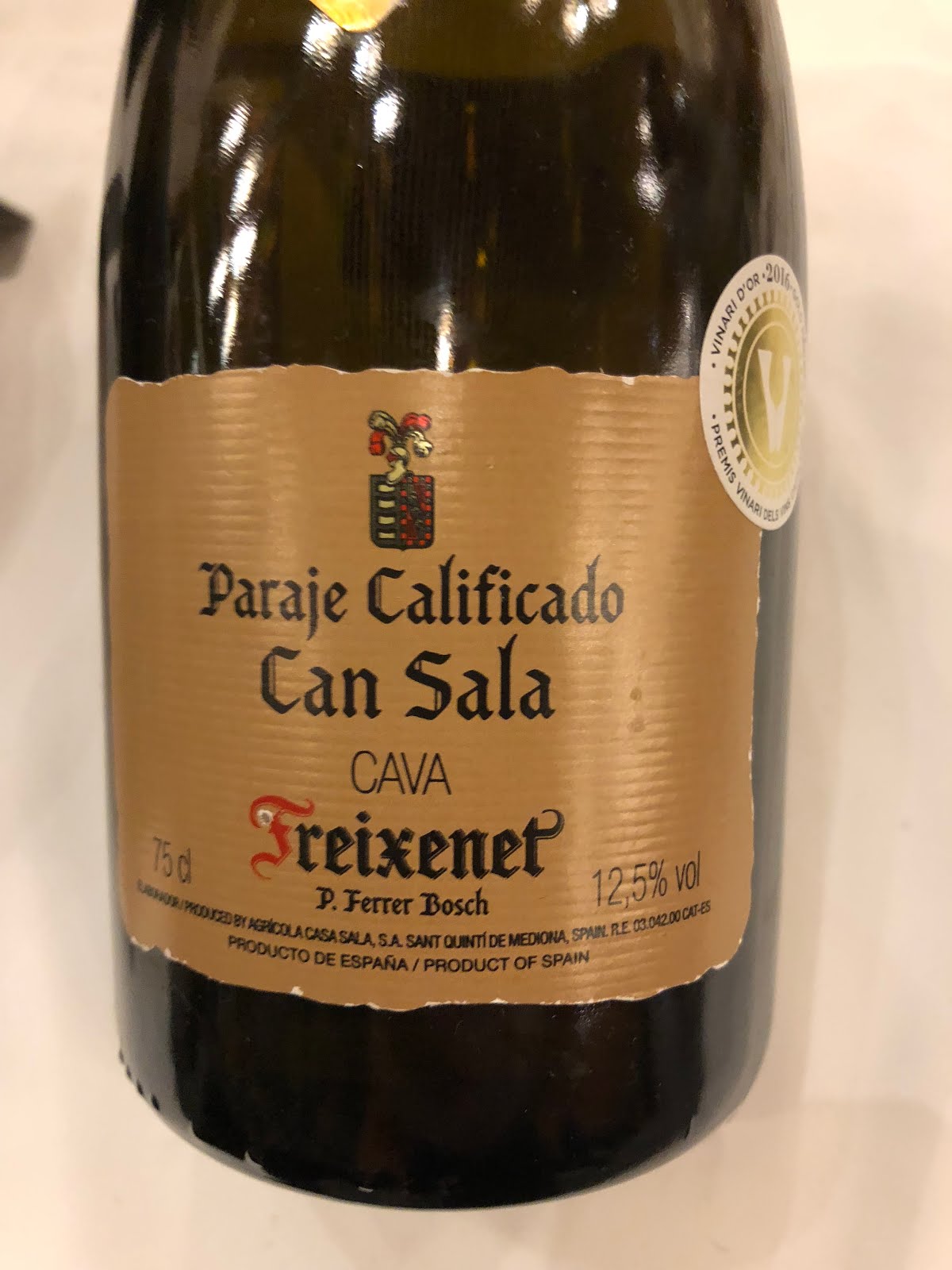
Our first stop was over to Friexenet (pronounced Fresh-net) where we tasted a few glasses of Cava (Spanish sparkling wine made in the traditional style of Champagne) then took a glass and wandered around the festival, observing and planning out our strategy. The Cava was excellent and we ended up buying a couple of bottles later on in the evening.

The theme of the festival was Spain and Portugal so it seemed like Spain was a pretty good place to start.

I had planned on taking notes or at least recording information on each wine I drank but that strategy soon fell apart. I think I needed staff for that and my wife was only there for the wine. I settled for taking photos of the wines that I liked.


The first Rioja that I really liked was from CVNE. This was a 2010 Gran Reserva ($28) which meant that it is aged for 2 years in the barrel and 3 years in the bottle. It is made from Tempranillo from one of the best wine areas in Spain, Rioja. 


I really liked that you could taste a number of wines from the same winery. The booth at Marques de Riscal had a number of wines and these three Rioja wines were all amazing. The 2016 Tempranillo ($16) was OK but needed some more time in the bottle. The 2013 Reserva ($28-available in liquor stores) had really good structure and a very nice taste while the 2007 Gran Reserva ($50) was very smooth and delicious - my favourite Rioja of the evening! 


I recently blogged about the Mencia grape from Spain.  I only found one Ribeira Sacra wine (made from Mencia) from the BC Liquor store, but in my research, I realized that Bierzo was another area that grows the grape. Happily, there was a winery in attendance from Bierzo that specialized in Mencia grape wine. The 2015 Descendientes de J. Palacios  Petalos ($37 - available in BC Liquor stores) was another wonderful Mencia with excellent structure, a touch of minerality and still some strong red and black fruits.

Although the first hour was mostly concentrated on Spanish wines, it was a bit of a blur. However, here are a few of the other really nice wines that we liked:


The favourite wine from Priorat was the Alvaro Palacios 2016 Camins del Priorat ($34). This wine is a blend (as is usual from Priorat) of Cab Sauv, Grenache, Syrah and a Spanish grape called Samso. Wonderful aroma with red and black fruits.


From the Ribera Del Guadiana was another beautiful Tempranillo - the Bodegas Alvear 2015 Palacio Quernado La Zarcita ($30). This wine was another smooth yet structured dark cherry wine.


A real standout was Arinzano which had wines that were all very enjoyable - and we picked up a few of these. This winery has the Pago designation which is a relatively new classification. Instead of a whole region getting a classification (like Priorat or Rioja), individual vineyards can apply to get an equivalent classification. Arinzano is one of only 17 vineyards to have this. There is a certainly a positive as all of their wines were very nice from the 2016 Hacienda Tempranillo to the 2010 La Casona ($44) made from Merlot and Tempranillo to the 2014 Gran Viino Blanco made with Chardonnay to the 2010 Gran Vino Tinto ($91) made from wonderful Tempranillo.


I did try some very nice white wines including a 2016 Marques de Riscal ($19)  from Rueda made with Verdejo grapes that tasted wonderful - fresh, fruity and light. My favourite white, though, was an Albarino from Rias Baixas made by Vionta ($24). The reason? My wife said it tasted like a glass of summer.

How can you beat that?

At this point, we headed to the onsite liquor store and bought some of these fantastic wines.

Next blog is part 2, the rest of the world!


Sunday, February 25, 2018

Two Wines: Mencia - First Taste of a Unique Spanish Grape. and Saint Joseph - a Powerful Syrah


I tried a wine made from a new grape this snowy weekend. The grape is called Mencia.

The Mencia grape (pronounced Men-thee-ya) is a Spanish grape that is grown in the Northwest of Spain. The main areas it is grown is in Bierzo, Valdeorras, and Ribeira Sacra. It is a red grape that was historically used for bulk type, watery wines but things have recently changed - producers are concentrating the flavours and using old vines to limit yields.  However, it is not a grape that is really well known.

So, how did I hear about it?

I was listening to one of my podcasts - I think it was either Wine For Normal People or Grape Nation - and an expert was talking about one of the real up and coming places in the world for wine. He said that the Ribeira Sacra region, in Spain, was an area of fantastic wines and that the prices was great value for what you get.

I looked online and found that the BC Liquor Store carries exactly one wine from Ribeira Sacra - and so I rushed out and bought a couple of bottles. Friday night, while we waited for our dinner to cook, we popped open a bottle, and I was blown away!


The wine that we found was a Prior de Panton Finca Cuarta Mencia from Ribeira Sacra ($20). Its colour was deep red - almost purple in colour. On the nose were strong aromas of red fruit such as red cherries and raspberries. On the palate, though, was a structured wine with medium to high tannins and medium to high acidity. There were coffee and tobacco flavours as well as red and even some black fruit.  The finish was nice and long and overall was a wonderful wine. Sadly, little of the wine lasted until the meal was ready. I would probably decant this wine for an hour or so next time .


This wine made me think of a wine I had last weekend as it was similar in structure. That wine was a 2015 Saint Joseph Domaine Courbis from the Northern Rhone ($42). Like all Northern Rhone wines, it was a Syrah wine but a Syrah wine that had some great structure - similar to the Mencia.


It was a wine that I did decant which was probably a good thing.  It had some spice and pepper as well as red fruits on both the palate and the nose. It was strong in tannins - almost a bit too strong - and really could have been aged another three to five years. This was a definitely powerful Syrah and really stood out from some of the easier drinking Syrahs that I have had from the Okanagan.

Both of these wines surprised me with their intensity. I would definitely buy them again but would probably purchase the one from Ribeira Sacra more often for two reasons. First, it seemed ready to drink from the bottle and didn't really require ageing - although it would probably be fine with a couple of years in the cellar. Second, the price was quite reasonable - after all, I could get two of the Mencia for the price of the Syrah!

Next week, I am attending the Vancouver Wine Festival - and can't wait to go! The two featured countries are Portugal and Spain (although I can't seem to find a winery that will be attending from Ribeira Sacra) but there will be wines from all over the world. Should be a fantastic time!


Time to Taste an Albariño from Catalonia, Spain!

  Today we're drinking an Albariño — but there's an interesting twist. This 2024 Raimat Albariño doesn't come from the cool, Atl...