My journey to complete my WSET level 2 and my WSET 3 certifications was populated with many tastings and bottles of fine wine. In the older posts, read about my journey in this blog that featured wines in both of the courses. My next stop on my journey was doing my own wine tours in the Okanagan for 6 years. Now I'm retired (again) and just drinking - and tasting - wine! Join me as we taste a new wine every couple of weeks!
Showing posts with label vouvray. Show all posts
Tuesday, August 22, 2017
Trip to Birch Bay - Awesome Wine in the USA
I recently spent a few days just south of the border, in Birch Bay, Washington.
There was sun, fun and family but there was also wine.
It's no secret that wine prices in Canada are much higher than the US. There are also some amazing wines available in the US that I don't even know if BC carries in our own liquor stores.
The first place we went to was Trader Joe's. Trader Joe's is famous (or infamous) for its 'Two Buck Chuck' which is Charles Shaw wine. This comes in a variety of styles and prices. I bought a bottle of something for about $3 a few years ago and, even without any wine experience and several years of making my own wine in the basement, 'Two Buck Chuck' was truly a hideous wine that was not worth drinking. It has truly turned me off the entire Charles Shaw line.
However, during this trip, I looked around at some of the other wines and there was a wine that intrigued me. I have just started listening to a podcast called, "Wine for Normal People" which has good information although the host of the program is a bit annoying because she often interrupts the guests that she has on the show. "Let them speak!" he complained, derisively. As I said, though, the podcast has good information and one of the episodes I listened to was on rosé. The host, Elizabeth Schneider, did a great job discussing rosé in general and one style that she really liked was a French rosé from Tavel - an appellation that only makes rosé.
Well, in Trader Joe's, there was a Tavel rosé that cost under $20 so I thought I'd give it a try. My apologies for the photo, but it was a Réserve de Chastelles 2016 Tavel Rosé.
This Tavel had some nice red fruit taste and was very interesting. The colour was not your pale, pinkish rosé colour that is so common - it was definitely reddish pink and actually looked quite appetizing! At first on the palate, it tasted a bit sweet - but then the acidity hit my palate and - wow! It balanced beautifully with the sweetness to make a very delicious, crisp rosé. It is a blend of Grenache and Syrah grapes. We enjoyed it very much and had some nice cheese and charcuterie to accompany the wine. I will definitely try a Tavel Rosé again.
After Trader Joe's we headed to that wonderful giant of warehouse shopping, Costco. I picked up two wines for our trip at this mega store.
The first was a Vouvray which is made from Chenin Blanc. It was a Domaine le Peu de la Moriette which cost around $20 US. This Vouvray had apple and honey on the nose and more so on the pallet with nice fruit forward flavours. It also had a touch of a bready taste due to the wine lying sur lees (basically absorbing the taste of the dead yeast cells). The finish was medium. Overall, it was a very crisp chenin blanc which was enjoyable to drink. It accompanied our barbecued chicken very well and would also be good to sip on the patio.
The final wine cost close to $25 US at Costco. I really enjoy a good Pinot Noir but have had my share of these wines that have not been that great - thin or watery or just lacking in character or structure. In my WSET studies, I learned about Oregon's Willamette Valley and how their wines are giving Burgundy wines tough competition, and for a better price. This gave me the perfect opportunity try one so I bought a 2013 Lange Pinot Noir from the Williamette Valley in Oregon.
This was an amazing wine - it was definitely up with some of the better Pinot Noir wines that I have tasted. It was rich and tasted of red fruit. There were many different tastes including red cherry, blackberry, leather and tobacco. There was also a vanilla taste and an earthiness that you don't always get with Pinot Noir. There were light to medium tannins but the wine was structured enough to easily pair with a grilled rib eye steak. It had a medium finish, was complex, expressive of the varietal, balanced and intense. I would rate it very good or excellent. I will have to try this one again. Unfortunately, I couldn't find this one on the BC Liquor Board website so I may have to bop down to the US Costco on a regular basis!
Finally, in amongst all of the liquor at Costco (that makes this Canadian drool terribly), there is a locked case with some of the higher priced alcohol items. I had just finished the section on Bordeaux in Karen McNeil's wonderful resource, The Wine Bible. Near the end of the chapter, she suggested several wines as stand outs for Bordeaux including two that were at Costco. I didn't buy them, but I thought I'd briefly comment on them and maybe, just maybe, I will find a reason to spend over $100 US on a fine vintage....
The first was 2014 Chateau Leoville Las Cases Grand Vin de Leoville du Marquis de Las Cases from St. Julien in Medoc. It was priced at $125 US and could be found on WineSearcher.com anywhere between $75 to over $200 - and wine.com lists it at $150. More tellingly, the older vintages are well into the $400 or $500 range - a 2005 will set you back $900!
The second was a 2014 Cos D'Estournel from Saint-Estéphe for $115. A bottle, online, ranged from $70 to close to $200 and the vintages available at the BC Liquor store ranged from 2004 ($290) to 2009 ( $800) to 2010 ($600) and 2011 and 2012 ($270). Maybe buying this and hanging on would have been a good idea?
Despite what you may think about warehouse stores like Costco, it seems that, along with the $6 bottles of Yellowtail, there are some very nice wines to be had. I've purchased a couple more that were in the $30 to $40US range and look forward to blogging about them at a later date.
Hope you enjoyed this look at US warehouse wines - salut!
Monday, June 12, 2017
Sweet Barrel-O-Wine! WSET class #7 - Part 2
Hmm - it seems that Class #7 has a Neil Diamond focus; first it was Cracklin' Rose (well, Cracklin' Champagne ) and then Sweet Barrel-O-Wine (rhymes with Sweet Caroline?).
The second half of the class looked at sweet wines - not my favourite, but important, all the same.
First, the lesson. There are a few ways that you can make wines sweet.
Interrupting the fermentation is the first one we looked at. This can be done by removing the yeast, fortifying the wine (like adding sulphur dioxide or alcohol) which is what they do to Port and to fortified muscats like Muscat de Beams de Venise.
The second way to sweeten wine is to add a sweet component to the blend. One way is to add unfermented grape juice (süssreserve), like in a German liebfraumilch, but the juice has to be made of the same type of grape as the wine. The second way is to add sweet wine. One famous one to add is called PX with stands for Pedro Ximenez which is a super sweet, almost honey-like wine that is used for sweet Sherry.
The last way to sweeten wine is to concentrate the sugars in the grapes. This is done by using dry grapes, either on the vine, like late harvest wines (e.g. spätlese) or letting the grapes dry on racks, etc., until they are like raisins which concentrates the flavours in wines such as Recioto (made form Corvina grape) or PX - the sweetest wine of the world. Another way to do this is by using noble rot where grapes are in a damp area and develop a specific type of mould. The mould attack the grape and causes it to shrivel. This has to be done with grapes that are highly acidic and thinned skin. The final way to concentrate sugars is freezing the grapes to make Ice Wine!
Our first wine was from Pantelleria which is an island that is south of Sicily. This wine (I believe it was a Recioto) was deep amber in colour and had medium plus intensity with aromas of raisin, fig, prune and a bit of floral. On the palate, it was nutty, raisin, vanilla, sultanas, and a jammy hint. It was sweet (almost lucsious) had medium plus acidity, full body, and a medium plus finish. This wine was rated as Very Good and was a Passito di Pantelleria made by Donna Fugato ($40 for 375 ml).
The second was a Noble Rot wine. It was from Vouvray (which is in the Loire region) and was made with Chenin Blanc.The colour was medium gold and it had a medium plus intensity on the nose, with aromas of raisin, earth, and lots of stone fruit. On the palate, there was jam, plum, fig, fresh fruit and, again, an earthiness. It was a sweet wine with high acidity, medium plus body and a medium plus finish. This 2005 wine from Nectar Moncontour was also rated as Very Good and cost $72 for 500 ml.
Next up was a Tokaji wine - our instructor's favourite wine! It was medium gold in colour and had medium intensity on the nose with aromas of marmalade, peach, apricot and tropical fruits like mango. On the palate, it had flavours of tech, pineapple and apricot jam with an earth flavour. It was a sweet wine with high acidity, medium body and a long finish. Tokaji wines are rated on sweetness by puttanyos which range from 3 to 6 - this one had 5 puttonyos. This 2009 Tokaji from Chateau Dereszla had 11.5% alcohol, cost $50, and pairs well with veal and chicken.
The final wine was soooo sweet. If you like sweet wines, this is the one. It was medium gold in colour, and had a medium plus intensity on the nose with aromas of raisin, lychee and pineapple. It was a lusciously sweet wine (the level above sweet is officially called 'luscious') and had tastes of pineapple, raisin and apricot. There was high acidity, full body, and a long finish with 7.5% alcohol. This was a Mission Hill Reseve Riesling Icewine from 2014. It pairs well with cheese and costs $56 for 375 ml.
I definitely learned a lot about both sparkling and sweet wines during this class of my WSET. I was able to pinpoint the tastes that makes sparkling Champagne so desirable and I have an understanding of how sweet wines can really vary.
Our next class deals with Port and Sherry - two wines that I am not all that familiar with. Time for some more learning!
Wednesday, May 24, 2017
Riesling Evening with some Blanc Plonk - WSET Class 5 - Part 1
It was a lovely day on Tuesday.
I was able to combine two of my favourite things - riding my scooter and drinking wine!
It was a nice, sunny day and I hopped on my scooter and headed out to my WSET class in Vancouver. I even got there about a half an hour early and I was able to try a new restaurant, Pokérrito. This restaurant serves Hawaiian poké - sort of a Hawaiian version of sushi - on rice, salad or in a burrito.
I really enjoyed poké when I was in Maui and was very excited to see it arrive here in recent weeks. When I entered the restaurant - sort of a take out place with a couple of tables - I was a bit concerned about the 12 people in front of me but the line went fast. I ended up gobbling half of the rice and accompanying wonderful ingredients before class started.
This was class number 5 - time is definitely going far too rapidly!
We started off with Riesling a wine that can range from bone dry all the way to sugar-sweet. The best ice wine in BC, as a matter of fact, is made from Riesling. Riesling is also one of the few white grapes that lends itself to ageing.
Most Riesling comes from Germany. There's Mosel that has the lightest and most delicate, somewhat sweet, Rieslings grown on steep slopes in places like Piesport and Bernkastel. Then there's Rheingau which is a smaller region that makes drier wines where all the grapes only grow on the north side of the river to catch the sun. Next up is Pfalz which has off dry, medium body wines in places like Forst and Deidesheim. Finally there's Rheinhessen which is the largest area which is flat and produces the cheaper Rieslings.
The Germans have Qualitatswein which is the first level of their better wines and then they have Pradikatswein which is their higher quality wine. I have to learn this, so you might as well, too! Within the Pradikatswein category, there are grape quality levels going from almost dry to very sweet. They are kabinett, spätlese, auslese, beerenauslese, trockenbeerenauslese, and eiswien.
In Alsace, the French label the wines with the grape varietal but also have the better wines from Villages and then from Grand Cru. They are usually dry or sweet wines. Other areas include Austria, New Zealand, and Australia where Riesling smells like a lime popsicle - and petrol!
Our first three wines were all Riesling and we had to blind taste them.
The first wine we tried was from Alsace and sort of replaced our wine that had cork taint during the first night. It was clear, pale, lemon, with a pronounced nose, lots of stone fruit and apple, a dry wine with high acidity, medium body and a medium minus finish. It was rated Good. It was made by Trimbach and dost $36.
The second was a Kabintett level German wine that was medium lemon, with medium intensity on the nose and had some stone fruit (nectarine, peach, apricot) as well as petrol and lychee. It was an off dry wine with high acidity and a medium finish It was a 2014 Weingut Max Ferd Richter from Mosel that was rated Good and cost $40 and had a whopping 9% alcohol.
The last Riesling was Auslese - so it was pretty sweet! It was pale lemon, medium intensity on the nose, lots of stone fruit (apricot, peach, pear) as well as a hint of lime. It was medium in sweetness, had high acidity, medium body and a medium finish. This wine was a giant seven and a half percent alcohol and was a 2011 Joh. Jos. Prüm Bernkasteler Badstube Auslese that was rated Good and cost $85.
After the Rieslings, we looked at some different white grapes that are all grown in France.
First was Chenin Blanc which is the grape grown in Vouvray. It is famous for its 'wet wool' or funky smell and is also South Africa's most planted grape.
The wine we tried was pale lemon with medium intensity on the nose, a lot of stone fruit, off dry in taste with high acidity and a medium body. It had a bit of a funky taste (apparently - I couldn't sense it, though) and a medium finish. It was a 2015 Vouvray made by Baron Bernard (couldn't find a web site), was rated Very Good, and cost $28.
The next grape was Melon Blanc, grown in Muscadet. It is a neutral grapeshot is not aromatic and lends itself to sur lie - absorbing dead yeast cells - for 6 months to a year.
This Clos de Briords old vines Muscadet was pale lemon, with a medium minus nose, and had apple, peach, floral aromas, and tastes of lemon, peachy and apricot. It's smokiness was complimented by light body and a medium plus finish. This wine was rated at Very Good and cost $30.
The last was Viognier which is a big sugar, full bodied wine with low acid and none of the spiciness of, say, a Gerwurztraminer.
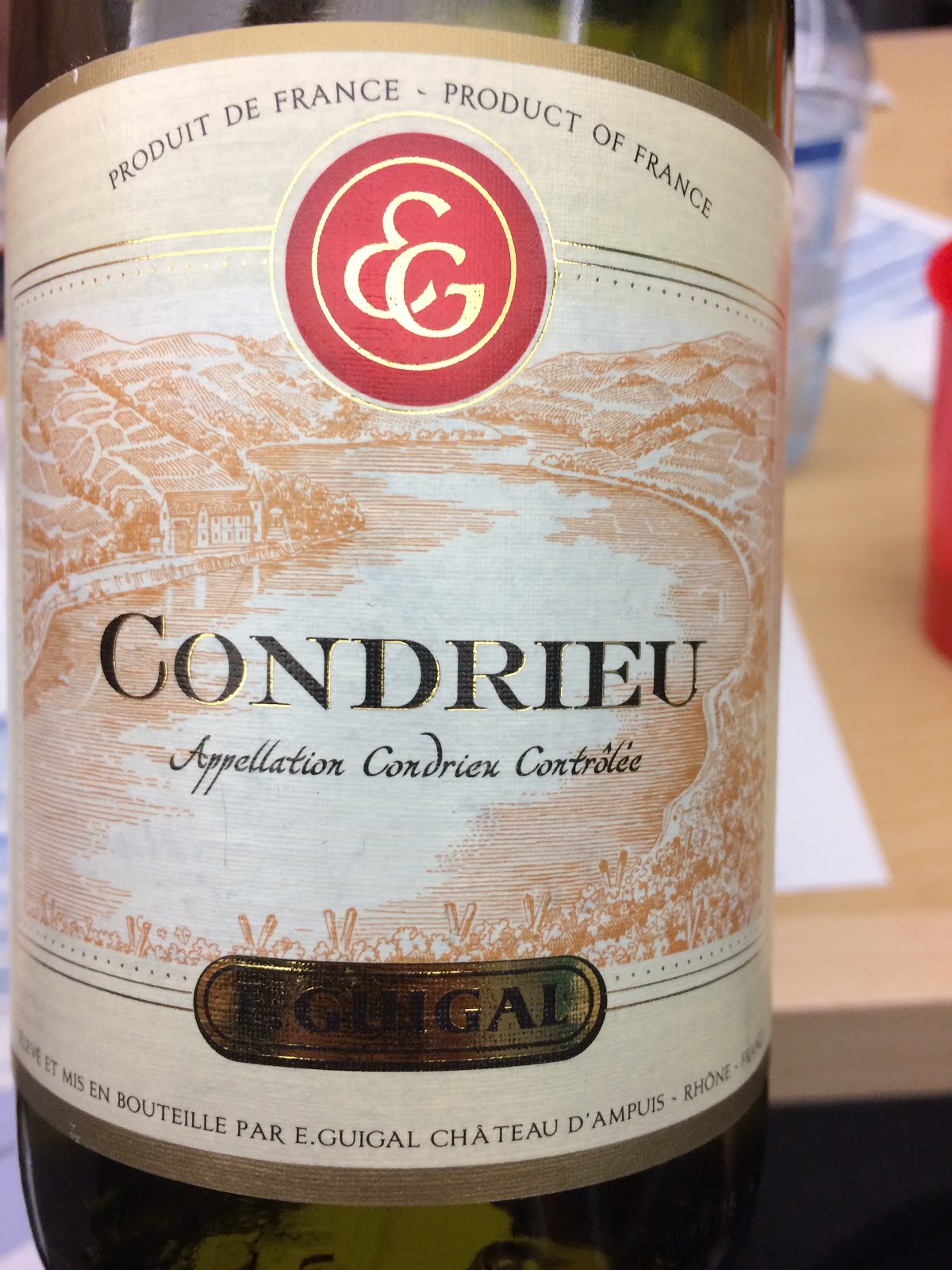
The Viognier we tried was medium lemon, had pronounced floral, apple and stone fruit aromas, some additional apple and toasty flavours on the palate, and had medium acidity, full body, and a medium plus finish. This was a Condrieu made by E. Guigal which was rated at Very Good and cost $82.
Those were the whites that we tried that night - next come the reds!
Subscribe to:
Posts (Atom)
Gavi wine from Italy - more complex and more character than Pinot Grigio
This time we taste a delicious Cortese di Gavi from northern Italy. This alternative to Pinot Grigio, a 2023 Villa Sparina Gavi di Gavi h...
-
It's been a while..... School had to end, then we were off on a trip to Eastern Canada for a couple of weeks Then a fishing trip ...
-
Way back, when I was first exposed to alcohol (I must have been legal, right?) I drank hideous wines. They were cheap and sweet and ...
-
One thing that has really been made apparent to me since I have taken my WSET and since I have been sampling wines a bit more critically....